
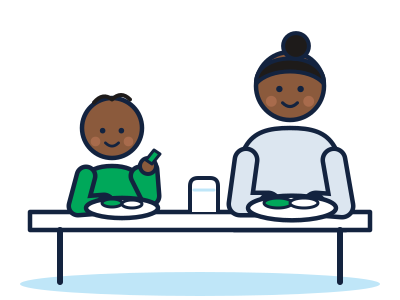
If You Remember Nothing Else
- Toddlers need less food than you think. Growth slows after the first birthday, and appetite drops with it.
- You decide what, when and where. Your child decides how much.
- Never hold the nose or pour food into a child's mouth. Food can go into the lungs and cause choking or pneumonia.
- New foods may need 10 to 15 tries. Keep offering, without pressure.
- Cut out sweet drinks, malt drinks and biscuits between meals. They take away appetite.
- A child who is growing well is eating enough. Weight loss, pain or very few foods needs a check.
Why Toddlers Eat Less
In the first year a baby roughly triples their birth weight. In the second year growth slows sharply, so a toddler needs less food for their size than they did as a baby. Parents often see this as a sudden loss of appetite. At the same time toddlers become more wary of new foods, and they discover they can say no.
So it is normal for a toddler or young child to:
- eat well one day and hardly anything the next
- eat one good meal a day and pick at the others
- refuse a food they liked last week
- want the same few foods again and again
- refuse anything that looks new, mixed or "wrong"
Over a week, most children eat about what they need. Picky eating usually eases by school age.
Your Job and Your Child's Job
Child-feeding specialists use a simple rule called the division of responsibility:
The Parent Decides
What food is offered, when meals and snacks happen, and where the family eats.
The Child Decides
Whether to eat and how much, from what is offered.
In practice this means you serve a family meal that includes at least one food your child usually eats, let them serve themselves or choose from the plate, and let them stop when they say they are full — without comment, and without a replacement meal cooked to order. Children who are trusted to listen to their own hunger usually eat more over time, not less.
New Foods Take Many Tries
Children often need to see, touch, smell and taste a new food 10 to 15 times, sometimes more, before they accept it. Early refusals are part of learning, not a final answer.
- Put a small amount of the new food next to familiar foods. One piece is enough.
- Eat it yourself and enjoy it. Children copy the people they eat with, especially older children.
- Let them explore: touching, licking and spitting out are steps towards eating.
- Involve them in shopping at the market, washing vegetables, stirring, and serving.
- Do not bribe, reward or punish with food. "Eat your beans and you can have sweets" teaches that beans are a punishment and sweets are the prize.
Never Force-Feed
Holding the Nose to Force Food or Drink in Is Dangerous
In some homes children are fed by holding the nose, or lying them back and pouring pap or liquid into a cupped hand at the mouth, so that they must swallow. This can make food and liquid go into the lungs (aspiration), causing choking, pneumonia and death. Never feed a child this way, and tell anyone who helps you — grandparents, nannies, crèche workers — never to do it either.
Gentler pressure also backfires. Coaxing, threatening, spoon-chasing around the room, or insisting on "one more bite" makes meals a battle, and children who are pressured usually eat less and dislike more foods. If your child eats nothing at a meal, calmly clear the plate. The next meal or snack is only a few hours away.
Meals, Snacks and Drinks
- A routine: three meals and two planned snacks a day, about two to three hours apart. Grazing all day, or a bottle or biscuit whenever the child is bored, kills appetite for meals.
- Eat together when you can, at a table or on a mat, with the family.
- Screens off. Children fed in front of the television or a phone eat without noticing hunger and fullness, and often refuse to eat without it.
- Short meals: 20 to 30 minutes is enough. After that, clear away without fuss.
- Healthy snacks: fruit, groundnuts for children over five (paste for younger ones), boiled egg, boiled corn (once your child chews well), moi moi, yoghurt, roasted plantain.
- Drinks: water and milk. Sweet drinks, malt drinks, zobo with sugar, juice and fizzy drinks fill a small stomach with sugar, cause tooth decay and take away appetite.
- Not too much milk. Over the age of one, a toddler who drinks a great deal of milk — more than about half a litre a day — often eats little food and can become short of iron.
How Much Is Enough?
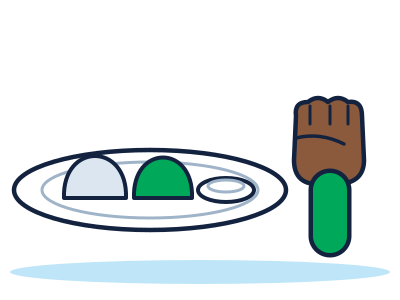
Children's portions are much smaller than adults'. A rough guide for a toddler or young child is a portion about the size of their own fist for each part of the meal — a fist of yam, rice or swallow, a fist of beans or vegetables, and a smaller piece of fish, egg or meat. Serve small amounts and let them ask for more. A full adult plate is overwhelming and leads to waste and worry.
Checking Growth
The clearest answer to "is my child eating enough?" is the growth chart. Your child's health card has a chart for weight, and clinics plot height too, against the World Health Organization child growth standards. A child whose weight and height follow a steady curve is getting enough food, however little they seem to eat. Take the card to every clinic visit, and ask the nurse to show you your child's curve.
A child who is small but growing steadily along a lower line is often simply small, like their parents. What matters most is a child who crosses down through lines, stops gaining, or loses weight.
When It Is More Than Picky Eating
A small number of children have a feeding problem that needs help, not patience alone.
Come In Now
Emergency department, straight away
- Choking or breathing difficulty after eating or drinking
- Unable to swallow saliva, or drooling and distressed
- Refusing all drinks, with no wee for 12 hours, or very sleepy
- Vomiting green fluid or blood
See a Doctor Soon
Book an appointment in the next week or two
- Drinking little, with no wee for 8 hours: see a doctor today
- Losing weight, not gaining, or dropping across growth chart lines
- Eats fewer than about 20 foods, and the list is shrinking
- Gags, vomits or panics with lumpy food or new textures
- Coughs or chokes often while eating or drinking
- Seems to have pain with eating, frequent vomiting, diarrhoea or hard stools
- Still only eating smooth food after about 12 months
- Meals are extremely distressing for the child or the family
- Also has delays in speech, movement or play
Usually Normal
Keep going with calm family meals
- Growing along their curve
- Eats some foods from most food groups
- Appetite goes up and down
- Prefers familiar foods
- Energetic and playing normally
At Limi, our nutrition and feeding support checks your child's growth and makes a plan with you. When eating difficulties come with developmental concerns, sensory sensitivities or autism, our developmental team — including speech and language therapists, who treat problems with chewing and swallowing — assesses your child. If your child is not yet talking, see our speech and language guide.
Do not buy "appetite stimulant" syrups or tonics from a chemist. They do not treat the cause, some contain medicines with side effects, and a child who needs help should be examined.
Iron, Worms and Vitamin A
Iron deficiency is common in young children in Nigeria, and it can itself reduce appetite. Signs include pale skin, inner eyelids and palms, tiredness, irritability, frequent infections, and eating non-food things such as soil, chalk, sand or ice. If you notice these, see a doctor: a simple blood test can check for anaemia, and there are other causes, such as malaria and sickle cell disease, to think about. Iron-rich foods include liver, meat, fish, crayfish, eggs, beans and dark green leaves such as ugwu. Do not give iron tonics without a test and advice.
Worms such as roundworm and hookworm are common where children play outside, and can cause tummy aches, poor appetite and anaemia. The World Health Organization recommends regular deworming for children from 12 months of age in areas where worms are common, and Nigeria gives it through national programmes, often together with vitamin A, during Maternal, Newborn and Child Health weeks and at clinics. Ask at your child's clinic whether your child is due. Handwashing with soap, wearing shoes outside, and clean water help prevent worms.
A Week of Ideas
Examples for a toddler eating with the family. Take the child's food out before adding hot pepper and seasoning cubes, and keep salt low. Breastfeeding can continue alongside.
| Day | Breakfast | Lunch | Supper | Snacks |
|---|---|---|---|---|
| Monday | Pap with groundnut paste and milk | Beans and ripe plantain | Yam with egg sauce | Banana; boiled egg |
| Tuesday | Boiled egg and bread | Jollof rice with fish and vegetables | Eba or semovita with egusi and ugwu | Pawpaw; groundnut paste on bread |
| Wednesday | Moi moi and pap | Yam porridge with fish | Rice and beans with stew | Orange; yoghurt |
| Thursday | Oats or custard with milk | Boiled plantain with vegetable sauce | Amala with ewedu and fish | Mango; boiled egg |
| Friday | Akamu with soya flour | Spaghetti with minced meat and carrots | Sweet potato with beans | Watermelon; roasted plantain |
| Saturday | Fried egg with yam | Tuwo with miyan kuka or okra soup | Rice with chicken stew and liver | Pineapple; moi moi |
| Sunday | Pap and akara | Family rice and stew, vegetables | Pepper soup (mild) with yam | Guava; groundnut paste |
Offer water with meals. If your child rejects the main dish, they can fill up on the other parts of the meal; you do not need to cook something else.
Questions Parents Ask
Everyone says my child is too thin. Should I worry?
Look at the growth chart, not the comments. A child who is active and growing along their own curve is healthy, even if slim. If the weight curve is flattening or dropping, see a doctor.
My child will only eat rice and instant noodles. What do I do?
Keep serving family meals that include one food they accept, alongside small amounts of others, and stop offering the favourite on demand between meals. Instant noodles are high in salt; use them rarely and without the whole seasoning sachet. If the list of accepted foods is very short, or your child is losing weight, see a doctor.
Should I give vitamins or an appetite tonic?
Most children who eat a varied diet do not need them, except the vitamin A and deworming given through national programmes. Appetite tonics are not recommended. If you are worried, have your child examined; the doctor tells you whether a specific supplement is needed.
My child eats well for the nanny but not for me.
This is common, and not a failure on your part. Children often test limits with parents. Check the nanny is not using force or distraction with a phone, and agree on the same calm routine.
My child brings the school lunch home uneaten.
Pack smaller portions of familiar food that is easy to eat, check they have enough time to eat, and ask the teacher what happens at lunch. A good breakfast and an after-school snack help.
Is it all right for my child to have sweets at all?
An occasional treat is fine, served after a meal rather than between meals, and followed by brushing teeth before bed. Avoid using sweets as rewards. See our guide to children's teeth.
Sources
- World Health Organization. WHO guideline for complementary feeding of infants and young children 6–23 months of age. 2023.
- World Health Organization. WHO child growth standards. 2006.
- World Health Organization. Guideline: preventive chemotherapy to control soil-transmitted helminth infections in at-risk population groups. 2017.
- American Academy of Pediatrics. Caring for your baby and young child: birth to age 5. 7th edition, 2019.
- National Institute for Health and Care Excellence. Faltering growth: recognition and management of faltering growth in children (NG75). 2017.
- Goday PS and others. Pediatric feeding disorder: consensus definition and conceptual framework. Journal of Pediatric Gastroenterology and Nutrition, 2019.
- National Population Commission and ICF. Nigeria Demographic and Health Survey 2018. 2019.
Written for parents and carers in NigeriaClinically reviewed by Limi Children’s Hospital cliniciansLast updated September 2026Next review due September 2027