
If You Remember Nothing Else
- A temperature of 38 °C or more is an emergency in sickle cell disease. Come to Limi Children's Hospital now, day or night, even if your child seems well. If you cannot get here quickly, go to the nearest emergency department.
- Fast breathing, chest pain, sudden weakness, a big tummy with pale skin, or a painful erection: come in now. These can become dangerous within hours.
- Water, warmth and rest prevent many crises. Send a water bottle everywhere, especially in the heat and the harmattan.
- Give the daily medicines exactly as prescribed — usually penicillin, folic acid and malaria prevention — and keep every vaccine up to date.
- Ask the haematology team about hydroxyurea. Many children benefit from it, and it can reduce pain, chest crises and hospital stays.
- Sickle cell is inherited, not a curse and not contagious. Children with it can study, play, work and live full lives.
Emergencies That Cannot Wait
Children with sickle cell disease can become seriously ill quickly because their spleen does not protect them from infection well and their red cells can block blood vessels. If your child has any one of these, come to Limi Children's Hospital now, day or night. If you cannot get here quickly, go to the nearest emergency department. Tell the staff straight away that your child has sickle cell disease. Have someone else drive if you can, so you can watch your child, and call 0813 408 5400 on the way so the team can prepare.
Come In Now
Emergency department, straight away
- Temperature 38 °C or more
- Fast or difficult breathing, chest pain, or a new cough with pain (acute chest syndrome)
- Sudden weakness of an arm or leg, a drooping face, slurred or muddled speech, a fit, a very bad headache, or sudden change in vision (possible stroke)
- Very pale, weak or tired, especially with a swollen or tight tummy on the left side (the spleen trapping blood)
- A painful erection lasting more than 2 hours (priapism)
- Severe pain not controlled by the home plan
- Repeated vomiting, or unable to drink
- Unusually sleepy or hard to wake
See a Doctor Today
Same day, not tomorrow
- Pain that needs the home plan for more than a day or is slowly getting worse
- Eyes more yellow than usual, or dark urine
- Swollen, painful hands or feet in a baby or toddler
- Diarrhoea or poor drinking
- A painful erection that went away but keeps coming back
Usually Fine at Home
Follow your child's plan and call if unsure
- Mild pain that settles with rest, fluids, warmth and the medicines on the plan
- Slightly yellow eyes that are usual for your child
- Tiredness after a busy day that improves with rest
Why a Fever Is Urgent
Most children with sickle cell disease lose the use of their spleen in the first years of life. The spleen normally filters bacteria from the blood, so without it a simple-looking fever can become a blood infection in hours. Do not give paracetamol and wait. Take the temperature, and if it is 38 °C or more, go in. The team takes blood tests and gives antibiotics quickly.
What Sickle Cell Disease Is
Red blood cells carry oxygen around the body. They are normally round, soft and flexible, so they squeeze through the smallest blood vessels. In sickle cell disease, the child has a different type of haemoglobin (the oxygen-carrying substance inside red cells), called haemoglobin S. When the cells give up their oxygen, the haemoglobin S clumps together and the cells become stiff and curved like a sickle.
Sickled cells cause two main problems. They break down early, so the child is usually a little anaemic and may have yellowish eyes. And they get stuck in small blood vessels, blocking blood flow. That blockage is what causes pain crises and damage to organs such as the lungs, brain, spleen, kidneys and bones.
Sickle cell disease is lifelong, but it is very variable. Some children have few problems; others have frequent crises. Good care from early life makes a large difference.
Genotype: AA, AS, SS and SC
Everyone inherits two haemoglobin genes, one from each parent. The pair is your genotype.
- AA
- Two usual genes. No sickle cell disease and no trait.
- AS
- Sickle cell trait, sometimes called being a carrier. One usual gene and one sickle gene. People with AS are healthy and do not have the disease, but can pass the S gene to their children.
- SS
- Sickle cell anaemia, the most common and often the more severe type of sickle cell disease.
- SC
- One sickle gene and one haemoglobin C gene. This is also sickle cell disease. It is often milder, but can still cause crises, eye problems and the same emergencies.
When both parents are AS, each pregnancy has the same chances, whatever happened in earlier pregnancies:
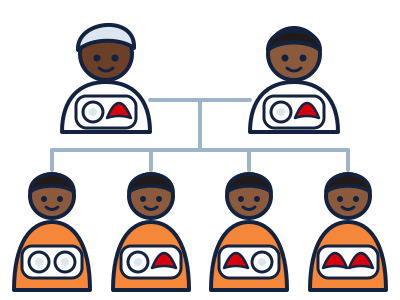
"1 in 4" is a chance for each pregnancy, not a pattern across the family. Parents who are both AS can have several children with SS, or none. If one parent is AS and the other is AA, no child will have sickle cell anaemia, though each has a 1 in 2 chance of being AS. If one parent is AS and the other AC, each child has a 1 in 4 chance of SC.
Testing Before Marriage or Pregnancy
Many couples in Nigeria check their genotype before marriage, and churches and mosques often encourage it. Knowing your genotype is useful information, not a judgement on anyone. Couples who are both carriers have choices, and a doctor or genetic counsellor can explain them privately and respectfully, including testing during pregnancy. Use a reliable laboratory: a haemoglobin electrophoresis or HPLC test, and repeat it if results disagree, because errors do happen.
Newborn Screening and Early Diagnosis
A blood test soon after birth can show whether a baby has sickle cell disease, long before any symptoms. Babies diagnosed early can start penicillin and vaccines in time, and families learn the warning signs before the first emergency. Newborn screening is not yet routine everywhere in Nigeria, so if either parent is AS, SC or SS, or you do not know, ask for your baby to be tested. Symptoms usually begin after about 6 months, often as painful, swollen hands and feet (dactylitis), paleness or repeated infections.
The Daily Plan That Prevents Problems
Every child with sickle cell disease should be under a haematology or specialist paediatric team, with regular clinic visits even when well. The plan usually includes these, always as prescribed for your child:
- Penicillin every day, usually from diagnosis in infancy until at least 5 years of age, to prevent pneumococcal infection. Never stop it early without asking the team.
- Folic acid, which helps the body make new red cells.
- Malaria prevention. Malaria can trigger severe crises and anaemia. Everyone should sleep under an insecticide-treated net every night, and most children take a regular antimalarial medicine as prescribed. Test every fever for malaria at the hospital. A fever is still urgent when the malaria test is negative.
- All routine vaccines, plus extras. Pneumococcal vaccines (including an extra one from 2 years), Hib, meningococcal vaccine, a yearly flu vaccine where available, and typhoid vaccine where advised. Check our vaccine schedule and ask the team which extras your child needs.
- Hydroxyurea (also called hydroxycarbamide). This medicine helps the body make more fetal haemoglobin, which stops cells sickling as easily. Studies, including large ones in African children, found fewer pain crises, fewer chest crises, fewer transfusions and fewer hospital stays. International guidance now recommends offering it to children with sickle cell anaemia from about 9 months of age. It needs regular blood tests. Ask the haematology team whether it is right for your child.
- Stroke screening with a transcranial Doppler scan. This painless ultrasound of the head measures blood flow in the brain. From age 2 to 16 years, it is recommended every year for children with SS. If the flow is fast, treatment can greatly reduce the chance of a stroke.
- Regular checks of blood count, growth, kidneys, eyes (especially in SC), hearing, school progress and teeth.
Learn to feel your child's spleen. The team shows you how to check the left side of the tummy, so you can tell if it suddenly becomes bigger.
What Triggers a Crisis
Crises sometimes come without warning, but these make sickling more likely. Reducing them is part of the daily plan.
| Trigger | What helps |
|---|---|
| Dehydration | Water through the day, more in the heat, with fever, diarrhoea or exercise. Pale urine is the goal. A child needs their own water bottle at school. |
| Cold | Wear layers in the harmattan mornings and in air-conditioned rooms. Dry off quickly after swimming or rain. Avoid very cold water and jumping into cold pools. |
| Infection, including malaria | Nets, vaccines, daily penicillin, hand washing, and quick treatment of every fever at hospital. |
| Exhaustion | Plan rest breaks. Sport is good, but stop to drink and rest; avoid pushing to extremes. |
| Heat | Shade, fluids and rest in the hottest part of the day. |
| High altitude and air travel | Low oxygen can trigger sickling. Before flying or trips to high places such as the Jos or Obudu plateaus, ask the team for advice, and pack medicines, water and warm layers. |
A Pain Crisis at Home
A pain crisis happens when sickled cells block blood flow to the bones, joints, back, chest or tummy. The pain can be mild or very severe. Babies and toddlers may cry, refuse to walk or use a limb, or have swollen hands and feet. Older children can usually tell you where it hurts; a pain scale of 0 to 10 helps you and the team judge whether it is getting better.
Ask the team for a written home pain plan. It usually includes:
- Start early. Give the pain medicine on your child's plan as soon as pain begins, in the dose on the plan or the pack for their age, measured with the syringe or spoon provided.
- Give plenty to drink. Water, oral rehydration solution, soups and fruit juice all count.
- Keep them warm and comfortable. Warm (never hot) compresses or a warm bath can help, and gentle massage. Never use cold packs or ice.
- Rest and distraction. Films, stories, music, games and company help.
- Check the temperature and breathing regularly. Fever, fast breathing or chest pain mean come in now.
- Come in if the pain is not controlled, is getting worse, is in the chest or tummy, or you are worried.
Medicines to Avoid
Do not give aspirin to children. Do not give codeine to children. Do not give "strong painkillers", injections or herbal mixtures from a chemist or neighbour. If the pain plan is not enough, your child needs to be assessed — in hospital the team gives stronger pain relief safely, with monitoring.
School and Teachers
Share this page with your child's teacher. Children with sickle cell disease can and should go to school and take part. A few adjustments help them stay well:
- Allow a water bottle in class and free toilet trips — drinking a lot means weeing a lot.
- Let them rest when tired, and stay inside in very hot or cold weather.
- Avoid extremes in sport: they can take part, with breaks to drink and rest, and without punishment for stopping.
- Know the emergency signs above, and call the parents straight away if the child has a fever, chest pain, weakness or severe pain.
- Support learning after absences. Share work, and tell the parents if concentration or learning seems to be changing, as this can be a sign of silent brain injury the team can check.
Our starting school checklist and page for schools have more.
Feelings, Stigma and Myths
Living with pain, hospital visits and missed school is hard. Children may feel different, anxious or low, and siblings can feel left out. Parents, especially mothers, are sometimes blamed by relatives. Talk openly with your child about the condition in words they understand, and let older children speak to the team themselves. Ask the care team about support groups for families and young people with sickle cell. If your child seems withdrawn, sad or is struggling at school, tell the team — emotional support is part of care.
Sickle cell is a curse, a punishment, or a sign the child is ogbanje or abiku.
Sickle cell disease is inherited through genes from both parents. It is nobody's fault, and it has nothing to do with spirits or curses. Rituals and marks on the skin can cause infection and delay treatment.
You can catch sickle cell from someone who has it.
It is not contagious. Friends, classmates and relatives cannot catch it by touching, sharing food or playing.
Children with sickle cell do not live to grow up.
With early diagnosis, prevention and good care, children with sickle cell disease grow into adults; where this care is routine, the great majority do. People with sickle cell go to university, work, marry and have families.
Herbal mixtures or special diets can cure sickle cell.
No herb or diet cures it. A balanced diet and plenty of fluids help health overall. Some remedies can harm the liver and kidneys. Tell the team about anything your child takes.
The mother is to blame.
Both parents pass on a gene. Neither chooses it, and neither is to blame.
Cure and New Treatments
A bone marrow (stem cell) transplant from a well-matched donor, usually a brother or sister who does not have sickle cell disease, can cure it. It carries real risks and is not suitable for every child, and it is only offered at specialist centres. Gene therapies have been approved in some countries, but are very limited in availability. Other new medicines are being studied. To find out whether any of these is an option for your child, ask the haematology team. They explain the benefits, risks and practical steps honestly. Beware of anyone who promises a cure for money.
Our paediatric haematology service cares for children with sickle cell disease, backed by emergency assessment and inpatient care day and night. Book regular clinic follow-up, and ask the team about hydroxyurea and a written plan for emergencies.
Questions Parents Ask
Why are my child's eyes yellow?
Red cells in sickle cell disease break down faster than usual, and this releases a yellow pigment. Many children always have slightly yellow eyes, and it is not dangerous by itself. More yellow than usual, dark urine, or yellow with paleness and tiredness needs checking the same day.
Will my child need blood transfusions?
Some children never need one. Transfusions are used for severe anaemia, some crises such as acute chest syndrome or a trapped spleen, before some operations, and regularly for children at high risk of stroke. The team explains why each time.
Should I give iron tablets or blood tonics for the anaemia?
Not unless the team has tested for iron deficiency and prescribed it. The anaemia in sickle cell disease is usually not caused by lack of iron, and children who have had transfusions can build up too much iron.
Can my child do sport and swim?
Yes, with sensible care: plenty to drink, rest breaks, no pushing to exhaustion, and getting warm and dry quickly after swimming. Being active is good for bones, mood and friendships.
My child needs an operation. Is that safe?
Operations can be done safely with planning. Tell every doctor and dentist about the sickle cell. Before the operation, the team checks the blood count, gives fluids, keeps your child warm and, when needed, gives a transfusion. See preparing for surgery.
My child is AS. Do they need treatment?
No. Sickle cell trait is not a disease, and most people with AS never have symptoms. They should drink plenty during very hard exercise and heat, and it is useful for them to know their genotype when they plan a family.
Sources
- National Heart, Lung, and Blood Institute. Evidence-Based Management of Sickle Cell Disease: Expert Panel Report. 2014.
- Federal Ministry of Health, Nigeria. National Guideline for the Control and Management of Sickle Cell Disease. 2014.
- World Health Organization. Sickle-cell anaemia: report by the Secretariat (A59/9). 2006.
- National Institute for Health and Care Excellence. Sickle cell disease: managing acute painful episodes in hospital (CG143). 2012.
- Tshilolo L and others. Hydroxyurea for children with sickle cell anemia in sub-Saharan Africa (REACH). New England Journal of Medicine, 2019.
- DeBaun MR and others. American Society of Hematology 2020 guidelines for sickle cell disease: prevention, diagnosis, and treatment of cerebrovascular disease. Blood Advances, 2020.
- Piel FB and others. Global epidemiology of sickle haemoglobin in neonates. The Lancet, 2013.
Written for parents and carers in NigeriaClinically reviewed by Limi Children’s Hospital cliniciansLast updated September 2026Next review due September 2027