
If You Remember Nothing Else
- Teething does not cause a fever of 38 °C or more, diarrhoea or a rash. If your baby has these, look for another cause and see a doctor.
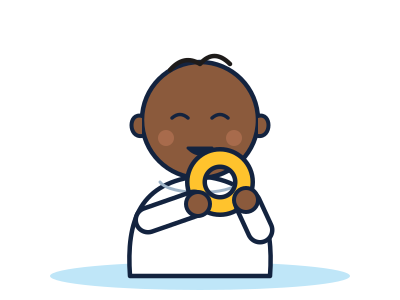
- Use a chilled teething ring or a clean finger to rub the gums. No teething powders, mixtures, gels, necklaces or cutting of gums.
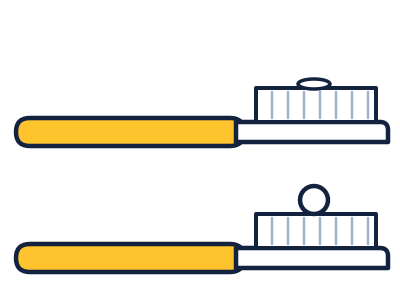
- Brush twice a day with fluoride toothpaste from the first tooth: a smear the size of a grain of rice under 3, a pea-sized amount from 3 to 6.
- No bottle in bed, and no sweet drinks in a bottle. Water and milk are the drinks for teeth.
- A knocked-out adult tooth is an emergency: hold it by the white part, put it back or keep it in milk, and see a dentist within the hour. Never put a baby tooth back.
What Teething Does, and Does Not, Cause
Most babies get their first tooth, usually a lower front tooth, at around six months, though anywhere from four to twelve months is normal, and a few are born with one. All 20 baby teeth are usually through by about two and a half to three years.
While a tooth is coming through, a baby may:
- dribble more, and have a red cheek or rash on the chin from the dribble
- chew and gnaw on fingers and toys
- rub the gums or ear on the same side
- be fussier and sleep less well for a few days
- have red, swollen gums where the tooth is coming
- have a slightly raised temperature, under 38 °C
Teething does not cause a fever of 38 °C or more, diarrhoea, vomiting, a body rash, a cough, or a baby who is floppy, drowsy or refusing all feeds. When these are blamed on teething, real illnesses such as malaria, pneumonia, urinary infection or gastroenteritis can be missed. Babies start teething at the same age they start picking up infections, which is why the two get confused. If your baby has a fever, use our fever checker and see a doctor.
Safe Teething Relief
- A teething ring or toy chilled in the fridge, not the freezer. Frozen rings can hurt the gums.
- Rub the gums gently with a clean finger.
- Something cool to chew: a clean, damp cloth chilled in the fridge, held while you watch. Avoid hard raw foods such as carrot, which can break off and be choked on.
- Wipe away dribble gently and often, and use a little barrier cream or petroleum jelly on the chin to protect the skin.
- Comfort and cuddles. Extra breastfeeds are soothing too.
If your baby is very uncomfortable, ask a pharmacist or doctor about a pain medicine suitable for your baby's age. Use the dose on the pack for your child's age, measured with the syringe or spoon that comes with it, and never give aspirin to a child.
Teething Remedies to Avoid
Teething Mixtures Have Killed Children in Nigeria
In 2008 and 2009, dozens of Nigerian children died after being given a teething mixture that had been contaminated with diethylene glycol, a poisonous industrial chemical. NAFDAC withdrew it. Teething powders, mixtures and syrups of unknown content are still sold in markets and chemists. They are not needed, and they can hide or cause serious illness.
Give a teething powder or mixture from the chemist or market.
Teething does not need medicine. Mixtures of unknown content can poison children, and some contain sedatives.
Rub a numbing teething gel on the gums.
Gels containing benzocaine can cause a dangerous blood problem in young children. Regulators advise against numbing gels for teething.
Put an amber or bead necklace, or a string with charms, around the baby's neck or wrist.
They do not ease teething, and they can strangle a baby or break and be choked on. Keep necklaces and strings off babies, including at night.
Cut or scratch the gums, or rub them with herbs, salt, alcohol or kerosene, to let the tooth out.
Cutting the gums causes bleeding and infection. Alcohol and kerosene are poisonous. The tooth will come through on its own.
Diarrhoea and fever mean the teeth are coming.
They mean the baby may be ill. See a doctor, and give extra fluids for diarrhoea.
Cleaning Gums and First Teeth
Before the first tooth, wipe your baby's gums once a day with a clean, damp cloth wrapped around your finger. It gets your baby used to having their mouth cleaned.
From the first tooth, brush twice a day: last thing at night, after the final feed or drink, and at one other time. Use a small, soft toothbrush made for babies and a fluoride toothpaste. Parents need to brush for their children until about seven or eight, and check afterwards until the child can do it well — a young child does not yet have the hand control to clean every tooth.
How Much Toothpaste
| Age | Amount of fluoride toothpaste |
|---|---|
| First tooth to 3 years | A thin smear, no bigger than a grain of rice |
| 3 to 6 years | A pea-sized amount |
| Over 6 years | A pea-sized amount, or a little more for older children |
Fluoride makes teeth stronger and helps stop decay. Using the right amount is safe even if a young child swallows some. Choose a toothpaste that lists fluoride on the pack, and keep the tube out of reach so children do not eat it. After brushing, spit out, but do not rinse with water, so the fluoride stays on the teeth.
How to Brush
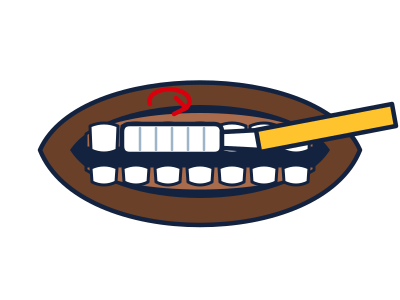
- Find a position where you can see. Sit your baby on your lap facing away, head resting against you, or stand behind an older child and tip the head back slightly.
- Lift the lip. Decay often starts at the top front teeth, near the gum. Look for white or brown marks.
- Aim the bristles at the gum line and brush in small circles, a few teeth at a time.
- Brush every surface: outside, inside and the chewing surfaces of the back teeth.
- Take about two minutes, then spit out, but do not rinse.
Make it part of the routine, like a bath. Singing a song, taking turns, or letting your child brush your teeth first all help with a toddler who resists.
Sugar, Bottles and Tooth Decay
Tooth decay is caused by sugar feeding the germs on teeth. It is not only about how much sugar, but how often: every sip of a sweet drink starts an acid attack that can last up to an hour. Decay in young children can cause pain, infection and abscesses, and can mean teeth need to be taken out under anaesthetic.
- No bottle in bed. Milk or sweet drinks pooling around the teeth during sleep cause rapid decay of the front teeth.
- Move from a bottle to an open cup from six months, and aim to stop bottles by about one year.
- Water and milk are the drinks for teeth. Juice, malt drinks, soft drinks, sweetened zobo, kunu with added sugar, and flavoured milk cause decay.
- Keep sweet foods to mealtimes, not snacks. Sweets, biscuits, chin chin, puff puff and sugary cereals between meals do the most harm.
- No sugar or honey on dummies, and no sweetened medicines left in the mouth; ask the pharmacist for sugar-free medicines.
- Brush before the last sleep. If your baby breastfeeds at night after teeth have come, clean the teeth before bed, and speak to the dentist about night feeds if you see early decay.
The First Dental Visit
Children should see a dentist when the first tooth appears, or by their first birthday, and then every six months to a year as the dentist advises. The first visit is short and gentle: the dentist looks at the teeth and gums, often with the baby on your lap, checks for early decay, shows you how to brush, and may paint a fluoride varnish on the teeth. Early visits help children feel relaxed at the dentist, and find problems while they are small.
Book the first check with our paediatric dentistry team, which sees babies and children at Limi.
Knocked-Out and Broken Teeth
Falls and knocks to the mouth are common in toddlers learning to walk and in children playing sport. First, check for a head injury: see head injury first aid. Then look at the teeth. Knowing whether the tooth is a baby tooth or an adult tooth decides what you do. Adult front teeth usually come through from about six to eight years.
A Knocked-Out Adult (Permanent) Tooth — Act Within Minutes
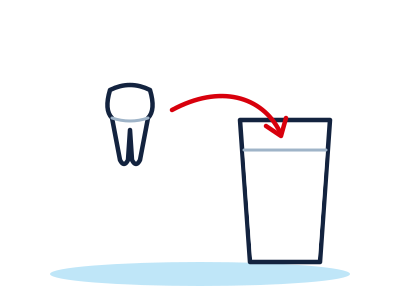
- Find the tooth and hold it by the crown, the white part you normally see. Do not touch the root.
- If it is dirty, rinse it briefly in milk or cold water, for no more than 10 seconds. Do not scrub it or wrap it in tissue.
- Put it back in the socket if the child is calm and old enough to cooperate, the right way round, and have them bite gently on a clean cloth to hold it.
- If you cannot put it back, put it in a cup of milk. Do not keep it in water, and do not let it dry out.
- Go to a dentist or emergency department now. The sooner, the better: ideally within the hour. Take the child's health card.
A Knocked-Out Baby Tooth
Do not put a baby tooth back. It can damage the adult tooth growing underneath. Press a clean, damp cloth on the gap to stop bleeding, and see a dentist the same day to check the other teeth and the gum.
Chipped, Broken, Loose or Pushed-in Teeth
Keep any broken piece in milk, and see a dentist the same day. A tooth that has been pushed up into the gum, or a tooth that changes colour to grey in the weeks after an injury, also needs to be checked.
When to Get Help
Come In Now
Dentist or emergency department, straight away
- A knocked-out adult tooth
- A mouth injury with a head injury, drowsiness or vomiting
- Swelling of the face spreading towards the eye or neck, with fever or difficulty swallowing
- Bleeding from the mouth that does not stop with 10 minutes of firm pressure
- Fever of 38 °C or more in a baby under 3 months, whatever the teeth are doing
See a Doctor or Dentist Today
Same day, not tomorrow
- A teething baby with fever of 38 °C or more, diarrhoea, vomiting or a rash
- A knocked-out baby tooth, or a chipped, loose or pushed-in tooth
- Toothache that keeps your child awake
- A swelling or pimple on the gum next to a tooth
- Your baby has been given a teething mixture or gel and seems unwell
Usually Fine at Home
Comfort, and brush as usual
- Dribbling, chewing and fussing
- Red, swollen gums where a tooth is coming
- A slightly raised temperature, under 38 °C
- A red chin from dribble
- A small bluish bubble on the gum before a tooth comes through
If your child has swallowed a teething mixture, medicine or toothpaste in large amounts, see poisoning first aid.
Questions Parents Ask
My baby is 11 months and has no teeth yet. Is something wrong?
Usually not; some babies are late teethers, and it often runs in families. Mention it at a well-baby check. If there are still no teeth by about 18 months, have a dentist or doctor check.
Why fuss about baby teeth if they fall out anyway?
Baby teeth are needed for eating, speaking and smiling for years, and they hold the space for the adult teeth. Decayed baby teeth hurt, can become infected, and early loss can make adult teeth come in crooked.
Can my child use a chewing stick instead of a toothbrush?
Chewing sticks are used by many Nigerian families and do clean teeth, but they do not give fluoride, and they are hard to use well in a young mouth. For children, a soft toothbrush and fluoride toothpaste is the recommended way.
My toddler's front teeth have brown marks. What are they?
Brown or white chalky marks near the gum on the top front teeth are often early decay. Early decay can sometimes be stopped with brushing, fluoride and fewer sweet drinks. Book a dental check soon.
My child grinds their teeth at night.
Grinding is common in young children and usually stops by itself. Mention it at the dental check if it continues or the teeth look worn.
Will thumb-sucking ruin my child's teeth?
Thumb-sucking and dummies are normal in young children. Most stop on their own. If the habit carries on as adult teeth arrive, it can push the teeth forward; the dentist shows you gentle ways to help your child stop.
Sources
- American Academy of Pediatrics. Clinical report: fluoride use in caries prevention in the primary care setting. 2014, updated 2020.
- American Academy of Pediatric Dentistry. Policy on early childhood caries (ECC): consequences and preventive strategies. Reference Manual, current edition.
- Public Health England. Delivering better oral health: an evidence-based toolkit for prevention. Updated 2021.
- Centers for Disease Control and Prevention. Fatal poisoning among young children from diethylene glycol-contaminated acetaminophen — Nigeria, 2008–2009. MMWR, 2009.
- US Food and Drug Administration. Risk of serious and potentially fatal blood disorder prompts FDA action on oral over-the-counter benzocaine products used for teething and mouth pain; and FDA warns against the use of teething necklaces, bracelets, and other jewelry marketed for relieving teething pain. 2018.
- International Association of Dental Traumatology. Guidelines for the management of traumatic dental injuries: avulsion of permanent teeth. 2020.
- World Health Organization. Guideline: sugars intake for adults and children. 2015.
Written for parents and carers in NigeriaClinically reviewed by Limi Children’s Hospital cliniciansLast updated September 2026Next review due September 2027