
If You Remember Nothing Else
- Make it safe, then shout for help. Do not become a second casualty. Never leave a child who is not breathing to look for help.
- Not responding and not breathing normally: start CPR. 5 rescue breaths, then 15 chest compressions to 2 breaths, pushing hard and fast.
- Burns: cool running water for 20 minutes. Never toothpaste, palm oil, egg or any oil.
- Poisoning: do not make the child vomit and give nothing by mouth. Take the container to hospital. A swallowed button battery is always an emergency.
- Fits: time it, nothing in the mouth, then lay the child on their side. Over 5 minutes, or a first fit, go to emergency.
- Dog, cat or monkey bite: wash for 15 minutes with soap and water and get rabies vaccination the same day.
- Reading is not training. Book a hands-on course and practise on a manikin.
The First Minute, in Any Emergency
- Make it safe. Switch off the power, turn off the gas, move the child away from fire, water or traffic — only if you can do so without putting yourself in danger.
- Check if the child responds. Speak loudly and tap them gently. Do not shake a baby.
- Shout for help. Call out to anyone nearby. Ask one person to phone for help and another to get transport ready. Put your own phone on loudspeaker so your hands stay free.
- Check breathing. If the child is not responding and not breathing normally, start CPR straight away.
- Come to Limi Children's Hospital now, day or night. If you cannot get here quickly, go to the nearest emergency department. Have someone else drive if you can, so you can watch your child, and call 0813 408 5400 or 0809 059 9995 on the way so the team can prepare.
Hands-on Training Is Better Than Reading
Nobody learns CPR from a web page. The steps here help you remember; the skill comes from practising on a training manikin, with an instructor who can check your hand position and how hard you press. Parents, grandparents, nannies, drivers and teachers can all learn. Ask the care team about first aid training, or find a baby and child first aid course run by a recognised first aid organisation, and repeat it every year or two.
Choking
A choking child goes quiet: they cannot cry, cough, talk or breathe, and may turn blue. If they are coughing hard, let them cough and stay with them. If not, act at once.
- Baby under 1: up to 5 back blows with the baby face down along your forearm, head lower than the chest; then turn the baby face up and give up to 5 chest thrusts with the heel of one hand on the lower half of the breastbone, just below the nipple line. Repeat.
- Child over 1: up to 5 back blows with the child leaning forward; then up to 5 tummy (abdominal) thrusts. Repeat.
- If the child stops responding, lay them on a firm surface, shout for help and start CPR.
Never sweep a finger blindly in the mouth, hold a child upside down by the feet, or give water. Every child who needed back blows or thrusts should see a doctor the same day. Read the full illustrated guide to choking.
Not Responding, Not Breathing Normally: CPR
CPR (cardiopulmonary resuscitation) keeps oxygen moving to the brain until the heart and lungs work again or help arrives. In children, the heart usually stops because breathing has failed — after choking, drowning, severe illness or injury — so rescue breaths matter more than they do for adults. This is the sequence in the European Resuscitation Council 2021 guidelines for children.
Recognise It
The child does not respond when you speak loudly and tap them, and is not breathing, or is only gasping. Occasional slow gasps are not normal breathing. Do not waste time feeling for a pulse.
What to Do
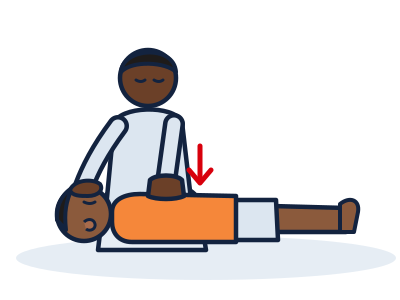
- Shout for help. Lay the child on their back on a firm, flat surface, such as the floor.
- Open the airway. For a baby, keep the head level (neutral) and lift the chin with a fingertip. For a child, put one hand on the forehead, tilt the head back gently and lift the chin with two fingers.
- Check breathing for no more than 10 seconds. Look for the chest moving, listen and feel for breath on your cheek.
- Give 5 rescue breaths. Baby: seal your mouth over the baby's mouth and nose. Child: pinch the nose and seal your mouth over theirs. Blow steadily for about 1 second, just enough to see the chest rise.
- Get help on the way. If someone is with you, they phone for help and arrange transport now. If you are alone with a phone, put it on loudspeaker. If you are alone without a phone, do 1 minute of CPR before you go for help.
- Give 15 chest compressions. Press on the lower half of the breastbone, at least one third of the depth of the chest (about 4 cm in a baby, 5 cm in a child), at 100 to 120 a minute — about two a second. Let the chest come fully back up after each push. Baby: both thumbs side by side on the lower half of the breastbone, with your hands wrapped around the chest; if you cannot reach round, use the heel of one hand. Child: the heel of one hand, arm straight and shoulder over the hand; use two hands for a big child. Courses differ a little on hand position. If you trained another way, do what you practised: pushing hard, fast and in the right place matters more than the exact technique.
- Then 2 rescue breaths, then 15 compressions, and keep repeating: 15 compressions, 2 breaths.
- Do not stop until the child starts breathing normally or moving, trained help takes over, or you are too exhausted to continue. If there are two of you, swap every two minutes.
- If you cannot give breaths, give continuous chest compressions. It is far better than doing nothing.
- If a defibrillator (AED) is available, switch it on and follow its spoken instructions. AEDs are safe for children.
- If the child starts breathing normally but does not wake, put them in the recovery position and keep checking their breathing until help arrives.
Head Injury
Bumps to the head are very common as babies learn to roll, toddlers learn to walk and children climb. Most are minor: a lump, a short cry and back to play. A few cause bleeding or swelling inside the skull, which shows in the child's behaviour over the following hours.
What to Do Now
- Comfort the child and look at them. Are they awake, crying normally and moving all their limbs?
- Hold something cold on the bump for up to 10 minutes: a cold pack or ice wrapped in a cloth, never ice directly on the skin.
- Stop any bleeding with firm pressure from a clean cloth. The scalp bleeds a lot even from small cuts.
- Watch closely for the next 24 hours, and keep an adult with the child. They can sleep if they are awake and behaving normally before bedtime; check that they are breathing normally, move and respond when you check on them.
Come In Now
Emergency department, straight away
- Knocked out, even briefly
- A fit after the injury
- Vomiting after the injury
- Unusually sleepy, confused, hard to wake, or not themselves
- Weakness, clumsiness, trouble walking, talking or seeing
- Clear fluid or blood from the nose or ears; bruising behind the ears or around both eyes
- A soft swelling or dent in the skull, or a bulging soft spot in a baby
- A fall from a height (a balcony, stairs, a tree), a road accident, or a hit from something heavy
See a Doctor Today
Same day
- Any bump or bruise on the head of a baby under 1
- A headache that does not go away
- Crying much more than usual, or more irritable
- A cut that is gaping or will not stop bleeding
- You are not sure how the injury happened
Usually Fine at Home
With an adult watching
- Cried straight away, then settled
- A lump or bruise but playing normally
- Eating, talking and walking as usual
Do not give sleeping medicine, rub the lump with hot water or herbs, or let the child go back to rough play or sport the same day. For pain, give children's paracetamol at the dose on the pack for your child's age, measured with the syringe that comes with it.
Poisoning
Young children explore with their mouths and copy adults. Most poisonings happen at home, with things that look like food or drink: medicines that look like sweets, and kerosene, petrol or bleach stored in soft-drink or water bottles.
What to Do Now
- Take whatever is left away from the child, and wipe or rinse anything left in their mouth. Wash any chemical off the skin with plenty of water.
- Do not make the child vomit. Vomiting can burn the food pipe twice, and kerosene or petrol can be breathed into the lungs as it comes up.
- Give nothing by mouth — not palm oil, milk, salt water, raw egg or herbal mixtures — unless a health worker tells you to.
- Take the container, packet or bottle with you, and work out how much may have gone and when.
- Come to Limi Children's Hospital now, even if the child seems well. Many poisons cause harm hours later. If you cannot get here quickly, go to the nearest emergency department.
Specific Poisons
- Medicines. Iron tablets, adult painkillers, heart and blood pressure medicines, diabetes tablets, antimalarials and sleeping tablets can be dangerous to a small child in small amounts. Go to emergency.
- Kerosene, petrol, diesel and lamp oil. Even a mouthful can be breathed into the lungs and cause a severe pneumonia. Watch for coughing, choking, fast breathing or drowsiness. Do not make them vomit. Go to emergency.
- Bleach, caustic soda, drain cleaner, battery acid and dishwasher products. These burn the mouth, throat and food pipe. Signs are drooling, pain on swallowing, vomiting or burns around the mouth. Rinse the lips and face with water. Go to emergency.
- Button batteries. A swallowed coin-sized battery can start to burn the food pipe within two hours. It is an emergency even if the child seems perfectly well. Go now, and bring the packet or device.
- Insecticides, rat poison and farm chemicals. Wash the skin and change the clothes. Go to emergency; some cause sweating, drooling, small pupils or twitching.
- Carbon monoxide from generators and charcoal stoves. Headache, dizziness, vomiting or sleepiness, often in several people in the house at once. Get everyone into fresh air, switch off the generator if it is safe, and go to emergency.
Snake bites and scorpion stings are covered under bites and stings. To prevent poisoning, see the home safety checklist.
Burns and Scalds
Most burns in young children are scalds from hot drinks, bath water, hot pap or soup, and cooking oil. Cooling the burn quickly with running water reduces pain, scarring and the depth of the burn — and it still helps up to 3 hours after the injury.
What to Do Now
- Stop the burning. Move the child away from the heat. If clothes are on fire: stop, drop to the ground and roll, or smother the flames with a heavy blanket or wrapper.
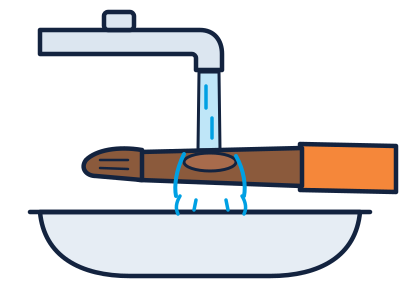
- Cool the burn under cool running tap water for 20 minutes. If there is no tap, pour clean water continuously from a jug or bucket. Not ice, and not iced water.
- Remove clothing, nappies, rings, bangles and waist beads near the burn, gently, while you cool. Leave anything that is stuck to the skin.
- Keep the rest of the child warm. Babies and small children get cold quickly. Wrap the parts you are not cooling in a dry cloth.
- Cover the burn loosely with cling film, laid on in strips rather than wrapped round. A clean plastic bag works for a hand or foot. If you have neither, use a clean, non-fluffy cloth.
- Give pain relief if needed: children's paracetamol at the dose on the pack for your child's age.
Put toothpaste, palm oil, groundnut oil, raw egg, honey, butter, pap or kerosene on the burn.
These hold the heat in, deepen the burn and carry infection. They also have to be scrubbed off in hospital, which hurts. Use only cool running water.
Burst the blisters so the water comes out.
Leave blisters alone. The skin over a blister protects the raw skin underneath from infection.
Use ice to cool it quickly.
Ice damages the skin further and can make a small child dangerously cold. Cool tap water is right.
Come In Now
Emergency department, after you start cooling
- Bigger than the child's own palm and fingers
- On the face, neck, hands, feet, genitals or over a joint
- White, brown, black, leathery or painless skin
- Going all the way round an arm, leg or the body
- Electrical or chemical burns
- Breathed in smoke or hot air: cough, hoarse voice, soot around the nose or mouth
- Any burn in a baby, or a child who is unwell or very drowsy
See a Doctor Today
Same day
- Any burn with blisters in a child under 5
- A burn that is still very painful after cooling
- You are not sure how deep it is
- Signs of infection in the following days: spreading redness, pus, fever
Usually Fine at Home
After 20 minutes of cooling
- A small red area with no blisters, smaller than a coin, in an older child
- Like mild sunburn: red and sore, skin not broken
Fits (Seizures)
A fit (convulsion or seizure) can be frightening to watch. The child may go stiff, jerk their arms and legs, roll their eyes, go blue around the lips or stop responding. The most common kind in young children is a febrile seizure: a fit brought on by a fever, usually between 6 months and 5 years. Most stop on their own within 5 minutes and do not harm the brain. But in Nigeria a fit with fever can also be a sign of severe malaria or meningitis, so a child who has a fit needs to be examined.
What to Do Now
- Stay calm and note the time. Use your phone's clock, or ask someone to record a short video — it helps the doctor.
- Keep the child safe. Lay them on the floor or a bed with nothing hard or sharp nearby. Put something soft under their head. Loosen tight clothing.
- Turn them on their side if you can, so saliva or vomit can drain out of the mouth.
- Do not hold them down or try to stop the jerking.
- When the jerking stops, put them in the recovery position (below) and stay with them until they are fully awake. They may be sleepy or confused for up to an hour.
Put a spoon, a finger, cloth or anything else in the mouth so they do not swallow their tongue.
Nobody can swallow their tongue. Objects in the mouth break teeth, cut the mouth and block breathing. Put nothing in the mouth.
Pour water on the face, put the child in a cold bath, or rub onion, urine, kerosene or palm oil on them.
These can cause choking, burns or dangerous cold, and delay getting help. Keep the child safe on their side, time the fit, and get help.
The Recovery Position
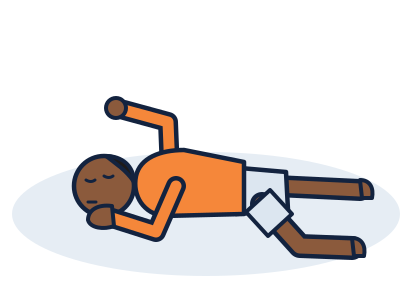
Use it for a child who is breathing normally but not fully awake — after a fit, or if they have fainted. It keeps the airway open and lets vomit or saliva drain out.
- Kneel beside the child, who is lying on their back. Put the arm nearest you out at a right angle, elbow bent, palm up.
- Bring the far arm across the chest and hold the back of that hand against the child's cheek nearest you.
- Bend the far knee up and, holding the knee and the hand at the cheek, roll the child towards you onto their side.
- Bend the top leg so the hip and knee are at right angles. This stops them rolling forward.
- Tilt the head back gently so the mouth points slightly down, and keep checking their breathing.
A baby can be held in your arms on their side, head a little lower than the body, facing down, so the airway stays clear.
Come In Now
Emergency department, straight away
- The fit lasts more than 5 minutes, or one fit follows another
- It is the child's first fit
- Any fit in a baby under 6 months
- Difficulty breathing, or blue lips that do not recover
- Not waking up properly within an hour
- Fever with a stiff neck, a rash that does not fade, or a bulging soft spot
- The fit happened after a head injury, a fall or a possible poisoning
See a Doctor Today
Same day, even if the child seems fine
- A short febrile seizure in a child who has had them before and is now awake and well
- The cause of the fever has not been found — ask for a malaria test
Afterwards at Home
Once a doctor has seen the child
- Nothing by mouth until fully awake
- Fever medicine makes the child comfortable but does not prevent another febrile seizure
If your child has epilepsy and a written seizure plan with a rescue medicine, follow the plan. Our fever checker helps you decide what to do about a fever.
Nosebleed
Nosebleeds are common in children, especially in the dry harmattan air, with colds, and from nose-picking. They look like a lot of blood but usually stop with the right pressure.
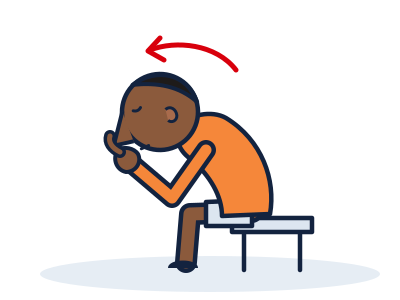
- Sit the child down and lean them forward, so blood runs out of the nose, not down the throat.
- Pinch the soft part of the nose, just below the hard bony bridge, closing both nostrils.
- Hold it for 10 minutes without letting go to check. Use a clock. The child breathes through their mouth and spits out any blood.
- If it is still bleeding, pinch for another 10 minutes. A cold cloth on the bridge of the nose can help.
- Afterwards, no nose-blowing, picking, hot drinks or rough play for the rest of the day.
Do not tilt the head back or lie the child down — the blood goes down the throat, which can cause vomiting or choking. Do not push cotton wool, paper or leaves up the nose.
Go to Emergency If
the bleeding has not stopped after 20 minutes of firm pinching; there is a lot of blood; the child is pale, dizzy or breathing fast; it followed a hard blow to the head or face; or the child has sickle cell disease, a bleeding problem or takes a blood-thinning medicine. See a doctor at a routine visit if nosebleeds happen often, or with easy bruising.
Cuts and Bleeding
- Press firmly on the wound with a clean cloth or gauze, for 10 minutes without lifting to check. Wear gloves or put a plastic bag over your hand if you have one.
- Raise the injured part above the level of the heart if you can.
- If blood soaks through, add more cloth on top and keep pressing. Do not remove the first layer.
- Once it has stopped, rinse the wound under clean running water, and cover it with a clean dressing or plaster.
- Leave anything stuck deep in the wound where it is — a nail, stick or glass — and press around it, not on it.
Do not put ash, coffee, powder, toothpaste, engine oil, cobweb or leaves on a wound. They cause infection and tetanus. Check that your child's tetanus vaccinations are up to date — see the vaccine schedule.
When a Cut Needs a Doctor
Go to emergency now, pressing on the way, if blood spurts or does not slow after 10 minutes of firm pressure, something is stuck in the wound, the wound is deep on the chest, tummy, neck or head, or the child is pale, sweaty or faint. See a doctor today for edges that gape open, cuts on the face, dirty wounds or rusty metal, any human or animal bite, numbness or trouble moving fingers or toes, or redness, pus or fever in the following days.
Bites and Stings
Dog, Cat and Monkey Bites: Think Rabies
Rabies is present in Nigeria, mostly spread by dogs. Once symptoms of rabies start it is almost always fatal, but it can be prevented completely with prompt wound washing and vaccination. Children are bitten more often than adults, and more often on the face and head.
- Wash the wound straight away with soap and running water for 15 minutes. This is the single most important step. Flush scratches and licks on broken skin in the same way.
- Apply an antiseptic such as povidone-iodine if you have it. Cover loosely. Do not stitch or seal it at home.
- Come to Limi the same day for rabies vaccination (post-exposure prophylaxis), or the nearest emergency department if you cannot get here quickly. Do not wait to see if the animal gets sick. Deep bites, bites to the head, face or hands, and bites from wild animals or bats may also need rabies immunoglobulin — ask the doctor.
- Find out about the animal if you safely can: whose it is, whether it is vaccinated, and whether it stays well over the next 10 days. Tell the doctor.
- Check tetanus vaccination and watch for infection: redness, swelling, pus or fever.
Do not put herbs, pepper, kerosene or hot oil on a bite, and do not wait for a traditional healer. Vaccinate your own dogs against rabies every year.
Snake Bites
In northern and central Nigeria the carpet viper causes most serious bites; its venom can cause bleeding and swelling. The treatment that works is antivenom, given in hospital. First aid is about keeping still and getting there quickly.
- Move the child away from the snake, calm them, and keep them as still as possible.
- Remove rings, bangles, anklets and tight clothing from the bitten limb before it swells.
- Keep the bitten limb still, with a splint or sling if you can, roughly at the level of the heart.
- Carry the child to transport rather than letting them walk, and come straight to Limi Children's Hospital, or the nearest emergency department if you cannot get here quickly. Call ahead to check that antivenom is available: Limi is on 0813 408 5400.
- Note the time of the bite and what the snake looked like. Do not try to catch or kill it.
Tie a tight band (tourniquet) above the bite.
Tourniquets can cut off the blood and cause the limb to be lost, and do not stop the venom. Do not tie anything tight.
Cut the bite, suck out the venom, or apply a black stone, herbs or hot oil.
None of these remove venom. Cutting causes bleeding and infection, especially after a carpet viper bite. They waste time that is needed to reach antivenom.
Give aspirin or ibuprofen for the pain.
These can make bleeding worse. Paracetamol at the dose on the pack is safer; the hospital will manage pain.
Scorpion Stings
Most scorpion stings cause sharp pain, tingling and swelling that settle within a day. Babies and young children are more likely to become seriously unwell.
- Wash the sting with soap and water and hold a cold cloth or wrapped ice on it for 10 minutes at a time.
- Keep the child still and calm, and give paracetamol for pain at the dose on the pack.
- Take a child under 5 to be seen the same day, even if they seem well at first.
Go to emergency now if the child has trouble breathing or swallowing, drools, vomits repeatedly, sweats heavily, has jerking or restless movements, unusual eye movements, or becomes drowsy.
Drowning
Drowning is quick and silent. A young child who slips face down into water does not splash or shout, and can drown in the time it takes to answer a phone. It happens in buckets, basins, water drums, baths, wells, fish ponds, gutters, pools and rivers — a few centimetres of water is enough.
- Get the child out of the water, without putting yourself in danger. Reach with a stick or rope, or throw something that floats, if you cannot stand safely.
- Check breathing. If they are not breathing normally, shout for help and start CPR with 5 rescue breaths. Rescue breaths matter most in drowning.
- Do not try to drain water out by holding the child upside down or pressing on the tummy. It wastes time and causes vomiting.
- If they vomit, turn them onto their side, clear the mouth, and carry on.
- Remove wet clothes and keep them warm once they are breathing.
Every Child Pulled from the Water Needs to Be Checked
Come to Limi Children's Hospital now if the child needed any rescue breaths or CPR, lost consciousness, or has a cough, fast or difficult breathing, vomiting, drowsiness or unusual behaviour. If you cannot get here quickly, go to the nearest emergency department. Water in the lungs can make breathing worse over the next few hours, even in a child who seemed fine.
Prevention matters most: empty buckets and basins after use, cover drums, wells and tanks, fence pools on all four sides, and never leave a young child alone near water, even for a moment. See the home safety checklist.
Electric Shock
- Do not touch the child while they are still in contact with the current. You will be shocked too.
- Switch off the power at the mains, the socket or the generator, or pull out the plug.
- If you cannot switch it off, stand on something dry such as a rubber mat, wooden board or thick pile of newspaper, and push the child or the wire away with something dry that does not conduct electricity: a wooden broom handle or wooden chair. Never use anything metal or wet.
- Check breathing. If they are not breathing normally, start CPR.
- Cool any burns with running water for 20 minutes once it is safe.
High-voltage lines — fallen power lines, transformers, or electricity poles — can kill from a distance. Stay well away, keep others back, and call the electricity company. Do not approach until the power has been cut.
Every child who has had an electric shock from mains power should be checked in an emergency department, even if they seem well. Electrical burns are often deeper than they look, and the shock can disturb the heart's rhythm.
Eye Injuries
Chemicals in the Eye
- Rinse straight away with clean, lukewarm running water for 15 to 20 minutes. Hold the eyelids open. Tilt the head so the water runs away from the other eye, from the nose side outwards.
- Remove contact lenses if the child wears them.
- Go to emergency, taking the container with you. Bleach, cement, lime, caustic soda and relaxers are especially damaging.
Do not put breast milk, urine, herbal drops, kerosene or anything else in the eye. Clean water only.
Something in the Eye
- Dust or an eyelash: stop the child rubbing. Rinse with clean water, or let them blink in a bowl of clean water. If it will not come out, or the eye stays red and painful, see a doctor today.
- Something stuck in the eye, or a cut to the eye: do not try to remove it or press on the eye. Cover it lightly with a paper cup or clean pad, keep the child still, and go to emergency.
- A blow to the eye: hold something cold against it, gently, for 10 minutes. Go to emergency if there is blood in the coloured part of the eye, blurred or double vision, severe pain, or the eye looks misshapen.
Broken Bones
A broken bone (fracture) is likely if the child falls and then has pain, swelling, bruising or refuses to use the arm or leg, or if the limb looks bent. In young children bones can bend and crack rather than snap, so the limb may look normal. If in doubt, it needs an X-ray.
- Keep the injured part still in the position you find it. Do not try to straighten it.
- Support it: an arm in a sling made from a wrapper or scarf; a leg padded with rolled cloth on either side.
- Hold a cold pack wrapped in cloth on the swelling for up to 10 minutes.
- Give nothing to eat or drink until a doctor has seen the child, in case they need an operation or sedation. Paracetamol at the dose on the pack can be given for pain, with a sip of water.
- Come to Limi Children's Hospital for an X-ray.
Take the child to a traditional bone setter, who will pull it straight and bind it tightly with sticks.
Tight binding can cut off the blood supply as the limb swells, which can lead to muscle damage, a deformed limb or even losing it. Get an X-ray first; the doctor treating the fracture explains every option.
Go to Emergency Straight Away If
the bone has come through the skin; the limb is very bent; the hand or foot below the injury is pale, cold, blue or numb; the thigh is injured; or the child may have hurt their neck or back. For a possible neck or back injury, do not move the child unless they are in danger — keep their head still in line with the body and wait for trained help.
Your First Aid Kit
Keep one kit at home and one in the car, somewhere every adult knows. Start with the essentials below; the full first aid kit checklist explains each item.
The Essentials
Sources
- Van de Voorde P, Turner NM, Djakow J, et al. European Resuscitation Council Guidelines 2021: Paediatric Life Support. Resuscitation. 2021;161:327–387.
- Zideman DA, Singletary EM, Borra V, et al. European Resuscitation Council Guidelines 2021: First aid. Resuscitation. 2021;161:270–290.
- Lott C, Truhlář A, Alfonzo A, et al. European Resuscitation Council Guidelines 2021: Cardiac arrest in special circumstances (drowning, electrocution). Resuscitation. 2021;161:152–219.
- International Federation of Red Cross and Red Crescent Societies. International First Aid, Resuscitation, and Education Guidelines 2020. Geneva: IFRC; 2020.
- American Heart Association and American Academy of Pediatrics. 2025 Guidelines for Cardiopulmonary Resuscitation and Emergency Cardiovascular Care: pediatric basic life support. Circulation. 2025.
- National Institute for Health and Care Excellence. Head injury: assessment and early management (NG232). 2023.
- World Health Organization. Rabies vaccines: WHO position paper. Weekly Epidemiological Record. 2018;93(16):201–220.
- World Health Organization Regional Office for Africa. Guidelines for the prevention and clinical management of snakebite in Africa. 2010.
- World Health Organization. Pocket book of hospital care for children (poisoning, burns, convulsions). 2nd edition, 2013.
- World Health Organization and UNICEF. World report on child injury prevention. 2008.
Written for parents and carers in NigeriaClinically reviewed by Limi Children’s Hospital cliniciansLast updated September 2026Next review due September 2027