

If You Remember Nothing Else
- Put your baby skin to skin and to the breast in the first hour. Colostrum, the first thick yellow milk, is the baby's first protection against infection.
- Feed often: 8 to 12 times in 24 hours, day and night, whenever the baby shows hunger. More feeding makes more milk.
- Pain that lasts through a feed means the latch needs fixing. Take the baby off gently and start again with a wider mouth.
- Count the nappies. From day 5, at least 6 heavy wet nappies and at least 2 yellow poos a day, and back to birth weight by 2 weeks.
- Nothing but breast milk for six months — no water, glucose water, pap, herbs or gripe water, even in the heat.
- A baby too sleepy or weak to feed needs to be seen now.
The First Hour and Colostrum
As soon as possible after birth, your baby should be dried and placed on your bare chest, with a cloth over both of you, and put to the breast within the first hour. Babies held skin to skin stay warmer, cry less, keep their blood sugar steadier and usually find the breast themselves. After a caesarean you can still do this; ask the midwife to help.
For the first two to three days your breasts make colostrum: thick, yellow or orange, and small in amount — a few teaspoons at a feed. That is exactly right. A newborn's stomach is about the size of a cherry on day one. Colostrum is rich in antibodies, gently clears the first dark poo (meconium), and so helps the baby clear the yellow pigment that causes jaundice. It is not "dirty" or "old" milk, and there is no need to squeeze it out and throw it away.
Between day two and four your milk "comes in": the breasts feel fuller and the milk becomes whiter and more plentiful. Frequent feeding in the first days makes this happen on time.
A Good Latch, Step by Step
The baby should take a big mouthful of breast, not just the nipple. The nipple then sits far back at the soft part of the roof of the mouth, where it is not squashed, so feeding does not hurt and the baby gets more milk. Before you start: sit comfortably with your back supported, and hold your baby close with the head, neck and body in a straight line, tummy towards you.


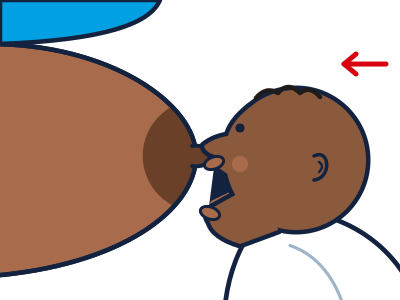

How a Good Feed Looks and Feels
- Sucking changes from quick little sucks to slow, deep sucks with pauses, and you can see or hear swallowing.
- It may pull or tingle for the first few seconds, but should not keep hurting. Pain all through a feed is not normal.
- The nipple comes out the same shape it went in — round, not flattened or with a white line across it.
- The baby comes off by themselves looking relaxed and sleepy, with open hands.
If it hurts, slide a clean little finger into the corner of the baby's mouth to break the suction, and try again.
Positions to Try
There is no single right position. What matters is that you are comfortable, the baby is close, and the latch is deep. A pillow or folded wrapper can take the baby's weight.




See our safe sleep guide before feeding lying down at night.
Is My Baby Getting Enough?
You cannot see how much milk goes in, so look at what comes out, and at the baby. These are the signs midwives use:
| Baby's age | Wet nappies in 24 hours | Poo |
|---|---|---|
| Day 1 to 2 | 1 to 2 or more | Black, sticky (meconium), at least 1 |
| Day 3 to 4 | 3 to 4 or more, getting heavier | Changing to green-brown, looser, at least 2 |
| Day 5 to 6 weeks | 6 or more heavy wet nappies, pale urine | Yellow, soft or runny, seedy, at least 2 the size of a large coin |
A heavy wet nappy feels like 3 to 4 tablespoons of water poured into a dry one. Other good signs:
- Weight. Losing some weight in the first days is normal — up to about a tenth of birth weight. Most babies are back to birth weight by 2 weeks. Ask for weighing at the day 3 to 5 check and at 2 weeks.
- Feeding pattern. 8 to 12 feeds in 24 hours, each lasting until the baby comes off by themselves. The baby wakes for most feeds.
After about 6 weeks, poos can become less frequent in a breastfed baby — some go several days without one and are well, as long as the poo is soft when it comes and the baby is feeding and wetting nappies.
Cluster Feeding and Growth Spurts
Many babies feed almost non-stop for a few hours, often in the evening, then sleep longer. This cluster feeding is normal, especially during growth spurts around 2 to 3 weeks, 6 weeks and 3 months. It does not mean your milk is "not enough"; keep offering the breast and supply rises within a day or two.
When to Get Help
Come In Now
Emergency department, straight away
- Baby too sleepy or weak to feed, or will not wake for feeds
- No wet nappy for 12 hours, or a sunken soft spot
- Temperature 38 °C or more in a baby under 3 months
- Yellow skin in the first 24 hours, or yellow with a baby who is very sleepy
- Vomiting green fluid, or vomiting every feed
- Breathing 60 or more times a minute, chest pulling in, grunting or blue lips
See a Doctor or Feeding Helper Today
Same day, not tomorrow
- No wet nappy for 8 hours, or fewer wet or dirty nappies than the table above
- Still losing weight after day 5, or not back to birth weight by 2 weeks
- Dark urine or orange-red crystals in the nappy after day 3
- Feeds always longer than an hour, or baby never seems satisfied
- Mother: a red, hot, painful area on the breast with fever or flu-like aches
- Mother: cracked or bleeding nipples that are not improving
Usually Normal
Keep feeding, and mention it at the next check
- Feeding every 1 to 3 hours, and more in the evening
- Some feeds short, some long
- Bringing up a little milk after feeds
- Breasts feel softer after the first few weeks
- A gentle pull at the start of a feed that eases
A mother with a breast problem, fever or pain should see her own doctor or maternity unit. Limi Children's Hospital cares for the baby: our nutrition and feeding support checks the latch, weighs your baby and helps you build your supply.
Sore Nipples, Full Breasts and Mastitis
Sore or Cracked Nipples
Tenderness in the first week is common. Pain that lasts through the feed, or nipples that crack or bleed, almost always mean the baby is not taking enough breast into the mouth, and fixing the latch is the treatment. Meanwhile, start on the less sore side and rub a few drops of milk onto the nipple after feeds. If the latch looks good and pain continues, ask for the baby's mouth to be checked for tongue tie and the nipple for thrush.
Engorgement: Hard, Swollen Breasts
When the milk comes in, or when feeds are missed, the breasts can become hard, tight, hot and painful, and the nipple flattens so the baby cannot latch. To help:
- Feed often, at least every 2 to 3 hours, and let the baby finish the first breast before offering the second.
- Soften the dark area first by hand-expressing a little milk, or pressing gently around the nipple with your fingertips for a minute, so the baby can latch.
- Cool cloths after feeds ease the swelling.
- Use light, gentle strokes towards the armpit, not deep, hard massage.
A Word About Hot Water on the Breasts
Many families are taught to press very hot towels or hot water on swollen breasts, or to massage them hard. We understand why — it comes from care. But very hot compresses can burn the skin, and heat and deep massage can make the swelling and bruising worse. Cool cloths, frequent feeding and gentle handling work better.
Blocked Ducts and Mastitis
A tender lump in one part of the breast is often a blocked duct and usually settles in a day or two with feeding as usual, cool cloths and gentle handling. Mastitis is inflammation of the breast: a red, hot, painful, swollen area, often with fever, chills and aches like the flu. Keep breastfeeding from that side — the milk is safe for your baby and stopping suddenly makes it worse. Rest, drink, and see a doctor the same day if you have a fever or are not better within 12 to 24 hours; you may need antibiotics, prescribed after an examination. A lump that stays hot and painful despite treatment may be an abscess and needs to be seen. If you feel very unwell, shivery, confused or have a racing heart, go to an emergency department now.
"I Don't Have Enough Milk"
This is the worry mothers share most, and usually the supply is fine. Soft breasts after the first weeks, frequent feeds and short feeds are not signs of low supply; the nappy and weight signs above are the real test. The more milk is removed, the more is made. When supply is truly low, the usual causes are infrequent feeds, a shallow latch, or water and other feeds replacing breastfeeds. A feeding assessment looks for the cause. Do not take medicines or herbs to "increase milk" without advice.
Expressing and Storing Milk
Expressing by hand costs nothing and needs no electricity. Pumps help if you are away from your baby every day.
- Wash your hands with soap and water. Use a clean, wide-mouthed cup or container, washed in hot soapy water and rinsed, or boiled.
- Help the milk flow. Sit comfortably, think about your baby, and stroke the breast gently towards the nipple.
- Place your thumb and fingers in a C shape about 2 to 3 cm back from the base of the nipple, thumb on top.
- Press back towards your chest, then squeeze gently and release. Keep a rhythm: press, squeeze, release. Do not slide your fingers along the skin.
- Move your fingers around the breast when the flow slows, then switch breasts. Expect only drops at first; it gets easier with practice.
How Long Expressed Milk Keeps
| Where | Freshly expressed milk |
|---|---|
| Room temperature (up to 25 °C) | Up to 4 hours. In a hot room, use it as soon as you can. |
| Cool box with frozen ice packs | Up to 24 hours, then use or move to a fridge |
| Fridge (4 °C or colder) | Up to 4 days, at the back, not in the door |
| Freezer | Best within 6 months; up to 12 months is acceptable |
| Thawed frozen milk | Use within 24 hours if kept in the fridge, or within 1 to 2 hours at room temperature. Never refreeze. |
| Left over after a feed | Use within 2 hours, then throw away |
Most homes in Abuja are warmer than 25 °C for much of the year, so plan for the heat. Label each container with the date and time, and use the oldest first.
- During power cuts, keep the fridge and freezer doors shut. If the power will be off for more than a few hours, move the milk into a cool box with frozen ice packs or bottles of frozen water.
- To warm milk, stand the container in a bowl of warm water. Never use a microwave or boil breast milk — it heats unevenly and destroys some of the protective parts.
Feeding Expressed Milk by Cup
A small open cup is easy to keep clean and lets the baby set the pace. Hold the baby upright, rest the rim on the lower lip, and tip it so the milk just touches the lips. Let the baby sip at their own pace; never pour milk into the mouth. A grandmother, nanny or crèche worker can learn this in minutes.
Going Back to Work
Many mothers in Nigeria return to work while the baby is young and carry on breastfeeding. It takes planning.
- Start expressing two to three weeks before you go back, once a day after a morning feed, to build a small store in the freezer and to let the carer practise cup feeding.
- Talk to your employer early. Ask for a clean, private place to express and somewhere cool to keep the milk. Nigerian labour law provides for nursing mothers to have breaks to feed during the working day; ask your human resources office what applies to you.
- At work, express about as often as the baby would feed — usually every 3 hours — and keep the milk in a fridge or a cool box with ice packs.
- Breastfeed whenever you are together: before you leave, as soon as you come home, at night and at weekends. This keeps your supply going.
Only Breast Milk for Six Months, Then Keep Going
For the first six months, breast milk gives a baby all the food and water they need, even in the dry season and harmattan. The World Health Organization, UNICEF and Nigeria's Federal Ministry of Health all recommend exclusive breastfeeding: nothing else to eat or drink, not even water, except medicines and vitamins a health worker has prescribed. Water, glucose water, pap, herbal mixtures and gripe water fill the small stomach so the baby feeds less, and can carry germs.
At six months, start other foods — see our guide to starting solids — and keep breastfeeding to two years or beyond. Breast milk still provides a large share of a young child's energy and protection in the second year.
HIV and Breastfeeding
If you are living with HIV, you can still breastfeed. World Health Organization and Nigerian guidance is that mothers on HIV treatment breastfeed exclusively for six months and continue as their clinic advises, taking their medicines every day, with the baby receiving the medicine and tests the clinic prescribes. Taken reliably, treatment makes passing HIV to the baby very unlikely. Talk to your antenatal or HIV clinic before the birth and at each visit. Your status is confidential.
If Your Baby Needs Formula
Some babies need formula. It is safe when prepared correctly, and dangerous when it is not.
- Use infant formula for babies under 12 months — not evaporated or condensed milk, powdered cow's milk, soy milk or pap.
- Wash and sterilise the feeding things. Wash in hot soapy water, then cover with water in a pot and bring to the boil, or use a steriliser.
- Boil fresh drinking water and let it cool for no more than 30 minutes, so it is still hot (at least 70 °C) when you add the powder. This kills germs that powder can carry.
- Measure exactly. Water first, then the number of level scoops on the tin, using only the scoop that comes with it. Never add extra water to make the tin last, and never add extra powder.
- Cool the feed quickly under running cold water, and test a few drops on your inner wrist: it should feel warm, not hot.
- Throw away any feed not used within 2 hours. Make each feed fresh.
Cup feeding is safer than bottles when cleaning them properly is hard. If you want to return to breastfeeding after giving formula, it is often possible — ask for help early.
Things People Say
The first yellow milk is dirty or stale. Squeeze it out and throw it away.
Colostrum is the most precious milk the baby will ever get: packed with antibodies that protect against infection. Give all of it.
In this heat the baby needs water.
Breast milk is almost all water. A breastfed baby under six months needs no water, even in the dry season. In hot weather, offer the breast more often.
Small breasts cannot make enough milk.
Breast size depends mainly on fat, not milk-making tissue. Women with small breasts make plenty of milk; what matters is frequent feeding and a good latch.
Questions Parents Ask
How long should each feed last?
Anything from 5 to 40 minutes can be normal. Let the baby finish the first breast, which gives them the richer milk at the end, then offer the second. Feeds that always last more than an hour are worth checking.
Can I breastfeed when I have malaria, a cold or diarrhoea?
Yes, in almost all cases. Your milk passes antibodies to the baby, and stopping suddenly can cause mastitis. Wash your hands often. Tell the doctor or pharmacist that you are breastfeeding when you are given any medicine, so they can choose one that is safe. Codeine is not recommended while breastfeeding. Avoid herbal mixtures, because their contents are unknown.
Will my baby bite when the teeth come?
A baby who is latched well cannot bite while sucking, because the tongue covers the lower gums. If your baby bites near the end of a feed, calmly break the suction and end the feed. Most babies learn quickly.
My baby is 18 months. Should I stop?
There is no need to stop at a set age. The World Health Organization recommends breastfeeding to two years or beyond, alongside family foods. When you do stop, drop one feed at a time over a few weeks, which is kinder to you and your child.
Sources
- World Health Organization and UNICEF. Implementation guidance: protecting, promoting and supporting breastfeeding in facilities providing maternity and newborn services — the revised Baby-friendly Hospital Initiative. 2018.
- World Health Organization. WHO recommendations on maternal and newborn care for a positive postnatal experience. 2022.
- World Health Organization. Guideline: updates on HIV and infant feeding. 2016.
- World Health Organization and FAO. Safe preparation, storage and handling of powdered infant formula: guidelines. 2007.
- Centers for Disease Control and Prevention. Proper storage and preparation of breast milk.
- Academy of Breastfeeding Medicine. Clinical Protocol #36: the mastitis spectrum. 2022.
- National Institute for Health and Care Excellence. Postnatal care (NG194). 2021.
- Federal Ministry of Health, Nigeria. National Policy on Infant and Young Child Feeding in Nigeria. 2010.
Written for parents and carers in NigeriaClinically reviewed by Limi Children’s Hospital cliniciansLast updated September 2026Next review due September 2027