
If You Remember Nothing Else
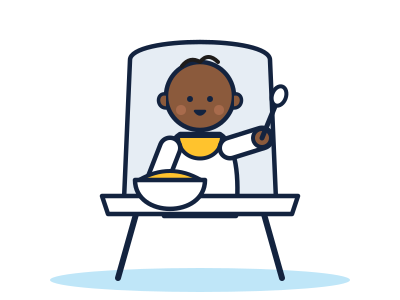
- Start at about six months, and keep breastfeeding to two years or beyond.
- Thick, not watery. Food should stay on the spoon. Thin pap fills the stomach with water.
- Add something from an animal every day if you can: egg, fish, crayfish, liver or meat, for iron.
- No salt, sugar, seasoning cubes, honey, tea or sweet drinks in the first year.
- Always sit your baby upright and stay with them while they eat. Never give whole groundnuts to a child under five.
- Let your baby decide how much. Offer, encourage, never force.
Why Six Months
For the first six months, breast milk (or infant formula) gives a baby everything they need. After that, a growing baby needs more energy, iron, zinc and vitamin A than milk alone can give. The World Health Organization and Nigeria's Federal Ministry of Health recommend starting other foods at six months, while carrying on breastfeeding.
Starting much earlier — as many families are advised to do with pap at a few weeks old — replaces breast milk with less nourishing food and raises the risk of diarrhoea. Starting much later than six months can leave a baby short of iron and slow to accept textures. If your baby was born early, ask the clinic when to start.
Signs Your Baby Is Ready
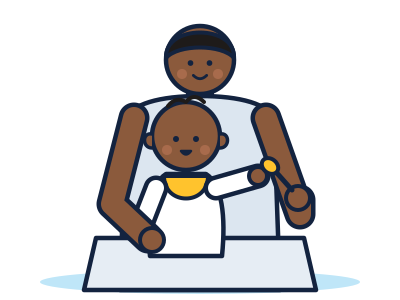
Most babies show all three of these signs at around six months:
- Sits up with a little support and holds the head steady.
- Looks at food, reaches for it and puts it in their mouth.
- Swallows food rather than pushing it straight back out with the tongue.
Chewing fists, waking at night, or wanting extra feeds are normal baby behaviour. On their own they are not signs that a baby needs solid food.
First Foods from the Market
Babies do not need special jars or packets. Good first foods are the ones you already cook, prepared without salt, pepper or seasoning cubes, and mashed smooth and thick. Take the baby's portion out of the pot before you season it.
- Enriched pap (ogi, akamu, koko). Make it thick, then stir in one or two of: ground crayfish, groundnut paste, soya flour, a mashed well-cooked egg yolk, or breast milk. Plain thin pap is mostly water and starch.
- Beans and moi moi (without pepper): mash well-cooked beans with a little palm oil, or crumble plain moi moi. Peeling the beans makes them smoother at first.
- Egg: cooked until the yolk and white are both solid, mashed.
- Fish, liver and meat: boiled, free of bones, finely mashed or blended into stew or pap. Liver once a week is rich in iron.
- Yam, sweet potato, cocoyam, potato and ripe plantain: boiled and mashed, with a little oil or groundnut paste.
- Vegetables: ugwu, spinach, garden egg leaves, carrots and pumpkin, cooked soft and mashed into other foods.
- Fruit: ripe pawpaw, banana, mango, avocado and orange segments (pips and skin removed), mashed.
A good meal combines a staple (pap, yam, rice, plantain) with something from an animal or a legume, a little fat (palm oil, groundnut oil or paste), and a vegetable or fruit.
Textures by Age
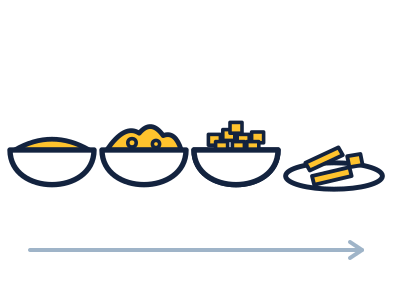
| Age | Texture | Examples |
|---|---|---|
| 6 months | Thick and smooth, stays on the spoon | Thick enriched pap, mashed beans, mashed yam with fish, mashed pawpaw |
| 7 to 8 months | Mashed, with soft lumps | Mashed plantain and egg, crumbled moi moi, fork-mashed avocado |
| 9 to 11 months | Finely chopped, and soft finger foods the baby can pick up | Soft yam or sweet potato sticks, banana pieces, soft rice and stew, flaked fish |
| 12 months | Family food, cut small | What the family eats, taken out before salt, seasoning cubes and hot pepper are added |
Moving on to lumpier textures by about nine to ten months matters. Babies kept on smooth food for too long often find lumps harder to accept later.
How Much and How Often
Keep breastfeeding as often as your baby wants, and add meals like this. A "cup" here is a normal 250 ml cup.
| Age | Meals a day | Amount at each meal |
|---|---|---|
| 6 to 8 months | 2 to 3 meals, plus 1 to 2 snacks if the baby is hungry | Start with 2 to 3 tablespoons; build up to half a cup |
| 9 to 11 months | 3 to 4 meals, plus 1 to 2 snacks | Half a cup |
| 12 to 23 months | 3 to 4 meals, plus 1 to 2 snacks | Three-quarters of a cup to a full cup |
A baby who is not breastfed needs one or two extra meals a day, and milk from a cup. From six months, offer a few sips of clean, boiled and cooled water from a cup with meals.
Iron: The Nutrient Babies Run Short Of
Babies are born with a store of iron that runs low at about six months. Iron is needed for the brain and for blood, and too little causes anaemia: a pale, tired, irritable baby who may be slow to develop. Iron deficiency is common in young children in Nigeria.
- Richest in iron: liver, meat, fish, crayfish, eggs.
- Also useful: beans, cowpeas, soya, groundnut paste, dark green leaves such as ugwu.
- Help the body absorb it by giving fruit rich in vitamin C, such as orange, pawpaw or guava, with the meal.
- Keep tea, coffee and cocoa drinks away from meals and from babies altogether; they block iron.
How to Feed: Follow Your Baby
Babies eat best when an adult sits with them, face to face, and responds to their signals. This is called responsive feeding.
- Sit your baby upright, on your lap or in a chair, never lying back.
- Give your baby their own bowl, so you can see how much they have eaten.
- Offer the spoon and wait for the mouth to open. Talk, smile, and name the food.
- Let them touch and hold food, and try to feed themselves. Mess is part of learning.
- Stop when they show they are full: turning away, closing the mouth, pushing the spoon away, playing.
- Offer a refused food again another day. Babies may need many tries before accepting a new taste.
Never force-feed, hold the nose, or pour food or liquid into a baby's mouth. It can make food go into the lungs, and it teaches babies to dislike eating.
Gagging and Choking
Gagging is normal and safe. It is how a baby moves food that is too big back to the front of the mouth. A gagging baby coughs, splutters, goes red, pushes the tongue out, and then carries on. Stay calm and let them sort it out.
Choking is different and is an emergency. The airway is blocked: the baby cannot cry, cough or breathe, may make a high-pitched noise or none at all, and may go blue. Learn what to do before you start solids: read choking first aid for babies and children, and see the difference explained at gagging or choking.
Foods to Avoid
| Food | Why |
|---|---|
| Honey, under 12 months | Can carry the germ that causes infant botulism, a serious illness. |
| Whole groundnuts and other nuts, under 5 years | Choking. Use smooth groundnut paste instead. |
| Salt and seasoning cubes | Babies' kidneys cannot cope with much salt, and it builds a taste for salty food. |
| Sugar, sweets, biscuits, sweet drinks, malt and fizzy drinks | Damage teeth and fill the baby with empty energy. |
| Tea, coffee and cocoa drinks | Block iron and contain caffeine. |
| Unpasteurised (fresh, unboiled) milk | Can carry dangerous germs. |
| Cow's milk as the main drink, under 12 months | Low in iron. It is fine in small amounts in cooking. |
| Hard, round or bony pieces | Choking: whole grapes, popcorn, hard raw carrot, chunks of meat, fish with bones, chewing gum. |
| Raw or soft-cooked egg | Cook eggs until the white and yolk are firm. |
Groundnut, Egg and Allergies
Food allergies are less common than many parents fear. Research now shows that giving foods such as groundnut and egg early — from around six months, once your baby has started solids — makes an allergy to them less likely, not more. Offer one new food at a time, early in the day, and keep offering it regularly once it is accepted.
- Groundnut: a little smooth groundnut paste stirred into pap. Never whole or crushed nuts.
- Egg: well cooked and mashed.
If your baby has severe eczema, or already reacted to a food, talk to a doctor before introducing groundnut and egg. Read more in our guide to allergies.
Come In Now If, After a Food, Your Baby Has
swelling of the lips, face or tongue, difficulty breathing, wheezing or noisy breathing, repeated vomiting, or becomes pale and floppy. Come to Limi Children's Hospital now, day or night, or go to the nearest emergency department if you cannot get here quickly. Hives (a raised, itchy rash) alone, without these signs, should be seen by a doctor the same day.
Clean and Safe Food in the Heat
Diarrhoea is common once babies start solids, and much of it comes from germs in food, water and dirty hands. In Nigerian heat, germs grow fast.
- Wash your hands and your baby's hands with soap before preparing food and before eating.
- Use clean bowls, cups and spoons, washed in hot soapy water. Cups are easier to clean than feeding bottles.
- Use safe water: boiled and cooled, or treated.
- Cook fresh, and serve straight away. Do not leave cooked food at room temperature for more than 2 hours, and less in hot weather.
- Throw away what the baby leaves. Saliva from the spoon lets germs grow in the rest of the bowl.
- If you keep food in a fridge, cool it quickly, cover it, use it within a day, and reheat once until steaming hot all through. During power cuts, cook smaller amounts more often rather than storing.
A Day's Meals at Nine Months
An example to adapt to your family's food and your baby's appetite. Breastfeed whenever the baby wants, including at night.
| When | What |
|---|---|
| Waking | Breastfeed |
| Breakfast | Half a cup of thick pap with groundnut paste and ground crayfish; a few pieces of ripe pawpaw |
| Mid-morning | Breastfeed; soft banana pieces |
| Lunch | Mashed beans and ripe plantain with a little palm oil and ugwu, cooked soft |
| Afternoon | Breastfeed; mashed avocado or a well-cooked egg |
| Supper | Mashed yam or sweet potato with flaked fish in unseasoned tomato stew; orange segments |
| Bedtime and night | Breastfeed |
When to Get Help
Come In Now
Emergency department, straight away
- Choking that does not clear, or a baby who went blue while eating
- Swelling of the face or tongue, or breathing difficulty after a food
- Diarrhoea or vomiting with a sunken soft spot, no wet nappy for 12 hours, or a very sleepy baby
See a Doctor Soon
Book an appointment this week, or today if unwell
- Diarrhoea or vomiting with no wet nappy for 8 hours: see a doctor today
- Weight not increasing on the child health card, or dropping
- Refusing all solid food by nine months
- Coughing, choking or gagging at most meals
- Only accepting smooth food after ten months
- Blood in the stool, or diarrhoea lasting more than two weeks
- A rash or vomiting each time a certain food is eaten
Usually Normal
Keep offering, and be patient
- Pulling faces at new tastes
- Gagging on lumps now and then
- Eating a lot one day and little the next
- Stools changing colour and smell
- Much of the food ending up on the floor
Our nutrition and feeding support team checks growth, works through the feeding problem with you and agrees a plan. For older children who are fussy eaters, see picky eating in toddlers and children.
Questions Parents Ask
My mother says to give pap from six weeks. Is that wrong?
It was common advice when she had her babies, and she means well. We now know that breast milk alone is best for six months: pap before then fills the baby without giving the nutrients of milk, and brings the risk of diarrhoea. You can share this page with her.
Should I give water once solids start?
Yes, a few sips of boiled and cooled water from an open cup with meals. Breast milk remains the main drink. Juice and sweet drinks are not needed.
When can my baby eat the family's peppery stew?
Take the baby's portion out before adding salt, seasoning cubes and hot pepper. Mild spices and herbs such as a little onion, garlic or thyme are fine. Babies can share more of the family's food after one year, with salt still kept low.
Are packet baby cereals better than home-made food?
No. Fortified cereals can be useful, but home-made enriched pap, beans, eggs, fish and vegetables are just as good and cost less. Check packet labels for added sugar.
My baby has become constipated since starting solids.
This is common. Offer water with meals and more fruit and vegetables such as pawpaw, and make sure pap is not too thick with starch alone. If stools are hard and painful for more than a few days, or there is blood, see a doctor.
My baby refuses everything I cook.
Keep meals short and relaxed, eat with your baby, offer the breast after the meal rather than just before, and try again the next day. Many babies take a few weeks to get going. If your baby is losing weight or refuses all food by nine months, see a doctor.
Sources
- World Health Organization. WHO guideline for complementary feeding of infants and young children 6–23 months of age. 2023.
- Pan American Health Organization and World Health Organization. Guiding principles for complementary feeding of the breastfed child. 2003.
- World Health Organization and UNICEF. Infant and young child feeding counselling: an integrated course. 2021.
- World Health Organization. Five keys to safer food manual. 2006.
- National Institute of Allergy and Infectious Diseases. Addendum guidelines for the prevention of peanut allergy in the United States. 2017.
- American Academy of Pediatrics. Clinical report: the effects of early nutritional interventions on the development of atopic disease. 2019.
- Federal Ministry of Health, Nigeria. National Policy on Infant and Young Child Feeding in Nigeria. 2010.
Written for parents and carers in NigeriaClinically reviewed by Limi Children’s Hospital cliniciansLast updated September 2026Next review due September 2027