

If You Remember Nothing Else
- Swelling of the tongue or throat, difficulty breathing, wheeze, or a child who turns pale and floppy is anaphylaxis. It is an emergency.
- If your child has an adrenaline auto-injector, use it straight away into the outer thigh, then come to Limi Children's Hospital now (or the nearest emergency department if you cannot get here quickly).
- Lie the child down with legs raised; sit them up only if breathing is hard. Do not let them stand or walk.
- Antihistamine syrup does not treat anaphylaxis. Never give it instead of adrenaline or instead of going to hospital.
- Give babies smooth groundnut paste and well-cooked egg early, from around 6 months, to lower the chance of allergy. Never whole nuts.
- A positive allergy test is not the same as an allergy. Tests only mean something alongside what happened when the child ate the food.
Anaphylaxis: An Emergency
Anaphylaxis is a severe allergic reaction that affects breathing or circulation. It usually starts within minutes of eating a food, being stung or taking a medicine, and can get worse quickly. It can happen even when earlier reactions were mild. A rash is not always present.
Come In Now
Use adrenaline if prescribed, then emergency department
- Swelling of the tongue or throat, hoarse voice, difficulty swallowing
- Difficulty breathing, noisy breathing, wheeze or a persistent cough
- Pale, floppy, very sleepy, confused or collapsed
- A baby who suddenly becomes pale, quiet and floppy after a new food
- Any of these after a sting, a medicine or a food your child is allergic to
See a Doctor Today
Watch closely on the way for any red signs
- Hives (raised itchy bumps) that spread after a food
- Swelling of the lips, face or around the eyes, with normal breathing
- Tummy pain or vomiting soon after a food
- A first reaction of any kind to a food
- A rash after starting a new medicine
Usually Fine at Home
Mention it at the next check
- A few hives that fade within hours, with no other signs, and no clear trigger
- Sneezing and a runny nose in the harmattan
- A small red swelling around an insect bite
- Redness around the mouth from acidic fruit or tomato
What to Do in Anaphylaxis
- Use the adrenaline auto-injector straight away, if your child has one. Press it firmly into the outer middle of the thigh; it can go through clothing. Hold it in place for the time given in its instructions. Note the time.
- Lie your child down with their legs raised. If breathing is difficult, let them sit up with legs out in front. Do not let them stand or walk, even if they feel better. A baby can be held flat on your lap.
- Come to Limi Children's Hospital now, day or night. If you cannot get here quickly, go to the nearest emergency department. Have someone else drive if you can, so you can watch your child, and call 0813 408 5400 on the way so the team can prepare.
- If there is no improvement after 5 minutes and you have a second auto-injector, use it in the other thigh, as the plan says.
- Give the asthma reliever through a spacer if your child has asthma and is wheezy, but only after the adrenaline.
- If your child stops breathing, start CPR — see CPR for children.
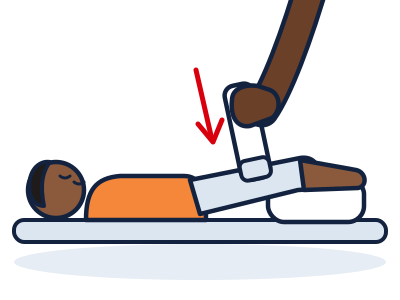
Still Go to Hospital After Adrenaline
Adrenaline can wear off, and symptoms can return hours later. Every child who has anaphylaxis needs to be seen in an emergency department, even if they improve. If your child has no auto-injector, come straight to Limi Children's Hospital, or the nearest emergency department if you cannot get here quickly — do not wait for antihistamine to work.
Signs of a Food Allergy
In a food allergy, the immune system mistakes a food for a threat. Reactions usually start within minutes to 2 hours of eating:
- Skin: hives (raised, itchy welts, pale or red, which on darker skin may look like skin-coloured bumps), flushing, itching, and swelling of the lips, face or eyelids.
- Mouth: itchy or tingling mouth and throat.
- Gut: tummy pain, vomiting, diarrhoea.
- Breathing and circulation: sneezing, cough, wheeze, hoarseness, paleness or floppiness — these mean anaphylaxis.
Some babies have a slower type of food allergy, usually to cow's milk, with eczema, reflux, diarrhoea, blood in the stool or poor weight gain over days. This needs a doctor's assessment; do not switch milks on your own. Eczema and food allergy are linked — see our eczema guide.
Allergy or Intolerance?
| Food allergy | Food intolerance | |
|---|---|---|
| What it is | The immune system reacting to a food | The gut having trouble digesting a food, such as lactose in milk |
| How quickly | Usually within minutes to 2 hours | Often hours later |
| Symptoms | Hives, swelling, vomiting, wheeze; can be life-threatening | Bloating, wind, tummy ache, loose stools; not dangerous |
| Amount needed | A very small amount can cause a reaction | Small amounts are often fine |
Common Food Allergens, and Where They Hide
Almost any food can cause allergy, but a few cause most reactions in children. Some are hidden in everyday Nigerian food:
| Food | Where to look |
|---|---|
| Groundnut (peanut) | Groundnut paste and soup, kuli-kuli, suya spice (yaji often contains ground groundnut), sweets, chin-chin and biscuits, some cooking oil. Tree nuts such as cashew are a separate allergy but often go together. |
| Egg | Cakes, puff-puff, bread, moi moi and other dishes made with egg, mayonnaise, some noodles. |
| Cow's milk | Formula, powdered milk, yoghurt, cheese (wara), ice cream, biscuits, chocolate, some breads. |
| Fish | Stews and soups, fish seasoning, stockfish, dried fish. |
| Crayfish, prawns and other shellfish | Ground crayfish in egusi, ogbono, okra and pepper soups, seasoning powders and cubes. |
| Sesame (beniseed) | Bread and buns, snacks, some spice mixes and sauces. |
| Wheat | Bread, pasta, noodles, semovita and wheat meal, chin-chin, biscuits. |
| Soy | Soy milk, tofu (awara), some formula, processed foods, seasoning. |
Many children outgrow milk and egg allergy. Groundnut, tree nut, fish and shellfish allergies are more likely to last, but can also improve; the team may re-test over time.
Introducing Allergy Foods to Babies
For many years parents were told to delay foods like groundnut. We now know that was wrong. A large trial (the LEAP study) found that babies at high risk who ate groundnut regularly from infancy were much less likely to develop groundnut allergy than babies who avoided it. Early introduction of well-cooked egg also appears to help.
- Start around 6 months, when your baby starts solid foods, and not before 4 months.
- Groundnut as a smooth paste only. Thin a little smooth groundnut paste with breast milk, water or pap. Never give whole or chopped nuts to children under 5 — they are a choking hazard.
- Egg well cooked, for example hard-boiled and mashed, or in a well-cooked moi moi.
- Introduce one new allergy food at a time, at home, in the morning or early afternoon when your baby is well, so you can watch for a reaction.
- Once it is tolerated, keep it going a few times each week. Stopping can allow an allergy to develop.
- Talk to your doctor first if your baby has severe eczema or has already reacted to a food. Do not delay for months; the team plans it with you, sometimes with a test first.
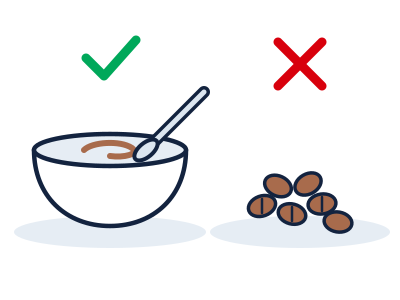
Our starting solids guide covers first foods and textures, and choking first aid is worth knowing for every carer.
Allergy Testing
Allergy tests are useful, but only when they are chosen and read by someone who knows the full story. Many children have a positive test to a food they eat without any problem. Testing without a clear reason can lead to foods being cut out for no benefit.
- Skin prick test
- A tiny drop of the food extract is placed on the forearm and the skin is pricked lightly. A raised bump after 15 minutes shows sensitisation. Quick and only mildly uncomfortable. Antihistamines must be stopped for a few days before, as the team advises.
- Blood test (specific IgE)
- Measures allergy antibodies to particular foods. Useful when skin testing is not possible.
- Food challenge
- The child eats small, increasing amounts of the food in hospital, with staff and emergency medicines ready. This is the clearest way to confirm whether an allergy is real or has been outgrown.
Avoid tests sold without a doctor, such as hair analysis, "IgG food intolerance" panels, and machines that claim to detect allergies through the skin. They are not reliable and often lead to unnecessary diets.
Harmattan, Sneezing and Catarrh
Allergic rhinitis (hay fever) is common in Nigerian children, and often worse in the harmattan, when dust, pollen and dry air irritate the nose. Signs include sneezing, a runny or blocked nose, itchy eyes and nose, rubbing the nose upwards, snoring, and dark circles under the eyes. It is not an infection, so antibiotics do not help.
- Rinse the nose with saline (salt-water drops or spray from a pharmacy) to clear dust.
- Reduce exposure: close windows on dusty days, damp-dust, wash faces and hands after outdoor play, and wash bedding often.
- Medicines as prescribed: a non-sleepy antihistamine or a steroid nasal spray can help a lot when used regularly through the season.
- Watch for asthma. Many children with allergic rhinitis also have asthma, and treating the nose helps the chest. See our asthma guide.
Insect Stings
Bee and wasp stings and fire ant bites usually cause pain, redness and swelling where the sting went in. A large swelling that spreads over a whole limb over a day or two is uncomfortable but not usually dangerous. Anaphylaxis after a sting is uncommon in children, but it is an emergency.
- Remove a bee sting quickly by scraping it out sideways with a fingernail or card.
- Wash the area and apply a cold compress. Pain relief from the pack, used as directed for your child's age, can help.
- Watch for signs of anaphylaxis for the next hour: swelling of the face or throat, breathing difficulty, paleness, vomiting, or hives spreading over the body. See first aid for bites and stings.
Medicine Allergies
Rashes during a course of antibiotics are common, especially with a viral illness, and many are not a true allergy. But children labelled "allergic to penicillin" may miss out on the most suitable medicines for years. If your child gets a rash, swelling or wheeze on a medicine:
- Stop the medicine and see a doctor, or come in now if there are any signs of anaphylaxis.
- Take a photo of the rash, and write down the medicine, the date and what happened.
- Blisters, peeling skin, sore mouth or eyes, or a fever with a widespread rash can be a rare but serious skin reaction. Come in now.
- Ask whether the allergy can be checked later, rather than carrying a label for life.
Living with Allergy
- Get a written allergy action plan from your doctor that lists the allergens, the signs of a reaction, and what to give.
- Read every label, every time. Recipes change. Look for the allergen in the ingredients and in "may contain" warnings. Be careful with street food, party food and unlabelled products, where you cannot check ingredients.
- If adrenaline is prescribed, carry two auto-injectors at all times, check the expiry dates, keep them out of heat, and make sure every carer knows how to use them. Ask the team about availability and supplies.
- Tell everyone who feeds your child: grandparents, nannies, drivers, teachers, friends' parents, and the kitchen at school or parties. Allergy is sometimes dismissed as fussiness; a printed plan helps.
- Plan for school: share the action plan and medicines, and agree who will act. See our starting school checklist.
- Teach your child, in words they understand, which foods to avoid, to ask before eating, and to tell an adult straight away if they feel unwell.
- Keep a varied diet. Avoiding several foods can affect growth; ask for a dietitian's help if you need it.
Our paediatric dermatology service and nutrition service help you build that plan, and the care team tells you where each allergy test is done.
Myths About Allergies
A little bit will not hurt; it will help the child get used to it.
For a child with a confirmed allergy, even a small amount can cause a serious reaction. Any plan to reintroduce a food should only be made with the allergy team.
Antihistamine syrup is enough for a bad reaction.
Antihistamines help itching and hives. They do not treat breathing or circulation problems. Anaphylaxis needs adrenaline and hospital.
Keep groundnut away from babies to prevent allergy.
The opposite. Regular smooth groundnut paste from around 6 months lowers the chance of groundnut allergy.
The child is just being fussy, or it is all in the mind.
Food allergy is a real immune reaction that can be measured and can be dangerous. Take every reaction seriously.
Once allergic, always allergic.
Many children outgrow milk and egg allergy, and some outgrow others. The team can re-test safely.
Questions Parents Ask
Should brothers and sisters be tested too?
Not routinely. Testing children who eat a food without problems can give confusing positive results. If a sibling has symptoms, talk to the doctor.
Should I avoid groundnut or egg while breastfeeding?
No. Avoiding foods during pregnancy or breastfeeding does not prevent allergy in the baby, unless a doctor has told you to for a specific reason. Breastfeeding is good for your baby.
Is groundnut oil safe for a child with groundnut allergy?
Highly refined oils usually contain very little protein, but much groundnut oil sold locally is unrefined or cold-pressed and can contain enough to cause a reaction. Avoid it unless your allergy team says otherwise.
My child gets hives with no obvious cause. Is it an allergy?
Hives that come and go without a trigger are very common in children and are often caused by a viral infection. They usually settle within days to weeks. If they last more than six weeks, or come with swelling or breathing problems, see a doctor.
Can children with egg allergy have vaccines?
Almost always, yes. The MMR vaccine is safe in egg allergy, and most flu vaccines can be given. Tell the nurse about any allergy and any previous vaccine reaction. See our vaccine schedule.
Should I give an antihistamine for mild hives?
A non-sleepy antihistamine, given at the dose on the pack for your child's age or as prescribed, can ease itching. Keep watching for any signs of anaphylaxis, and see a doctor if it was the first reaction to a food.
What if the auto-injector has expired?
In an emergency, an expired auto-injector is better than none — use it, then go to hospital. Replace expired devices as soon as you can.
Sources
- Resuscitation Council UK. Emergency treatment of anaphylaxis: guidelines for healthcare providers. 2021.
- National Institute for Health and Care Excellence. Food allergy in under 19s: assessment and diagnosis (CG116). 2011.
- National Institute for Health and Care Excellence. Anaphylaxis: assessment and referral after emergency treatment (CG134). 2011, updated 2020.
- Du Toit G and others. Randomized trial of peanut consumption in infants at risk for peanut allergy (LEAP). New England Journal of Medicine, 2015.
- Togias A and others. Addendum guidelines for the prevention of peanut allergy in the United States. National Institute of Allergy and Infectious Diseases, 2017.
- Cardona V and others. World Allergy Organization anaphylaxis guidance 2020. World Allergy Organization Journal, 2020.
Written for parents and carers in NigeriaClinically reviewed by Limi Children’s Hospital cliniciansLast updated September 2026Next review due September 2027