
If You Remember Nothing Else
- If the child can cough, cry or talk, let them cough. Stay with them and do not slap their back yet.
- Silent, cannot breathe, or turning blue: act now. Shout for help, but do not leave the child.
- Baby under 1: up to 5 back blows, then up to 5 chest thrusts, with the baby's head lower than the chest. Never squeeze a baby's tummy.
- Child over 1: up to 5 back blows, then up to 5 tummy thrusts. Keep repeating until the object comes out.
- If the child stops responding, start CPR and send someone for help.
- Never sweep a finger blindly in the mouth, hold a child upside down by the feet, or give water.
- Every child who needed back blows or thrusts needs a doctor's check the same day, even if they now seem well.
Is It Choking?
Choking happens when food or a small object blocks the airway. It is usually sudden, while the child is eating or playing, and someone often sees it happen. What you do depends on whether air is still getting through.
Act Now
The airway is blocked. Start the steps below.
- Cannot cry, cough, speak or breathe
- A cough that has gone silent or weak
- High-pitched noise, or no noise at all, when trying to breathe
- Lips, tongue or face turning blue or grey
- Clutching at the throat (older children)
- Becoming floppy or not responding
Stay Close and Watch
Air is getting through. Let the cough do the work.
- Coughing loudly and forcefully
- Crying or able to talk
- Breathing between coughs
- Pink lips
Encourage them to keep coughing. Do not pat their back or put anything in their mouth. If the cough becomes weak or silent, act now.
Usually Gagging
A normal reflex, common when babies start solid food.
- Noisy, with retching and sputtering
- Tongue pushed forward, eyes watering
- Face red, not blue
- Settles in a few seconds
Shout for Help — But Do Not Leave the Child
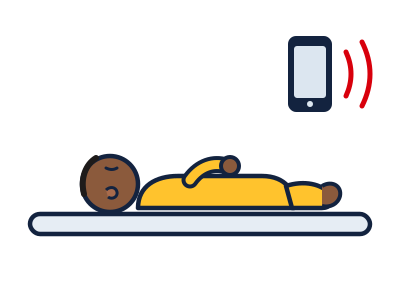
Call out to anyone in the house or compound to come. Ask them to phone for help and to get the car or transport ready. Keep doing the steps yourself. If you are alone with a phone, put it on loudspeaker so your hands stay free.
A Baby Under 1 Who Is Choking
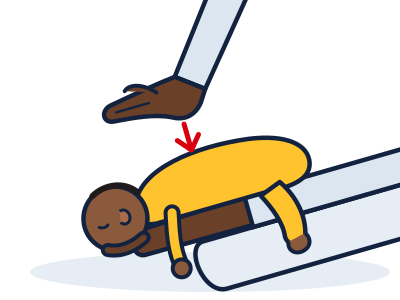
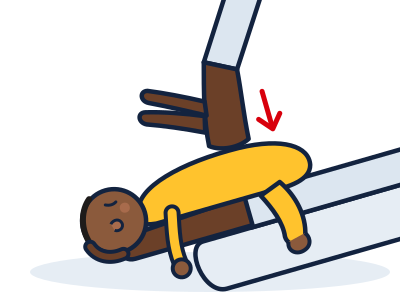
Sit or kneel so the baby is well supported. Lay the baby face down along your forearm, resting your arm on your thigh, with the head lower than the chest. Hold the baby's jaw with your thumb on one side and your fingers on the other. Do not press on the soft part under the chin, because that can block the airway more. The player below shows each step, and the full list follows.
The Steps in Full
- Give up to 5 back blows. With the baby face down along your forearm and the head lower than the chest, give up to 5 firm blows between the shoulder blades with the heel of your other hand. Make each blow separate and firm enough to shift the object. After each blow, look to see if it has come out. If it has, stop.
- Look in the mouth. If you can clearly see the object, pick it out with your fingertips. If you cannot see it, do not poke about in the mouth.
- Give up to 5 chest thrusts. Hold the baby between your two forearms, supporting the head, and turn them over so they are face up along your other forearm, head still lower than the chest. Place the heel of your free hand in the centre of the chest, just below an imaginary line between the nipples, on the lower half of the breastbone. Push down sharply up to 5 times. Chest thrusts are like the chest compressions of CPR but sharper and slower. Check after each thrust.
- Repeat. If the object has not come out, go back to 5 back blows, then 5 chest thrusts. Keep going until the object comes out, help arrives, or the baby stops responding.
- If the baby stops responding, start CPR. See if the child stops responding below.
Never Give Tummy Thrusts to a Baby Under 1
Squeezing a baby's tummy (abdominal thrusts, sometimes called the Heimlich manoeuvre) can injure the liver and other organs, which sit low and unprotected in babies. Use chest thrusts instead.
A Child over 1 Who Is Choking
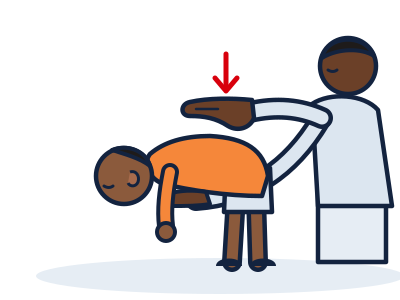
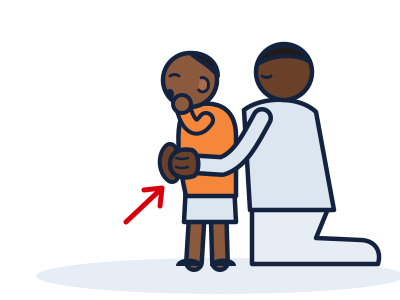
If the child is coughing hard, crying or talking, encourage them to keep coughing and stay with them. Do not slap their back while a strong cough is working. If the cough becomes weak or silent, or they cannot breathe, start the steps below. A small child can be laid across your lap; an older child can stand and lean forward.
The Steps in Full
- Give up to 5 back blows. Support the child's chest with one hand and lean them forward so the head is lower than the chest; a small child can lie face down across your lap. Give up to 5 firm blows between the shoulder blades with the heel of your other hand. Check after each blow and stop if the object comes out.
- Look in the mouth. Remove anything you can clearly see and easily reach. Do not sweep blindly.
- Give up to 5 tummy thrusts (abdominal thrusts). Stand or kneel behind the child and put your arms around the upper part of their tummy. Lean them forward. Make a fist and place it between the belly button and the bottom of the breastbone. Hold the fist with your other hand and pull sharply inwards and upwards, up to 5 times. Do not press on the ribs or the bottom tip of the breastbone. Check after each thrust.
- Repeat. Go back to 5 back blows, then 5 tummy thrusts, until the object comes out, help arrives, or the child stops responding.
- If the child stops responding, start CPR. See the next section.
If the Child Stops Responding
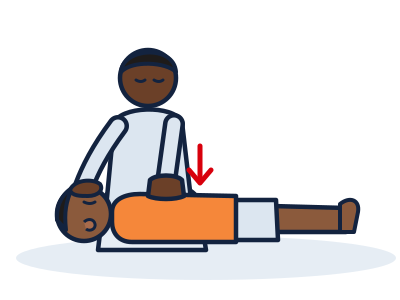
If a choking baby or child goes floppy, stops responding, or stops breathing normally, the airway may relax enough for air to get past the object. CPR can push air past it and may also move it.
- Lay the child on their back on a firm, flat surface. A floor or table, not a bed.
- Shout for help. If someone is with you, send them to phone for help and prepare transport to Limi Children's Hospital (or the nearest emergency department if you cannot get to Limi quickly). If you are alone, put your phone on loudspeaker.
- Open the mouth and look. If you can see the object, remove it. Do not sweep blindly.
- Give 5 rescue breaths. For a baby, cover the mouth and nose with your mouth. For a child, pinch the nose and cover the mouth. Breathe in steadily for about a second, enough to see the chest rise. If the chest does not rise, adjust the head position and try again.
- Start chest compressions. 15 compressions, then 2 breaths, and keep going. Look in the mouth for the object each time before you give breaths. The full CPR steps are on our first aid page.
- Keep going until the child starts breathing normally, or help arrives and takes over.
If the object comes out and the child is breathing, put them on their side in the recovery position, stay with them, and bring them to Limi Children's Hospital now. If you cannot get here quickly, go to the nearest emergency department.
Reading Is Not Enough
These steps are easier to do, and to remember under pressure, once you have practised them on a training manikin with an instructor. Parents, grandparents, nannies and teachers can all learn them. Ask the care team about first aid training for families, or look for a baby and child first aid course run by a recognised first aid organisation near you. Courses differ a little on hand position for a baby (the heel of one hand, two thumbs or, on older courses, two fingers). If you trained another way, do what you practised: acting quickly matters more than the exact technique.
What Not to Do
Much of the advice families hear about choking makes it worse. Here is what to do instead.
Put a finger in the child's throat to hook the object out.
A blind finger sweep can push the object deeper and scratch the throat. Only pick out something you can clearly see and easily reach.
Hold the child upside down by the feet and shake them.
A child can be dropped or injured, and the object can lodge further down. Back blows with the head lower than the chest use gravity safely.
Give water, garri or a piece of bread to "push it down".
A child who cannot breathe cannot swallow safely. Anything given by mouth can be breathed into the lungs. Give nothing to eat or drink.
Squeeze a baby's tummy, as you would for an adult.
Abdominal thrusts can damage a baby's organs. Under 1 year, always use chest thrusts.
Slap the back of a child who is coughing hard.
A strong cough clears the airway better than anything you can do. Wait and watch; act only if the cough becomes weak or silent.
After Choking: Why a Check-up Matters
If your child needed back blows, chest thrusts or tummy thrusts, take them to be checked by a doctor the same day, even if they seem completely well.
- Part of the object may still be there. A piece of groundnut or a small toy part can slip into the lungs and cause coughing, wheezing or pneumonia days or weeks later.
- Thrusts can cause injuries you cannot see. Tummy thrusts and chest thrusts are forceful and can bruise the organs inside, even when done correctly.
- A button battery or magnet may have been swallowed rather than coughed up. These can burn through the food pipe or gut within hours, so they are an emergency even if the child seems well.
Come In Now
Emergency department, straight away
- The child became floppy, blue or unresponsive, even if they recovered
- Noisy breathing, wheezing or fast breathing after the episode
- A cough that does not stop
- Drooling, or unable to swallow saliva
- You think a button battery, magnet or sharp object was swallowed
See a Doctor Today
Same day, not tomorrow
- You gave back blows, chest thrusts or tummy thrusts
- You are not sure the whole object came out
- Tummy pain after tummy thrusts
- The child says something still feels stuck
Watch at Home
A short cough that cleared on its own
- The child coughed the object up without help
- Breathing normally, eating and playing
Come in if a cough, wheeze or fever starts in the following days or weeks.
Limi Children's Hospital assesses children in an emergency day and night. Come to Limi now. If you cannot get here quickly, go to the nearest emergency department. Have someone else drive if you can, so you can watch your child, and call 0813 408 5400 on the way so the team can prepare.
Gagging or Choking?
Gagging is a normal reflex that protects the airway. It is most common when a baby starts solid food at around six months. The gag reflex sits further forward on the tongue in babies, so they gag easily while they learn to move food around their mouth.
| Gagging | Choking | |
|---|---|---|
| Sound | Noisy: retching, coughing, spluttering | Silent, or a weak high-pitched noise |
| Face | Red, eyes watering | Pale, then blue or grey around the lips |
| Tongue | Pushed forward or out | Mouth may be open with no sound |
| Breathing | Keeps breathing | Struggling or unable to breathe |
| What to do | Stay calm, stay close, let the baby work it out | Act now: back blows and thrusts |
Always stay with a baby or young child while they eat, so you can tell the difference straight away. See our guide to starting solid food for safe textures at each age.
Preventing Choking
Children under five are most at risk, because their airways are narrow and they are still learning to chew and swallow. Most choking happens on food, and most of it can be prevented.
Foods to Change or Avoid
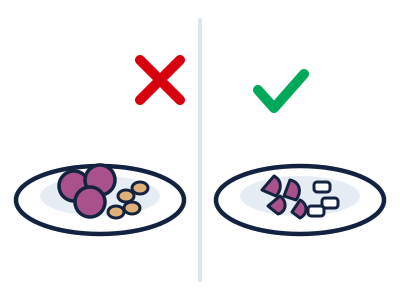
- Whole groundnuts and other nuts: not for children under 5. Offer smooth groundnut paste spread thinly, or finely ground nuts mixed into food.
- Grapes, cherry tomatoes and small round fruit: cut into quarters lengthways.
- Hard sweets, chewing gum and sweets with sticks: not for young children. Lollipops can come off the stick.
- Chunks of meat, fish with bones, and sausages: cut into small strips, shred, or mince; check fish carefully for bones. Cut sausages lengthways, then into small pieces.
- Hard raw foods: raw carrot, whole coconut pieces, corn (maize) kernels and popcorn. Grate, cook until soft, or leave until older.
- Sticky or dry lumps: large balls of swallow such as eba, pounded yam or fufu, and spoonfuls of thick groundnut paste. Offer small, soft amounts.
Objects to Keep Out of Reach
- Button batteries from remote controls, car keys, torches, watches and musical cards. Keep spares locked away and make sure battery compartments are screwed shut.
- Small toy parts, marbles, beads, coins, bottle caps, pen lids and hair clips. The test: if it fits through the cardboard tube inside a toilet roll, it is small enough to choke a young child.
- Balloons, especially burst ones. A piece of balloon can seal the airway completely. Do not let children under 8 blow up balloons, and pick up pieces straight away.
- Magnets from toys and fridge decorations.
- Necklaces, waist beads and wrist beads on babies. They can break into small beads, and cords can strangle. Leave them off until the child is older.
How Children Eat
- Sitting down, upright, with an adult watching. Not walking, running, playing or lying down.
- Not in a moving car, on a motorbike or while travelling, where you cannot reach them quickly.
- Never force-feed. Holding a baby's nose or pouring pap or medicine into the mouth while they cry can make them breathe it in.
- Older children can take food from babies. Teach brothers and sisters not to give the baby sweets, groundnuts or toys with small parts.
Our home safety checklist goes room by room through the other hazards.
Questions Parents Ask
Should I call for help first or start back blows first?
Start back blows straight away and shout for help at the same time. Ask anyone who comes to phone for help and prepare transport. If you are alone with a phone, put it on loudspeaker and keep going. Do not leave the child to go and find a phone.
Should I put my choking child in the car and drive to hospital?
No. A child who cannot breathe needs help in the next minute or two, and you cannot give back blows while driving. Do the steps where you are. Once the object is out, or if someone else can drive while you keep going, then come to Limi Children's Hospital, or the nearest emergency department if you cannot get here quickly.
My child is just over one but small. Which steps should I use?
Use the baby steps for children under one year old and the child steps from one year. If a child over one is very small, you can still lay them across your lap for back blows. What matters most is to act quickly.
What if I hurt my child doing the thrusts?
A choking child who cannot breathe is in danger of dying within minutes, so the thrusts are worth the risk of a bruise or injury. This is why every child who needed thrusts needs a doctor's check afterwards.
My child swallowed a coin but is breathing fine. Is that choking?
No, but it still needs a doctor's review. A coin that has gone into the stomach usually passes, but one stuck in the food pipe can cause drooling, pain or refusing to eat, and needs an X-ray. A swallowed button battery or more than one magnet is an emergency even if the child seems well — go now.
Where can I learn this properly?
Take a hands-on baby and child first aid course where you practise on a manikin. Ask the care team at your next visit, ask your child's school, or look for a course run by a recognised first aid organisation. Practise again every year or two, and teach the steps to everyone who looks after your child.
Sources
- Van de Voorde P, Turner NM, Djakow J, et al. European Resuscitation Council Guidelines 2021: Paediatric Life Support. Resuscitation. 2021;161:327–387.
- Zideman DA, Singletary EM, Borra V, et al. European Resuscitation Council Guidelines 2021: First aid. Resuscitation. 2021;161:270–290.
- Resuscitation Council UK. Paediatric basic life support guidelines. 2021.
- American Heart Association and American Academy of Pediatrics. 2025 Guidelines for Cardiopulmonary Resuscitation and Emergency Cardiovascular Care: pediatric basic life support. Circulation. 2025.
- International Federation of Red Cross and Red Crescent Societies. International First Aid, Resuscitation, and Education Guidelines 2020. Geneva: IFRC; 2020.
- American Academy of Pediatrics, Committee on Injury, Violence, and Poison Prevention. Prevention of choking among children. Pediatrics. 2010;125(3):601–607.
Written for parents and carers in NigeriaClinically reviewed by Limi Children’s Hospital cliniciansLast updated September 2026Next review due September 2027