
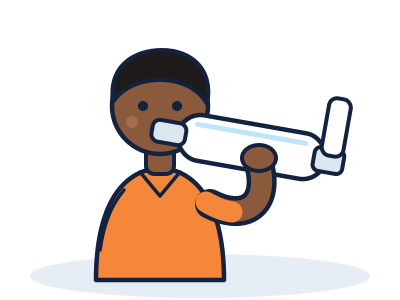
If You Remember Nothing Else
- Too breathless to talk, blue or grey lips, or the reliever is not helping: go to the emergency department now. Keep giving the reliever on the way, as the plan says.
- A reliever opens the airways in minutes; a preventer calms them over weeks. Most children with regular symptoms need both.
- Give the preventer every day, even when your child is well. Stopping it when symptoms settle is a common reason attacks come back.
- Always use a spacer. Much more medicine reaches the lungs, and it works as well as a nebuliser in most attacks.
- Needing the reliever more than two or three times a week means asthma is not controlled. Book a review; do not just buy more relievers.
- Every child with asthma needs a written action plan, and a copy with the school, the nanny and grandparents.
Is This an Asthma Attack?
In an attack the airways tighten and your child struggles to breathe. Attacks can build over days after a cold, or come suddenly after smoke or dust. If you are not sure which column fits, treat it as the more serious one.
Come In Now
Emergency department, straight away
- Too breathless to talk in sentences, eat or feed
- Blue or grey lips, tongue or face
- Skin sucking in hard between or under the ribs, or at the neck
- The reliever is not helping, or the effect lasts less than 4 hours
- Drowsy, confused, or unusually quiet and still
- Wheeze or cough that suddenly goes quiet while your child still struggles (this can mean very little air is moving)
See a Doctor Today
Same day, not tomorrow
- Needing the reliever more often than every 4 hours
- Cough or wheeze waking your child at night
- Breathing faster than usual, or cannot run or play as normal
- A fever with wheeze or cough
- Recently finished steroid tablets and symptoms are coming back
Usually Fine at Home
Follow the green zone of the plan; book a routine review
- Mild wheeze or cough that goes within minutes of the reliever
- Reliever needed less than three times a week
- Sleeping through the night
- Playing and running normally
You can count your child's breaths with our breathing counter, which tells you what the number means for their age. Coming to Limi? Call 0813 408 5400 on the way so the team can prepare. Have someone else drive if you can, so you can sit with your child upright and keep giving the reliever.
What Asthma Is
In asthma, the lining of the airways (the tubes that carry air into the lungs) is sensitive and often a little swollen. When something irritates it, the muscle around the tubes squeezes tight, the lining swells more and makes thick mucus. Air has to be pushed through narrow tubes: that is the wheeze, the cough and the tight chest.
Asthma is long-term but comes and goes. It often runs in families alongside eczema, hay fever and food allergy. It is not caused by anything the parents did, and it is not infectious.
Is Every Wheeze Asthma?
No. Many toddlers wheeze only with colds because their airways are small, and many stop by school age. Asthma is more likely when wheeze keeps coming back, happens without a cold (with exercise, laughing, dust or at night), runs in the family, or comes with eczema or allergies.
Signs of Asthma
- A cough that is worse at night or early in the morning, or that keeps going for weeks after a cold.
- Wheeze: a whistling sound when breathing out.
- Getting breathless or coughing with running, play or laughing, and stopping sport early.
- A tight chest or "chest pain" in older children; younger children may say their tummy hurts.
- Symptoms that come with triggers: harmattan dust, smoke, cold air, colds.
Asthma is often mistaken for "catarrh" or repeated chest infections and treated with antibiotics and cough syrups, which do not help it. If your child keeps coughing or wheezing, ask for an asthma assessment. Our paediatric pulmonology clinic, one of more than 30 specialties under one roof at Limi, sees children whose breathing problems keep returning.
Triggers in Abuja Homes
A trigger is anything that sets off symptoms. Note what came before each bad spell (our symptom diary helps). You cannot avoid every trigger; reduce the big ones and keep the preventer going.
| Trigger | What helps |
|---|---|
| Colds and flu | The most common trigger. Hand washing, the flu vaccine where available, and starting the amber zone of the plan at the first sign of a cold. |
| Harmattan dust and dry air | Close windows on very dusty days, damp-dust rather than sweep, and keep the reliever with your child. Ask your doctor whether the plan should change for the season. |
| Smoke from firewood, charcoal, kerosene and burning rubbish | Cook with good airflow and keep the child away from the fire. Gas makes less smoke. Do not burn rubbish near the house. |
| Cigarette and shisha smoke | No smoking anywhere in the house or car, ever. Smoke stays on clothes and furniture. |
| Generator fumes | Generator outside, far from windows and doors. The fumes also contain carbon monoxide, which can kill. |
| Dust mites | Wash bedding weekly in hot water, dry it in the sun, and air mattresses and pillows. |
| Cockroaches and mould | Cover food, clear rubbish daily, fix damp walls. Use insect spray only when the child is out, and air the room. |
| Pets and strong smells | Keep pets out of the bedroom. Avoid perfumes, incense, air fresheners and strong cleaning products near your child. |
| Cold air, air conditioning and rain | A scarf over the mouth in cold air; avoid sitting in a strong air-conditioner draught. |
| Exercise | Not a reason to stop sport. Warm up well; your doctor may advise the reliever before sport. |
Reliever and Preventer Inhalers
Inhalers put a small amount of medicine straight into the airways. Colours differ between brands, so learn your child's inhalers by their job, not their colour, and ask for the job to be written on each one.
- Reliever
- Relaxes the tight muscle around the airways within minutes and lasts a few hours. Used when symptoms happen, and in an attack. It does not treat the swelling underneath. The usual reliever is salbutamol.
- Preventer
- Usually a low-dose inhaled steroid. It calms the swollen, sensitive lining so attacks become less likely. It does nothing in the moment and takes days to weeks to work fully. It must be used every day, even when your child is well.
- Combination inhaler
- A preventer and a longer-acting reliever in one device. Some older children and teenagers are prescribed one of these to use in a particular way. Follow the plan your doctor writes.
Asthma is well controlled when there is no night-time cough, the reliever is needed less than three times a week, and your child plays and goes to school fully. If not, ask for a review.
Using an Inhaler with a Spacer
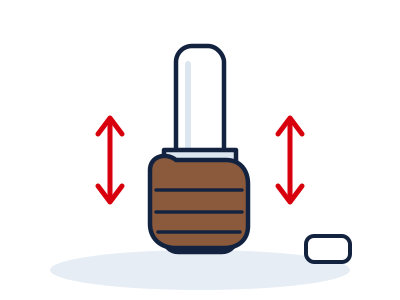
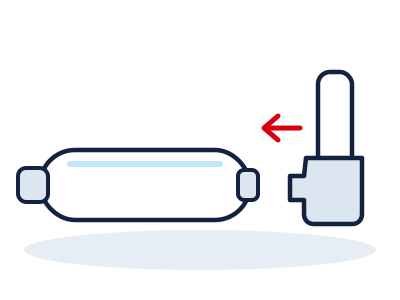
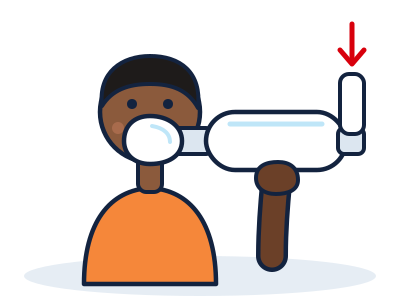
A spacer is a plastic tube that holds the puff of medicine so your child can breathe it in slowly. Without a spacer, most of the medicine hits the back of the throat. With one, much more reaches the lungs. Children of every age should use one with a puffer (metered-dose) inhaler. Babies and toddlers use a spacer with a soft face mask; most children from about 4 years can use a mouthpiece.


Looking After the Spacer
- Wash it about once a month in warm water with a little washing-up liquid. Do not rinse it; let it drip-dry in the air. Rubbing it with a cloth builds static that makes the medicine stick to the sides.
- Check the inhaler is not empty, using its counter or the date you started it, and keep inhalers out of direct sun and hot cars.
- Bring the inhalers and spacer to every appointment so the team can check technique. Many "inhalers that do not work" are simply missing the lungs.
No Spacer in an Emergency?
The World Health Organization describes an improvised spacer for emergencies when no proper spacer is available: a clean 500 ml plastic drinks bottle with a hole cut in the bottom, just big enough for the inhaler mouthpiece to fit snugly, and with the sealed edges smoothed. Your child breathes from the neck of the bottle. It is a stop-gap only, it will not seal like a mask on a young child, and it should never delay going to hospital. Ask for a proper spacer; they are inexpensive and last a long time.
Your Written Asthma Action Plan
International guidance (GINA, NICE and the British Thoracic Society) recommends that every child with asthma has a written, personal action plan. It says what to give every day, how to spot asthma getting worse, and exactly what to do. Ask your child's doctor to fill in the gaps below with you, then print a copy for home, school, the nanny and anyone who looks after your child.
Green: Doing Well
Every day, even when well
- No cough or wheeze, day or night
- Playing, running and sleeping normally
- Give: the preventer, as prescribed
- Before sport: the reliever, if your doctor advises
- Keep the reliever and spacer with your child
Amber: Getting Worse
Act now and call the doctor today
- Cough, wheeze or tight chest
- Waking at night with asthma
- Needing the reliever more than usual
- A cold starting
- Give: the reliever through the spacer, as the plan says
- Keep giving the preventer
- If the reliever is needed every 4 hours or more often, see a doctor today
Red: Emergency
Go to the emergency department now
- Too breathless to talk, eat or feed
- Ribs or neck sucking in; breathing very fast
- Blue or grey lips
- Reliever not helping, or not lasting 4 hours
- Give: the reliever through the spacer as the plan says, and keep giving it on the way
- Sit your child upright. Do not lie them down
| To be filled in with your child's doctor | |
|---|---|
| Child's name and date of birth | |
| Preventer: name, how many puffs, how often | |
| Reliever: name, and how many puffs in the amber zone | |
| Reliever in an attack: how many puffs, how often, while going to hospital | |
| Other medicines | |
| My child's triggers | |
| Peak flow when well (older children, if used) | |
| Hospital and phone | Limi Children's Hospital, 39 Adetokunbo Ademola Street, Wuse 2, Abuja. 0813 408 5400 or 0809 059 9995 |
| Date of plan and next review |
Review the plan at least once a year, after any attack that needed hospital or steroid tablets, and when your child's inhalers change.
What to Do in an Asthma Attack
- Stay calm and sit your child upright. Sitting up, leaning slightly forward, makes breathing easier. Do not lie them down. Loosen tight clothing.
- Give the reliever through the spacer straight away, one puff at a time, as the red or amber zone of the plan says.
- Watch for improvement over the next few minutes. Can your child talk more easily? Is the breathing slowing? Is the skin between the ribs sucking in less?
- If they are not improving, or you are worried at any point, go to the emergency department now. Keep giving the reliever on the way as the plan says. Have someone else drive if you can.
- If they are better, still see a doctor the same day. An attack means the asthma needs reviewing. Keep giving the reliever as the plan says and watch closely for the next 24 to 48 hours.
Do Not Wait
Blue or grey lips, a child too breathless to speak, a child becoming drowsy, or a reliever that is not working are emergencies. Go now. Do not wait to see if it settles, and do not use herbal steam, menthol rubs or a cough syrup instead of the reliever.
In the emergency department your child is given oxygen, more reliever and steroid medicine as needed. Most children improve within hours; some need to stay in. At Limi, the inpatient paediatric team cares for them day and night, and our paediatric intensive care unit (PICU) takes children who need intensive care. Before you go home, ask the team to check inhaler technique, update the action plan and book follow-up.
Asthma at School and in Sport
Children with asthma should do everything their classmates do. The school needs to know, and needs to be able to act.
- Give the school a copy of the action plan and a labelled reliever and spacer, kept where the child can reach them quickly — not locked in an office far away. Older children can carry their own.
- Show the teacher and school nurse how the spacer works. Anyone can learn it in five minutes.
- Sport is good for asthma. Swimming, football and running are all fine when asthma is controlled. If your child keeps stopping early or coughing after games, the asthma needs a review, not a sick note.
- Trips and boarding school: send the inhalers, a spare spacer and the plan, and name the adult responsible.
Our starting school checklist has a section for children with long-term conditions. Schools can find training and resources on our page for schools.
Teenagers
Teenagers often skip the preventer when they feel well or feel embarrassed using the reliever. Let them own the plan: phone reminders, the preventer kept by the toothbrush, and time alone with the doctor. Smoking, vaping and shisha make asthma much worse.
Myths About Asthma
Inhalers are addictive; once you start, you can never stop.
Inhalers are not addictive. Children use them because the asthma needs them. When asthma is well controlled for a while, the doctor can often step the dose down.
Steroid inhalers will stunt my child's growth or damage them.
Preventers use tiny doses that stay mostly in the lungs. Large studies found a small reduction in adult height of around one centimetre on average with long-term inhaled steroids. Uncontrolled asthma, repeated courses of steroid tablets and missed school cause far more harm. Your doctor uses the lowest dose that keeps asthma controlled and checks growth.
My child will outgrow it, so there is no need to treat.
Some children do get better as they grow, but nobody can predict who. Untreated asthma causes night-time waking, missed school and dangerous attacks now, and may affect lung growth. Treat it now; the doctor will reduce treatment if it settles.
The reliever is enough; the preventer is only needed when sick.
The preventer is what stops attacks. Relying on the reliever alone treats the tightness but leaves the swelling underneath, and frequent reliever use is a warning sign.
Asthma is caused by a curse or by cold drinks.
Asthma runs in families and is set off by triggers such as colds, dust and smoke. Cold drinks do not cause it.
Questions Parents Ask
How is asthma diagnosed in a young child?
There is no single test for a toddler. The doctor listens to the story — what the cough and wheeze are like, when they happen, what sets them off, family history, eczema or allergies — and examines your child, ideally while wheezing. They may try a preventer for a few weeks to see if it helps. From about 5 years, breathing tests (spirometry, peak flow) and sometimes allergy tests can help confirm it.
Can my child have too much reliever?
In an attack, giving the reliever as the plan says is safe and can be life-saving; it can make the heart race and hands shake for a while, which passes. The danger is not the reliever but what heavy use means: the asthma is not controlled. If your child needs it more than two or three times a week, or often at night, book a review.
Should I buy a nebuliser for home?
Most children do not need one. A spacer works as well in most attacks, is portable and does not need power. A home nebuliser can give false reassurance and delay going to hospital. If your child's doctor recommends one, they will explain when to use it.
Are vaccines safe for children with asthma?
Yes. Children with asthma should have all routine vaccines. A yearly flu vaccine, where available, is recommended because flu can trigger severe attacks. Check your child's record with our vaccine schedule.
Can herbal remedies or steam help?
No herbal mixture has been shown to control asthma, and some contain steroids or other drugs without a label, or substances that harm the liver. Steam and hot water inhalation can scald. Tell your doctor about anything your child takes.
Sources
- Global Initiative for Asthma. Global Strategy for Asthma Management and Prevention. 2024 update.
- National Institute for Health and Care Excellence, British Thoracic Society and Scottish Intercollegiate Guidelines Network. Asthma: diagnosis, monitoring and chronic asthma management (NG245). 2024.
- World Health Organization. Pocket Book of Hospital Care for Children: guidelines for the management of common childhood illnesses. 2nd edition, 2013 (wheeze, asthma and improvised spacers).
- Kelly HW and others. Effect of inhaled glucocorticoids in childhood on adult height. New England Journal of Medicine, 2012.
- Cates CJ, Welsh EJ, Rowe BH. Holding chambers (spacers) versus nebulisers for beta-agonist treatment of acute asthma. Cochrane Database of Systematic Reviews, 2013.
- World Health Organization. WHO guidelines for indoor air quality: household fuel combustion. 2014.
Written for parents and carers in NigeriaClinically reviewed by Limi Children’s Hospital cliniciansLast updated September 2026Next review due September 2027