
If You Remember Nothing Else
- You are part of your baby's care team. Ask questions, ask whether you can join the ward round, and learn the care you can give.
- Start expressing milk as soon as you can after birth, ideally within the first hour, then at least 8 times in 24 hours including once at night.
- Every drop of colostrum counts. Small amounts are normal and are exactly what a small baby needs.
- Kangaroo care — your baby skin to skin on your chest — helps small babies survive and grow. Ask when you can start.
- Wash your hands every time you touch your baby, and keep anyone who is unwell away.
- Use corrected age for milestones, but give vaccines by the real birth date.
- After going home, breathing pauses, blue colour, poor feeding or a fever mean come in now.
What the NICU Is
A neonatal intensive care unit (NICU) is a ward for newborns who need more help than a normal postnatal ward can give. Some babies are there for a few hours of observation; others for many weeks. Babies come to the NICU because they:
- were born early — before 37 weeks is premature, and before 32 weeks is very premature
- are small (under 2.5 kg), even if born on time
- need help with breathing
- have an infection, low blood sugar, or jaundice that needs treatment
- had a difficult birth, or need an operation or close monitoring
The unit can feel loud and bright. Monitors beep often. Most alarms are reminders — a sticker has come off, or a baby has wriggled — and the nurses respond to the ones that matter. Ask, "What does that alarm mean?" as often as you need to.
Doctors who specialise in newborns (neonatologists) lead the team, with neonatal nurses at the cot side. A dietitian, physiotherapist, pharmacist and doctors from other specialties join as your baby needs them. Learn the name and role of the nurse caring for your baby each shift. At Limi, the neonatal team cares for newborns day and night, with more than 30 children's specialties in the same hospital. Read about the Limi neonatal unit.
Words You Will Hear
- Incubator
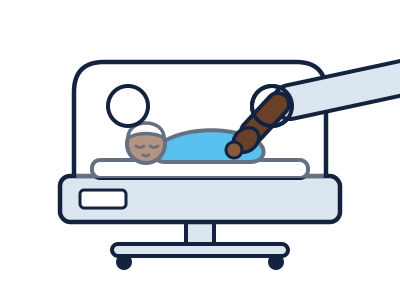
- A clear, heated cot that keeps a small baby warm and protected. The round ports on the side let you reach in to touch your baby.
- Radiant warmer
- An open cot with a heater above it, used when the team needs easy access to the baby.
- CPAP
- Gentle air pressure through small prongs or a mask on the nose. It keeps the lungs open so the baby can breathe on their own with less effort.
- Oxygen
- Extra oxygen, often through thin nasal tubes. The amount is adjusted using the monitor, because too much and too little can both cause harm.
- Ventilator
- A breathing machine connected to a tube in the windpipe, for babies who need the machine to breathe for them for a while.
- Surfactant
- A liquid put into the lungs of some premature babies. It helps the tiny air sacs stay open.
- Monitor and oxygen probe
- Stickers and a small light wrapped on a hand or foot show heart rate, breathing and oxygen level (saturation) on a screen.
- Phototherapy
- Blue light treatment for jaundice. The baby wears eye pads and a nappy. See our jaundice guide.
- NG tube
- A soft, thin feeding tube passed through the nose into the stomach, used until the baby can suck, swallow and breathe together.
- Cannula or drip
- A small plastic tube in a vein, often in a hand or foot, for fluids, sugar and medicines.
- Umbilical line
- A thin tube placed in the blood vessels of the cord stump, used in the first days for fluids and blood tests without repeated needles.
- Apnoea
- A pause in breathing of 20 seconds or more, or a shorter pause with a low heart rate or colour change. Common in premature babies; some are given caffeine to reduce it.
- Bradycardia ("brady")
- A drop in heart rate, often with an apnoea. Many settle on their own or with a gentle touch.
- Desaturation ("desat")
- A dip in the oxygen level on the monitor.
- Corrected age
- Your baby's age counted from their due date rather than their birth date. A baby born 8 weeks early who is now 5 months old has a corrected age of 3 months.
- Kangaroo care
- Holding your baby, in a nappy, upright on your bare chest, wrapped against you. Also called skin-to-skin care.
- EBM
- Expressed breast milk: milk you have removed by hand or pump for your baby.
- ROP
- Retinopathy of prematurity: a condition of the back of the eye in very premature babies. Eye checks find it early, when it can be treated.
Your Milk: Expressing and Colostrum
Breast milk is the one part of NICU care nobody else can provide. For premature babies it lowers the risk of serious gut infection (necrotising enterocolitis), blood infection, and other complications, and it is easier to digest. Even if you did not plan to breastfeed, your milk in these first weeks is worth the effort.
Your first milk, colostrum, is thick and yellow, and comes in drops or a few millilitres at a time. That is normal. It is concentrated, full of antibodies, and may be given to your baby by tube, syringe, or dabbed inside the cheek as mouth care. Bring every drop to the nurses.
How to Express by Hand
- Wash your hands and have a clean container from the unit ready.
- Help the milk flow. Sit near your baby or look at a photo of them, gently massage the breast, and use a warm cloth for a few minutes.
- Make a C shape with your thumb and finger about 2 to 3 cm back from the nipple, on the edge of the darker area.
- Press back towards your chest, then squeeze gently and release. Keep a rhythm. It may take a few minutes before drops appear.
- Move your fingers around the breast when the flow slows, then switch sides. Collect every drop.
- Label the container with your baby's name, the date and time, and give it to the nurse as the unit advises.
Express at least 8 times in 24 hours, including once at night, when the hormone that makes milk is highest. Once your milk increases, usually after a few days, a pump — ideally a hospital-grade one — saves time. Ask the unit what is available. Keep milk cool when carrying it from home, in a cool box with ice packs, and follow the unit's storage rules, which are stricter for sick and premature babies.
If your supply is low, it is not a sign you have failed. Stress, pain and separation all slow milk down. Expressing close to your baby, kangaroo care, rest, food and drink all help, and so does the unit's feeding support. If your baby needs formula as well, the team chooses the right one for your baby.
Kangaroo Mother Care
Kangaroo mother care (KMC) means holding your baby skin to skin on your chest for long periods, and feeding them with breast milk. The World Health Organization recommends it for small and premature babies as soon as possible after birth, for as many hours a day as you can — and many babies on CPAP or with drips can have it. The team shows you when and how to start. It helps babies keep warm, breathe and feed more steadily, gain weight and go home sooner, and it lowers the risk of death in small babies.

- Wear something that opens at the front, and sit in a chair that lets you lean back a little.
- Your baby wears a nappy and a hat only, and lies upright between your breasts, chest to chest, with legs bent up like a frog.
- Turn the head to one side, tilted slightly up, so you can see the face and the nose and mouth are clear.
- Wrap a cloth firmly around you both, up to the baby's ears, so the baby is secure if you move or doze. Put your top or a wrapper over the baby's back.
- Stay for at least an hour at a time, and longer if you can. Each move in and out of the incubator uses energy, so fewer, longer sessions are better.
Fathers and other close family can give kangaroo care too. At home, continue for as long as your baby is happy to stay — usually until they start wriggling out, often around the time they reach their due date or 2.5 kg.
Taking Part in Your Baby's Care
Parents who take part in daily care learn their baby's signals early and feel more confident at home. Ask the nurses to show you how to:
- Touch your baby calmly. Very small babies often prefer a still, warm hand cupped around the head and feet (a "hand hug") to stroking.
- Read their signals. Splayed fingers, turning away, hiccups or colour change can mean "I need a rest". Calm, pink and settled means "this is fine".
- Change nappies, take temperatures, do mouth care with colostrum, and help with tube feeds.
- Talk, read and sing softly. Your baby knows your voice from pregnancy.
- Try breastfeeding when the team says your baby is ready, often starting with licking and nuzzling at an expressed breast.
Wash your hands with soap and water, or use hand gel, every time you touch your baby or their things. Keep brothers, sisters and visitors with coughs, colds, fever or diarrhoea away. Ask the unit about its visiting rules.
Looking After Yourself
You may be recovering from a caesarean or a difficult birth while travelling to and from the unit. Many parents feel guilt, shock, numbness or fear, sometimes all in one day. These feelings are common, and premature birth is very rarely caused by anything a mother did.
- Eat, drink and sleep when you can. Expressing, healing and worry all use energy.
- Accept practical help — food, transport, care for older children.
- Watch for low mood that does not lift, constant anxiety, panic, or thoughts of harming yourself. Tell the team or your own doctor; postnatal depression and anxiety are treatable, and fathers can be affected too.
- Ask about costs and your HMO cover early, so money questions do not add to the strain. The care team tells you who to speak to.
Questions to Ask the Team
Now
Before Going Home
Going Home
Most babies are ready to go home when they can breathe on their own without pauses, keep warm in an ordinary cot, and feed well enough by breast or bottle to gain weight steadily. For many premature babies this is around their original due date, sometimes earlier. Before discharge, many units ask you to stay in and care for your baby yourself for a day or two, with nurses close by.
- Feeding: follow the plan you are given. Small babies tire easily, so feeds may be little and often. Weigh your baby as advised, usually weekly at first.
- Warmth: small babies lose heat quickly. Keep going with kangaroo care, keep the room free of draughts, and dress your baby for the room without over-wrapping.
- Sleep: always on the back, in their own cot, even if they slept on their tummy in the NICU while monitored. See safe sleep.
- Eye checks: many premature or small babies need checks for ROP. Ask the team whether your baby does, and when and where they will be done — sometimes after discharge. Do not miss them — treatment works best when it is started on time.
- Hearing: every baby who has been in the NICU should have a hearing test before or soon after going home.
- Vaccines: given by the actual birth date, not the corrected age. A premature baby needs the same protection on time. See the vaccine schedule.
- Development: use corrected age when you look at milestones until about two years of age. Premature babies are more likely to need extra support, so regular developmental checks are part of follow-up. Track progress with our milestones tool; our development service assesses any baby whose progress needs a closer look.
- Infection: keep up handwashing, keep sick visitors away, and avoid smoke in the home.
Warning Signs After Discharge
Come In Now
Emergency department, straight away
- Breathing pauses of 20 seconds or more, or any pause with colour change
- Blue or grey lips, tongue or face
- Breathing 60 or more times a minute, grunting, or skin sucking in under the ribs
- Not feeding, or too sleepy or weak to feed
- Floppy, or hard to wake
- Temperature 38 °C or more, or below 35.5 °C
- A fit, or green vomit, or a swollen, tight tummy
See a Doctor Today
Same day, not tomorrow
- Feeding less than usual, or fewer wet nappies
- Vomiting most feeds
- Yellow skin coming back or getting deeper
- Blood in the poo
- A cough, or a runny nose that is making feeding hard
- You feel something is not right
Usually Normal
Mention it at the next check
- Short breathing pauses of a few seconds during sleep that settle on their own
- Grunting and squeaking noises during sleep
- Hiccups, sneezing, bringing up a little milk
- Slower progress than a baby born on time, if on track for corrected age
If you are coming to Limi in an emergency, call 0813 408 5400 on the way so the team can prepare. Have someone else drive if you can, so you can watch your baby. Bring the discharge summary.
Questions Parents Ask
Did I cause my baby to come early?
Almost always, no. Many premature births have no known cause, and others follow infections, high blood pressure, twins, or problems with the placenta that nobody could have prevented at home. If you have questions about a future pregnancy, ask for a talk with the team or your obstetrician.
Will I still be able to breastfeed?
Many mothers of premature babies breastfeed fully. Expressing often from the first hours protects your supply while your baby learns. Kangaroo care and early practice at the breast help the move from tube to breast.
Can I hold my baby while they are on CPAP or have a drip?
Often, yes. Nurses help you move your baby safely with the tubes in place. Ask each day; the answer may change as your baby grows stronger.
Will my baby catch up?
Most premature babies catch up with their growth and development in the first two to three years, especially those born after 32 weeks. Using corrected age helps you see progress fairly. Follow-up checks find any delay early, when support helps most.
Why does my baby need so many blood tests, or a transfusion?
Blood tests guide oxygen, feeding, jaundice and infection treatment. Small babies have little blood, and their bodies make new red cells slowly, so some need a transfusion. The team explains why and asks for your consent first.
I am pregnant and may deliver early. What can I ask?
Ask whether you should give birth in a hospital with a neonatal unit, whether steroid injections to help the baby's lungs are recommended for you, and whether you can visit or speak to the neonatal team before birth. Moving before birth is safer for a premature baby than moving after. Health workers arranging transfer can see newborn transfer.
Sources
- World Health Organization. WHO recommendations for care of the preterm or low-birth-weight infant. 2022.
- World Health Organization. Kangaroo mother care: a practical guide. 2003.
- World Health Organization and UNICEF. Survive and thrive: transforming care for every small and sick newborn. 2019.
- National Institute for Health and Care Excellence. Developmental follow-up of children and young people born preterm (NG72). 2017.
- Fierson WM, American Academy of Pediatrics Section on Ophthalmology and others. Screening examination of premature infants for retinopathy of prematurity. Pediatrics, 2018.
- Federal Ministry of Health, Nigeria. Nigeria Every Newborn Action Plan. 2016.
Written for parents and carers in NigeriaClinically reviewed by Limi Children’s Hospital cliniciansLast updated September 2026Next review due September 2027