
If You Remember Nothing Else
- Crying usually peaks around 6 weeks and settles by 3 to 4 months. Evenings are often the worst.
- Crying with a fever, floppiness, poor feeding, green vomit or a weak or high-pitched cry means come in now.
- Go through the checklist: hungry, wind, nappy, too hot or cold, tired, wants holding, something hurting.
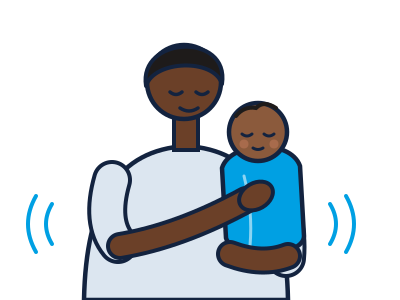
- Holding, walking, gentle rocking and shushing help many babies. You cannot spoil a young baby by carrying them.
- Never shake a baby. If you are at breaking point, put the baby on their back in the cot, step away, and call someone.
- No gripe water, agbo or other drinks. They do not treat colic and can harm a young baby.
Crying That Can Mean Illness
Most crying is normal. But crying is also one of the few ways a baby can tell you they are unwell. What matters is not only how much your baby cries, but how they cry and what else you notice.
Come In Now
Emergency department, straight away
- A weak, moaning or unusually high-pitched cry
- Temperature 38 °C or more in a baby under 3 months
- Floppy, very sleepy or hard to wake between cries
- Not feeding at all
- Green or yellow-green vomit, or vomit with blood
- Breathing fast, grunting, or skin sucking in under the ribs
- Screaming in bouts with legs drawn up, turning pale, and red-jelly or bloody poo
- A bulging soft spot on the head, a fit, or a rash that does not fade under a glass
See a Doctor Today
Same day, not tomorrow
- A change: crying far more, or quite differently, than usual
- Forceful vomiting that shoots out after feeds
- Fewer wet nappies, or feeding much less
- Crying every time they feed, arching and refusing the breast or bottle
- Crying with fever in a baby over 3 months
- Crying after a fall or bump
Usually Fine at Home
Try the checklist and soothing ideas below
- Crying worst in the late afternoon and evening
- A baby who feeds well, has plenty of wet nappies, and is gaining weight
- Calm, alert spells between crying
- Bringing up small amounts of milk without distress
If you are coming to Limi in an emergency, call 0813 408 5400 on the way so the team can prepare. If you are not sure, use our fever checker.
How Much Crying Is Normal
Crying follows a pattern in most healthy babies. It builds from about two weeks old, peaks at around six weeks, and then eases, so that by three to four months most babies cry much less. At the peak, two to three hours of crying spread across a day is common. Much of it comes in the late afternoon and evening, and some of it cannot be settled however skilled the parent.
This is the "crying curve". Knowing about it helps in two ways: it tells you the hardest weeks will pass, and it tells you that a baby who cries at six weeks is behaving like a six-week-old, not like a baby whose parents are doing something wrong.
Checklist: Why Is My Baby Crying?
Go Through These Calmly, One at a Time
Ways to Soothe a Crying Baby
No one method works for every baby, and what works today may not work tomorrow. Try one thing for a few minutes before switching, as changing too quickly can overstimulate a tired baby.
- Hold your baby close, skin to skin if you can. Your heartbeat and warmth are calming.
- Move gently: walk, sway, rock or bounce softly. A walk with the baby in a sling or wrapper on your back or front often helps.
- Try a different hold (see below).
- Make a steady sound: "shhh" close to the ear, humming, a fan, or quiet repetitive music.
- Offer the breast for comfort, or a dummy once breastfeeding is going well, usually after about four weeks.
- Wrap your baby snugly in a thin cloth with the arms in, leaving the hips loose so the legs can bend up and out. Always lay a wrapped baby on their back, and stop wrapping once they start trying to roll.
- A warm bath, then a quiet, dim room.
- Hand over to someone else for a while. A fresh pair of arms often settles a baby, and gives you a break.
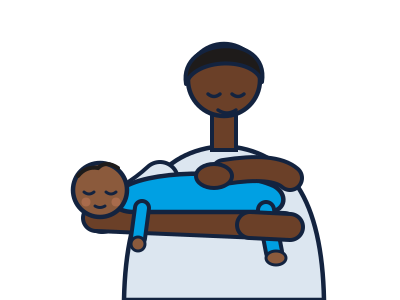
The upright hold against your shoulder, with one hand under the bottom and the other on the back, is another that many babies like, especially after feeds. A baby who falls asleep in your arms should be put down on their back in their own cot, not left to sleep on their tummy.
When You Are at Breaking Point
Hours of crying, with little sleep, can make any parent feel desperate, angry or tearful. These feelings do not make you a bad parent. What matters is what you do next. Shaking a baby, even for a few seconds, can cause bleeding in the brain, blindness, lasting disability or death. Babies' heads are heavy and their neck muscles weak, so it takes much less force than people imagine.
- Put your baby down safely. On their back, in their cot, with nothing else in it. A baby crying in a safe cot for a few minutes will come to no harm.
- Step out of the room and close the door. Go somewhere you cannot hear the crying so loudly.
- Take ten minutes to calm down. Breathe slowly, drink some water, sit outside.
- Call someone. Your partner, a relative, a friend, a neighbour — anyone who can talk to you or come to help.
- Go back when you feel calmer, and check on your baby.
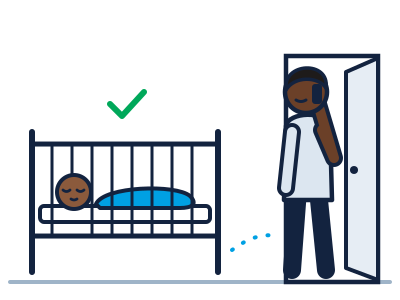
Share this plan with everyone who looks after your baby — your partner, grandparents, a nanny, older children. Tell them that it is always all right to put the baby down and walk away for a few minutes, and never all right to shake them. If you often feel you cannot cope, or you have thoughts of harming your baby or yourself, tell a doctor or nurse, or call us. Crying babies and low mood after birth often go together, and both get better with help.
Colic
Colic is the name for long bouts of crying in a baby who is otherwise healthy, feeding well and growing. The crying often starts at the same time each day, usually in the evening. The baby may go red in the face, clench their fists and draw up their legs, and be very hard to comfort. Doctors once used a "rule of threes" — crying for more than three hours a day, on more than three days a week, for more than three weeks — but you do not need to count. If your baby is healthy and cries a great deal, that is colic.
Nobody knows exactly what causes it. It is not caused by anything the parents did, and it goes away with time, usually by three to four months and almost always by six months. No medicine has been shown to reliably cure it; ask a doctor before giving any. What helps is the soothing above, breaks for parents, and a doctor's check to make sure nothing else is going on. Bring your baby in if you are not sure it is colic — especially if the crying started suddenly, your baby is not gaining weight, or you notice anything in the red or amber lists.
Posseting, Reflux and GORD
Posseting — bringing up small amounts of milk after feeds — is very common, and so is reflux, where milk comes back up from the stomach because the muscle at the top of the stomach is not yet strong. Around four in ten babies bring up milk regularly in the first months. It usually peaks around four months and stops by the first birthday. If your baby is happy, feeding and growing, it is a laundry problem, not a medical one.
Reflux becomes GORD (gastro-oesophageal reflux disease) when it causes problems: distress and arching during or after feeds, refusing feeds, poor weight gain, or a cough or breathing troubles linked to feeds. Book a check so a doctor can assess it.
Things that can help reflux:
- Hold your baby upright during and for a while after feeds.
- For bottle-fed babies, smaller feeds more often, without increasing the total. Ask a doctor before trying a thickened formula.
- Keep your baby away from tobacco smoke.
- Always put your baby to sleep flat on their back. Sleeping on the tummy or side, or propped up on pillows, does not help reflux and increases the risk of sudden infant death.
- Do not add pap, cereal or anything else to the bottle unless a doctor has advised it.
See a doctor today if vomiting is forceful and shoots across the room, especially in a baby between two and eight weeks old, as this can be a narrowing at the stomach outlet that needs an operation. Green vomit, blood in the vomit, a swollen tummy, or vomiting with fever means come in now.
Could It Be Cow's Milk Allergy?
A small number of crying babies have an allergy to the protein in cow's milk, usually through formula, and less often through a breastfeeding mother's diet. Clues that make it more likely:
- vomiting, diarrhoea, or mucus or blood in the poo
- eczema, or a rash or swelling soon after feeds
- poor weight gain
- a family history of eczema, asthma or allergies
Crying on its own is rarely allergy. If you notice these signs, book a check with a doctor. Do not switch between formulas, or move to goat's milk, soya or "lactose-free" milk on your own, and do not cut foods from your own diet without advice — you may lose nutrition you need without helping your baby. If allergy is likely, the doctor may suggest a trial of a special formula or a supervised change to a breastfeeding mother's diet. Swelling of the face, or difficulty breathing after a feed, means come in now. Read more in our allergies guide.
Remedies to Avoid
Give gripe water, agbo or other herbal mixtures for tummy pain.
They have not been shown to help colic. Some contain alcohol, sugar or herbs that can harm a young baby's liver and kidneys. A baby under six months needs only breast milk or formula.
Give water, pap or a little ogi to "fill the stomach" so the baby sleeps.
Other foods and drinks before six months crowd out milk and can cause diarrhoea. If you think your baby is hungry, feed more often and check the nappies and weight.
Carrying the baby every time they cry will spoil them.
Young babies cannot be spoiled. Responding to crying helps them feel secure, and they often cry less later.
Toss the baby in the air or jiggle them hard to stop the crying.
Rough movement can injure a young baby's brain in the same way shaking does. Gentle rocking and swaying are enough.
Lay the baby on their tummy to sleep to ease colic or reflux.
Tummy sleeping raises the risk of sudden infant death. Tummy time is for awake babies being watched. For sleep, always on the back.
Questions Parents Ask
Is my diet making my breastfed baby cry?
Usually not. Most babies are not bothered by what their mother eats, including pepper, beans or spices. Cutting out many foods rarely helps and can leave you short of energy. If you think one food is a problem, talk to a doctor before removing it for good.
Should I change my baby's formula?
Changing brands rarely helps colic, and frequent changes can upset the tummy. Talk to a doctor first, especially if you notice the allergy signs above.
Can my baby hurt themselves by crying for a long time?
No. Crying does not damage a healthy baby's lungs or cause a hernia, even when it goes on for a long time. It is hard to hear, but a baby crying in a safe cot while you take a break is safe.
Can I give paracetamol to settle my baby?
Do not give medicine for crying on its own. A baby who seems to be in pain needs to be seen so the cause can be found. Babies under three months should not be given any medicine unless a doctor has advised it.
Is a dummy all right?
A dummy can help some babies settle, and using one at sleep times is linked with a lower risk of sudden infant death. If you are breastfeeding, wait until feeding is going well, usually around four weeks. Never dip it in sugar, honey or anything else, and do not tie it around the neck.
When will it end?
For most babies, crying eases noticeably by three to four months. If it is not improving by then, or you are struggling, book a check — for your baby and for you.
Sources
- Wolke D, Bilgin A, Samara M. Systematic review and meta-analysis: fussing and crying durations and prevalence of colic in infants. The Journal of Pediatrics, 2017.
- National Institute for Health and Care Excellence. Gastro-oesophageal reflux disease in children and young people: diagnosis and management (NG1). 2015, updated 2019.
- National Institute for Health and Care Excellence. Food allergy in under 19s: assessment and diagnosis (CG116). 2011.
- Christian CW, American Academy of Pediatrics Committee on Child Abuse and Neglect. Abusive head trauma in infants and children. Pediatrics, 2009.
- American Academy of Pediatrics. Caring for Your Baby and Young Child: Birth to Age 5, 7th edition. 2019.
- World Health Organization. WHO recommendations on maternal and newborn care for a positive postnatal experience. 2022.
Written for parents and carers in NigeriaClinically reviewed by Limi Children’s Hospital cliniciansLast updated September 2026Next review due September 2027