
If You Remember Nothing Else
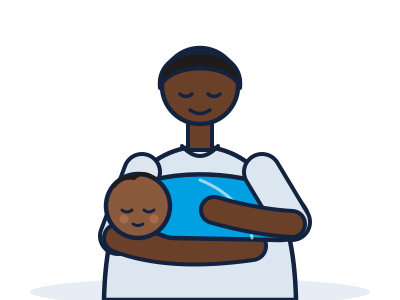
- Always support the head and neck. Never shake a baby, even in play.
- Keep the cord clean and dry. Put nothing on it unless a health worker has given you chlorhexidine for it. Fold the nappy below it.
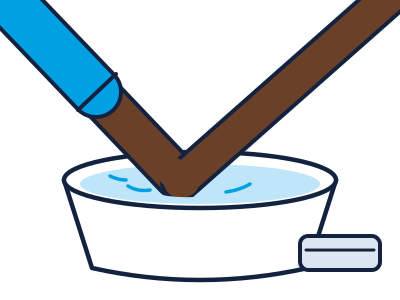
- Test the bath water with your elbow. It should feel warm, never hot. Never leave a baby alone in water, even for a moment.
- Nothing in the nose, ears or eyes. No oil, shea butter, breast milk, tiro or herbs.
- Dress your baby for the room. In Abuja heat, a vest and nappy or one light layer is often enough. Sweaty and flushed means too hot.
- Wash hands before holding the baby, and keep anyone with a cough, fever or cold sore away.
- BCG, polio and hepatitis B are due at birth. Keep the child health card safe and bring it to every visit.
When to Stop Reading and Come In
A newborn who will not feed, is hard to wake, feels hot (38 °C or more) or cold (below 35.5 °C), breathes fast or grunts, or has a fit needs to come to Limi Children's Hospital now, day or night. If you cannot get here quickly, go to the nearest emergency department. Have someone else drive if you can, so you can watch your baby, and call 0813 408 5400 on the way so the team can prepare. See newborn warning signs for the full list.
Holding Your Baby
A newborn's neck muscles cannot yet hold up the head, which is large and heavy for the body. Every time you pick your baby up or put them down, slide one hand under the head and neck and the other under the bottom. In your arms, let the head rest in the crook of your elbow or against your shoulder.
Normal washing and stroking will not harm the soft spots on the head (fontanelles). What does harm babies is shaking. A few seconds of shaking can cause bleeding in the brain. Never shake a baby, in anger or in play, and never throw a young baby in the air. If crying is getting too much, read what to do when you are at breaking point.
When your baby is awake and you are watching, give short spells on their tummy on a firm surface, or on your chest. A few minutes several times a day, from the first weeks, strengthens the neck and back. Babies always sleep on their back — see safe sleep.
Caring for the Cord
The stump of the umbilical cord dries, darkens and falls off on its own, usually between 5 and 15 days after birth. It needs very little from you.
- Keep it clean and dry. If it gets soiled with wee or poo, clean it with cooled boiled water and a clean cloth, then pat it dry.
- Leave it open to the air. Fold the top of the nappy down below the stump, and do not cover it with a tight binder or bandage.
- Put nothing on it unless a health worker has given you chlorhexidine for it — no powder, oil, toothpaste, ash, cow dung, herbs, spirit or hot compresses. Chlorhexidine cord gel is recommended in Nigeria's national newborn guidance; use it only as the health worker showed you.
- Wash your hands before and after touching it.
- Let it fall off by itself. Do not pull it, even when it is hanging by a thread.
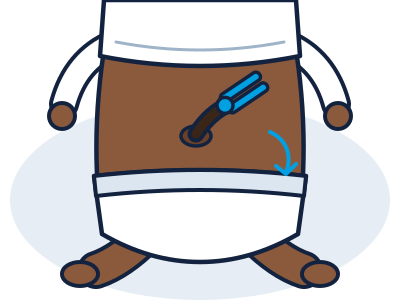
A drop or two of blood, or a little moisture at the base when the cord comes off, is normal. After it falls, the belly button may look moist for a few days and should then heal. Things to watch for:
- See a doctor today for redness spreading onto the skin of the tummy, swelling, pus or a bad smell. Cord infections can spread quickly in a newborn.
- Come in now if there is redness around the cord and the baby is feverish, floppy, not feeding or unwell, or if bleeding does not stop after 10 minutes of gentle pressure.
- Mention it at the next check if a small, moist, pink lump stays in the belly button after the cord falls off (a granuloma — simple to treat) or if the cord has not come off after about three weeks.
A soft bulge at the belly button that gets bigger when the baby cries is usually an umbilical hernia. It is common in African babies and most close on their own in the first few years. Do not strap a coin or tight band over it; this does not help and can damage the skin.
Bathing Safely
Until the cord has fallen off and the belly button has healed, give your baby a sponge bath ("top and tail") rather than putting them in water. In the heat you can do this every day. Once the cord has healed, a bath in a basin two or three times a week is enough, with a quick wash of the face, neck folds and nappy area on other days.
- Get everything ready first. Towel, clean clothes, nappy, a soft cloth, and cooled boiled water in a small bowl for the eyes. Close windows if it is windy or cool.
- Fill the basin with a little warm water — a few centimetres is enough. Put cold water in first, then add hot, and mix well.
- Test with your elbow. The water should feel comfortably warm, not hot. Hands are used to hot water and are not a good guide. If you have a bath thermometer, aim for about 37 °C, and never above 38 °C.
- Wipe the eyes first, each one from the inside corner outwards, using a fresh piece of cotton wool or cloth for each eye.
- Wash from the top down, ending with the nappy area. Clean girls from front to back. Do not pull back a baby boy's foreskin.
- Keep one hand on your baby the whole time. If you must leave, take the baby with you, wrapped in the towel. A baby can drown in a few centimetres of water in seconds.
- Pat dry, especially in the creases, and dress your baby straight away.
Use plain water in the first weeks. After that, a small amount of mild, unperfumed baby wash is fine. Avoid bubble bath, antiseptic in the water, and perfumed soaps. If your baby's skin is dry, a plain, unperfumed moisturiser, or a little shea butter on the skin, is a family choice. Put nothing into the nose, ears or eyes: oil dropped into the nose can be breathed into the lungs. Clean only the outside of the ears and nose — no cotton buds inside.
Nappies, Wee and Poo
Nappies tell you whether your baby is getting enough milk. Expect at least 8 changes a day at first.
| Age | Poo | Wet nappies |
|---|---|---|
| Days 1 to 2 | Meconium: black-green, thick and sticky. Hard to wipe off — a little oil on the skin first helps. | 1 to 2 a day. Small orange-pink crystals in the nappy can be normal. |
| Days 3 to 4 | Changing: greenish-brown, looser. This shows milk is coming through. | 3 to 4 a day, getting heavier. |
| Day 5 to week 6 | Breastfed: mustard-yellow, soft or runny, seedy; usually at least 2 to 3 a day, often after every feed. Formula-fed: paler, firmer, yellow-brown. | 6 or more heavy wet nappies a day. Urine pale and nearly clear. |
| After 6 weeks | Some breastfed babies go several days without a poo. That is fine if it is soft when it comes. | Still 6 or more a day. |
Green poo now and then is normal. Straining and going red before passing a soft poo is normal. Pellets or hard poo in a breastfed baby is not usual; mention it at the next check. See a doctor today for pale, white or clay-coloured poo (see the stool colour card), blood in the poo, fewer than 6 wet nappies after day 5, dark urine, or orange crystals after day 3. In baby girls, a little white discharge or a small amount of blood from the vagina in the first week is caused by the mother's hormones and is normal.
Nappy rash is common. Change nappies often, clean with water and a soft cloth, let the skin air for a few minutes, and use a thin layer of a barrier cream (zinc oxide) on red skin. See a doctor if the rash is raw, blistered, spreading into the creases with red spots at the edges, or not better after a few days.
Newborn Skin
These skin changes are common and harmless in the first weeks:
- Milk spots (milia): tiny white spots on the nose and cheeks. Do not squeeze them.
- Newborn rash: red blotches, sometimes with a small yellow-white centre, that come and go on the body in the first days.
- Peeling and dry skin, especially on the hands and feet, in babies born at or after their due date.
- Baby acne: small red spots on the face at a few weeks old, which clear on their own.
- Blue-grey patches on the lower back and bottom (slate-grey birthmarks; the medical name is congenital dermal melanocytosis). These are birthmarks, very common in African babies, and fade over years. Ask for them to be noted in the child health card so nobody mistakes them for bruises.
- Heat rash: tiny red or clear spots on the neck, chest and back, a sign the baby is too warm. Remove a layer.
- Cradle cap: yellow, greasy scales on the scalp. Wash the hair and gently brush the scales loose.
A rash is a reason to see a doctor today if it comes with fever or a baby who is unwell, if there are blisters or pus spots that are spreading, or if there are purple or dark red spots that do not fade when you press a clear glass against them — that one means come in now.
Warm, but Not Too Hot
Newborns cannot control their temperature well, so they can get cold quickly after birth or a bath — and in Abuja's heat, they overheat just as easily. Being too hot is uncomfortable, and overheating during sleep is linked to sudden infant death.
- Dress your baby in no more than one light layer more than you would wear to be comfortable in the room. On a hot afternoon that may be just a vest and a nappy. On a cool harmattan night, or in an air-conditioned room, a sleepsuit and a light wrapper.
- Check the chest or the back of the neck, not the hands and feet, which are often cool. It should feel warm, not hot or sweaty.
- Signs of being too hot: sweating, damp hair, flushed cheeks, heat rash, fast breathing. Take off a layer and offer a feed.
- No hat indoors once the baby is home, and never while asleep. A sunhat and shade for going out.
- Skin to skin on a parent's chest is the fastest way to warm a baby who feels cool.
Visitors and Handwashing
A newborn's defences against infection are still weak. An infection that is mild in an adult can be serious in a baby.
- Ask everyone to wash their hands with soap and water before holding the baby. Keep soap and a clean towel easy to reach.
- Anyone with a cough, cold, fever, diarrhoea or rash should visit later.
- No kissing on the face or hands. The virus that causes cold sores can cause a life-threatening infection in a newborn.
- No smoking in the house, in the car, or by anyone holding the baby. Keep the baby away from cooking smoke and generator fumes.
- At a naming ceremony, it is fine to keep the baby with one or two people rather than passing them around, away from crowds and smoke, and to step aside for feeds.
Mosquitoes and Nets
Malaria can make a baby very ill very quickly. Put your baby to sleep under a long-lasting insecticide-treated net for every sleep, day and night, tucked in well, with the baby lying on their back on a flat, clear surface underneath (see using nets safely). Treated nets are safe for babies. Do not burn mosquito coils or use sprays in the room where the baby sleeps — the smoke and chemicals irritate small lungs. A temperature of 38 °C or more in a baby under three months means come in now.
First Check-Ups and Vaccines
Before leaving the place of birth, most babies have a full examination, an injection of vitamin K to prevent a rare but serious bleeding problem, and the first vaccines. In Nigeria's national schedule, three are due at birth:
- BCG, against severe forms of tuberculosis. It leaves a small sore and then a scar on the upper arm over the following weeks; keep it clean and dry and put nothing on it.
- Oral polio vaccine (OPV 0), as drops in the mouth.
- Hepatitis B birth dose, ideally within the first 24 hours, which protects against passing the virus from mother to baby.
The next vaccines are due at 6 weeks. Use our vaccine schedule tool to see what is due and when, and book immunisation at Limi.
WHO recommends postnatal checks for mother and baby in the first 24 hours, around day 3, between day 7 and 14, and at 6 weeks. At these visits your baby will be weighed (most are back to birth weight by 10 to 14 days), checked for jaundice, and the cord, eyes, hips and heart looked at. Limi's well-baby clinic does these checks. Ask about a newborn hearing test if one has not been done. Register the birth with the National Population Commission too — the certificate matters later for school and travel.
Practices to Avoid
Most newborn traditions are harmless and carry real meaning. A few cause injuries that children's hospitals still see. These are the ones to skip.
Massage the baby with very hot water, or "stretch" and press the limbs and head to make them strong or well shaped.
Hot water can scald newborn skin, and forceful stretching can break bones or dislocate joints. Gentle stroking with warm (not hot) hands is fine. Babies grow strong through feeding, holding and tummy time.
Cut the uvula (the small flap at the back of the throat) to stop coughs, vomiting or poor weight gain.
Uvula cutting does not treat any illness. It can cause heavy bleeding, infection, tetanus and difficulty feeding. A baby with these problems needs to be examined.
Make cuts in the skin (scarification) or give facial marks, or make incisions to treat fits or illness.
Cuts can become infected, cause tetanus, and spread hepatitis B and HIV through shared blades. A baby who has had a fit needs hospital care, not incisions.
Put oil, shea butter, breast milk or herbal drops in the nose, ears or eyes, or line the eyes with tiro or kohl.
Keep the nose, ears and eyes free of everything. Oil can be breathed into the lungs, and some eye powders contain lead, which is poisonous to babies.
Give water, glucose water, pap or herbal drinks in the first months, especially in the heat.
Breast milk alone for the first six months, offered more often in hot weather. Other drinks crowd out milk and can carry infection. See our breastfeeding guide.
Questions Parents Ask
Can I use baby powder?
No. Powder shaken near a baby's face can be breathed in and irritate the lungs, and some powders contain menthol, which is unsafe for babies with G6PD deficiency. For nappy areas, a barrier cream works better.
When can my baby go outside?
Any time, with sensible care. Short trips in the shade are fine from the first days. Avoid direct sun, crowded places and people who are unwell in the first weeks, and keep the baby out of smoky or dusty air.
My baby's nose sounds blocked. What can I do?
Snuffly breathing is very common in newborns. A drop or two of saline (salt water) nose drops from a pharmacy before feeds can help. Do not use oil, menthol or decongestant drops. See a doctor if the baby is struggling to feed, breathing fast, or the skin sucks in under the ribs.
How do I cut my baby's nails?
Newborn nails are soft and grow fast. Gently file them with a baby nail file, or use baby nail scissors while the baby is asleep or feeding. Do not bite them off, as this can cause infection.
My baby's eyes are sticky. Is that an infection?
Some crusting in the corner of the eye is common, often from a narrow tear duct, and clears with cooled boiled water on clean cotton wool. Red, swollen eyelids or yellow-green pus in the first weeks needs to be seen the same day.
Sources
- World Health Organization. WHO recommendations on maternal and newborn care for a positive postnatal experience. 2022.
- World Health Organization. WHO recommendations on newborn health: guidelines approved by the WHO Guidelines Review Committee. 2017.
- National Institute for Health and Care Excellence. Postnatal care (NG194). 2021.
- American Academy of Pediatrics. Caring for Your Baby and Young Child: Birth to Age 5, 7th edition. 2019.
- National Primary Health Care Development Agency, Nigeria. National routine immunisation schedule.
- World Health Organization. WHO guidelines for malaria. 2023.
- Federal Ministry of Health, Nigeria. Nigeria Every Newborn Action Plan. 2016.
Written for parents and carers in NigeriaClinically reviewed by Limi Children’s Hospital cliniciansLast updated September 2026Next review due September 2027