

If You Remember Nothing Else
- Most coughs and colds are caused by viruses and get better on their own. A cough can last up to three weeks.
- Count the breaths for a full minute while your child is calm. 60 or more under 2 months, 50 or more from 2 to 12 months, and 40 or more from 1 to 5 years is fast breathing.
- Skin sucking in below the ribs, a grunt with each breath, or a harsh noise breathing in while calm means come in now.
- Antibiotics do not treat colds, and cough and cold syrups are not advised for children under six.
- Fluids, saline nose drops, rest, and a spoon of honey for children over one year are what help.
- A cough for more than two weeks that is not getting better, or with weight loss or night sweats, needs to be checked, including for TB.
What a Normal Cold Looks Like
A cold is a viral infection of the nose and throat. There are hundreds of cold viruses, so children cannot become immune to them all. Young children commonly have six to ten colds a year, more in their first years at crèche, nursery or school. This is normal and does not mean your child's immunity is weak.
A typical cold:
- starts with a sore or scratchy throat, sneezing and a runny nose (catarrh);
- may bring a mild fever for the first two or three days;
- turns the mucus thick, yellow or green after a few days — this is normal and does not mean a bacterial infection or a need for antibiotics;
- is at its worst around days two to four, then slowly improves over 7 to 10 days;
- leaves a cough, often worse at night and in the morning, that can last up to three weeks as the airways heal.
A child with a cold often eats less and is cranky. Between spells of coughing they should still be drinking, passing urine, and playing at least some of the time.
When to Come In
Pneumonia — an infection of the lungs — is a major cause of death in young children in Nigeria, and most of those deaths can be prevented with early treatment. The signs below come from the World Health Organization's guidance for sick children. If your child has any one of the "come in now" signs, come to Limi Children's Hospital now, day or night. If you cannot get here quickly, go to the nearest emergency department. Have someone else drive if you can, so you can watch your child, and call 0813 408 5400 on the way so the team can prepare.
Come In Now
Emergency department, straight away
- Skin sucking in below the ribs with each breath (chest indrawing)
- A harsh, high-pitched noise breathing in (stridor) while calm or asleep
- Breathing 60 or more times a minute while calm, at any age
- Grunting with each breath, or long pauses in breathing
- Blue or grey lips, tongue or face
- Too breathless to feed, drink or talk
- Unable to drink, or vomiting everything
- Very sleepy, floppy, or hard to wake; or a convulsion
- A baby under 3 months with a temperature of 38 °C or more
- Coughing fits followed by going blue or stopping breathing, in a baby
See a Doctor Today
Same day, not tomorrow
- Fast breathing for their age, counted while calm (50 or more from 2 to 12 months, 40 or more from 1 to 5 years)
- Wheezing (a whistling sound breathing out)
- Fever for 3 days or more, or fever that goes then comes back
- Feeding less than half the usual in a baby, or fewer wet nappies
- A barking cough with a hoarse voice (croup), even without stridor at rest
- Coughing fits that end in a whoop or vomiting
- Ear pain, or pain in the chest when breathing in
- Sudden coughing after choking on food or a small object
Usually Fine at Home
Watch, and use the tips below
- Runny or blocked nose with a cough, breathing normally
- Thick yellow or green mucus
- Mild fever in the first two or three days
- Cough still there at two to three weeks but slowly getting better
- Eating less but drinking and passing urine
Counting Breaths and Looking at the Chest
Two checks tell a doctor, and you, most of what matters about a cough. Do them while your child is calm or asleep — crying and fever make children breathe faster.
- Lift or open the top so you can see the chest and tummy. Good light helps.
- Count each rise of the chest or tummy for a full 60 seconds. Use a phone timer or our breathing counter, which also tells you what the number means for your child's age.
- Compare with the table below. If the count is at or above the number for your child's age, that is fast breathing. Fast breathing in a baby under 2 months, or 60 or more at any age, means come in now.
- Watch the lower chest, just below the ribs, as your child breathes in. Does the skin suck in? Do the nostrils flare? Is there a grunt at the end of each breath?
| Age | Fast breathing (breaths in one minute, counted when calm) |
|---|---|
| Under 2 months | 60 or more |
| 2 months to 12 months | 50 or more |
| 1 year to 5 years | 40 or more |
| Over 5 years | No single number applies. Breathing that looks fast, hard or noisy when calm needs to be seen |
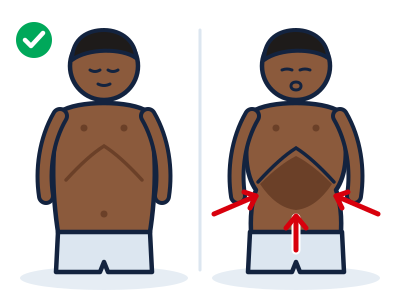
Chest indrawing means the lungs are stiff or the airway is narrowed, and the child is working hard to breathe. It is easiest to see in babies and thin children. In an older child you may also see the skin sucking in between the ribs or at the base of the neck.
What Helps
- Fluids, little and often. Breast milk for babies — feed more often, for shorter times, if a blocked nose makes feeding hard. Water, warm drinks, pap and soups for older children.
- Saline nose drops or spray. Salt-water drops from a pharmacy loosen mucus. For babies, a few drops before feeds and sleep, then gently wipe or use a soft bulb sucker at the nostril. Do not push anything inside the nose.
- Honey for children over one year. A spoonful of honey, alone or in a warm drink, can ease a cough, and it is recommended by NICE for children over one. Never give honey to a baby under one year — it can cause infant botulism.
- Paracetamol or ibuprofen for fever or a sore throat if your child is uncomfortable, using the dose on the pack for your child's age, measured with the syringe or spoon that comes with it. Do not give ibuprofen to a child who is dehydrated or vomiting.
- Rest and comfort. Keep babies on their back to sleep on a flat, firm surface, even with a cold — see safe sleep. Older children may be more comfortable propped up on a pillow.
- Keep them home while they have a fever. A child can return to school once the fever has gone and they feel well enough, even if they still cough.
What Does Not Help
Antibiotics to "clear the chest" or stop a cold becoming serious.
Antibiotics do not work on viruses, do not shorten colds, and do not prevent pneumonia. They cause diarrhoea and rashes, and each unneeded course adds to antibiotic resistance. Pneumonia needs a doctor's examination and a prescription.
Cough syrups, decongestants and "catarrh" syrups.
Studies have found they do not help children, and they can cause serious side effects. The UK medicines regulator advises against them under six years. In 2022 and 2023 the World Health Organization also warned about contaminated children's cough syrups that caused deaths in several countries. Honey and fluids work at least as well.
Menthol or camphor rubs on a baby's chest, face or nose.
These can irritate a baby's airway and cause breathing problems. Do not use them under two years, and never inside or under the nose. Camphor is poisonous if swallowed.
Breathing steam over a bowl of hot water.
Steam does not help children's coughs or croup, and hot water causes serious scalds. A warm shower or bath is safer comfort for an older child.
Herbal mixtures, kerosene, or palm oil and salt for cough.
Kerosene and petrol can cause pneumonia if a drop gets into the lungs. Herbal mixtures can harm the liver and kidneys and may delay treatment. Stick to fluids and honey.
Coughs That Need a Closer Look
Pneumonia
A child with pneumonia usually has a cough, fever and fast breathing, and may have chest indrawing, grunting, or look unwell and tired. Pneumonia can be caused by bacteria or viruses, and a doctor decides whether antibiotics are needed after examining your child, and sometimes after a chest X-ray or a blood oxygen check with a finger clip. Children with low oxygen or chest indrawing are treated in hospital. At Limi, the inpatient paediatric team cares for them day and night, and children who need intensive care go to our paediatric intensive care unit (PICU).
Croup
Croup is a viral infection that swells the voice box and windpipe. It usually affects children between six months and three years. It causes a barking cough like a seal, a hoarse voice, and sometimes a harsh noise breathing in (stridor). It is often worse at night and usually lasts two or three days.
- Keep your child calm and sitting up on your lap. Crying makes the swelling and the noise worse.
- Do not look in the throat or put anything in the mouth.
- Come in now if there is stridor while your child is calm or asleep, if the skin sucks in, if your child is drooling or cannot swallow, is pale, agitated or unusually sleepy.
- Even mild croup is worth a same-day visit. A single dose of steroid medicine prescribed by a doctor reduces the swelling.
Bronchiolitis in Babies
Bronchiolitis is a viral chest infection of babies, mostly under one year and especially under six months. It starts like a cold, then over two or three days the baby develops a cough, faster breathing and sometimes wheeze. It is usually worst around days three to five, and the cough can last three weeks. Antibiotics and inhalers do not help most babies. Watch feeding and breathing: come in now if your baby has pauses in breathing, chest indrawing or grunting, looks blue, or has had no wet nappy for 12 hours. See a doctor today if your baby is taking less than half their usual feeds or has had no wet nappy for 8 hours. Babies born early, or with heart or lung conditions, need to be seen sooner.
Wheezing
Wheeze is a high whistling sound when breathing out. Many young children wheeze with colds, and most outgrow it. Wheeze that keeps coming back, or wheeze and cough at night, with exercise or with dust, may be asthma. Read our guide to asthma.
Whooping Cough (Pertussis)
Whooping cough begins like a cold, then after a week or two brings long fits of coughing that leave the child red-faced, gasping with a "whoop", and often vomiting. It can last up to three months. Babies may not whoop at all: they may simply stop breathing or go blue after coughing, which is an emergency. The pentavalent vaccine given at 6, 10 and 14 weeks protects against it — keep your child's vaccines up to date. Antibiotics help if given early and protect others in the home.
A Cough That Started Suddenly with Choking
If a cough began suddenly while your child was eating (groundnuts, corn, beans) or playing with small objects, something may have gone into the airway. Even if the cough settles, see a doctor today. If your child cannot breathe, cough or cry, start first aid — see first aid for choking.
A Cough That Lasts: Could It Be TB?
Tuberculosis (TB) is common in Nigeria and children usually catch it from an adult they live with or spend time with. TB in children is easy to miss. Ask a doctor to check for TB if your child has:
- a cough that has lasted more than two weeks and is not getting better;
- weight loss, or not gaining weight despite eating;
- fever, often in the evenings, and night sweats;
- tiredness, less playfulness;
- swollen glands in the neck;
- contact with anyone who has TB or a long cough.
TB can be cured with a full course of treatment. Testing and treatment for TB are available free through Nigeria's national TB programme. If an adult in the home is diagnosed with TB, all children in the home should be checked, even if they are well, because young children may need preventive treatment.
Harmattan, Dust and Smoke
Harmattan
From about November to March, the dry, dusty harmattan wind brings dry coughs, blocked or bleeding noses, cracked lips, and more asthma attacks. It helps to:
- give plenty of fluids;
- use saline drops for dry noses and a little petroleum jelly on the skin around the nostrils and lips;
- keep windows closed on very dusty days, and damp-dust rather than sweep;
- keep children with asthma on their preventer inhaler as prescribed.
Smoke in the Home
Smoke from cigarettes, firewood, charcoal and kerosene stoves damages children's lungs and makes pneumonia, asthma and ear infections more likely.
- Do not allow smoking in the house or car.
- Cook outside or in a well-ventilated space, keep babies and toddlers away from the cooking fire, and use cleaner fuels such as gas where you can.
- Keep generators outside, far from windows and doors. Generator fumes contain carbon monoxide, which can kill without warning.
- Avoid burning mosquito coils or rubbish near where children sleep and play.
Preventing Chest Infections
- Vaccines. The routine vaccines protect against the main causes of serious pneumonia: pneumococcus (PCV), Hib and whooping cough (in the pentavalent vaccine) and measles. Check your child is up to date with our vaccine schedule tool.
- Breastfeeding, exclusively for six months, protects babies from chest infections.
- Good nutrition. Underweight children get pneumonia more often and more severely.
- Handwashing with soap, and teaching children to cough into a tissue or elbow.
- Keep young babies away from people with coughs and colds.
- Clean air at home: no smoke, and generators outside.
Questions Parents Ask
The mucus is green. Does my child need antibiotics?
No. Mucus often turns thick and green in the middle of a normal cold, as the body fights the virus. Colour alone does not mean a bacterial infection. Look at breathing, fever and how your child is instead.
How long will this cough last?
After a cold, a cough commonly lasts two to three weeks. See a doctor if it lasts longer than three weeks, is getting worse instead of better, or comes with any of the signs in this guide.
My child seems to have a cold all the time. Is something wrong?
Six to ten colds a year is normal in young children, and in the first year of nursery it can feel like one long cold. See a doctor if your child is not growing well, has pneumonia more than once, has ear discharge often, or has a cough that never fully clears.
Did my child catch a cold from getting wet or sleeping under the fan?
Colds are caused by viruses passed on by other people, not by rain, a cold drink, air conditioning or a fan. Children catch more colds when they mix with other children, which is why they are common at the start of school terms.
Why is the cough worse at night?
Mucus drips down the back of the throat when a child lies flat, which triggers coughing. It is common with colds. A night cough that goes on for weeks, or comes with wheeze, can be a sign of asthma and should be checked.
Can teething cause a cough and runny nose?
Teething can cause drooling and some fussiness, but not a cough, a fever of 38 °C or more, or fast breathing. If your teething child has these, look for another cause.
Sources
- World Health Organization. Integrated Management of Childhood Illness: chart booklet. 2014.
- World Health Organization. Revised WHO classification and treatment of pneumonia in children at health facilities: evidence summaries. 2014.
- National Institute for Health and Care Excellence. Cough (acute): antimicrobial prescribing (NG120). 2019.
- National Institute for Health and Care Excellence. Bronchiolitis in children: diagnosis and management (NG9). 2015, updated 2021.
- Medicines and Healthcare products Regulatory Agency. Over-the-counter cough and cold medicines for children. Drug Safety Update, 2009.
- World Health Organization. Household air pollution (fact sheet). 2024.
- World Health Organization. Roadmap towards ending TB in children and adolescents, third edition. 2023.
Written for parents and carers in NigeriaClinically reviewed by Limi Children’s Hospital cliniciansLast updated September 2026Next review due September 2027