
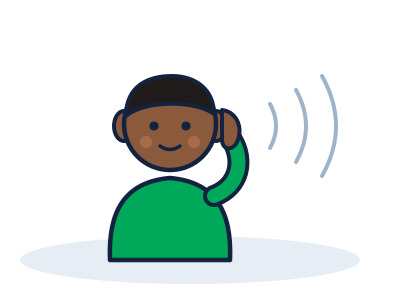
If You Remember Nothing Else
- Most ear infections get better in two to three days with pain relief and without antibiotics.
- Swelling, redness or pain behind the ear, with the ear pushed forward, means come in now.
- Put nothing in the ear: no oil, herbs, breast milk, cotton buds, sticks, or anything heated.
- Discharge that lasts more than two weeks, or keeps coming back, needs an ear specialist.
- Do not try to remove a bead, seed or insect from the ear yourself. A button battery in the ear or nose is an emergency.
- A child who does not turn to sounds, is slow to talk, or turns the TV up needs a hearing test. No child is too young to be tested.
Signs of an Ear Infection
The common ear infection in children is an infection of the middle ear (acute otitis media), the small air-filled space behind the eardrum. It usually follows a cold: the tube that connects the middle ear to the back of the nose swells and blocks, fluid collects, and germs grow in it. Children under three are most likely to get them, because this tube is short and nearly flat.
You might notice:
- ear pain, or an older child telling you their ear hurts;
- in babies and toddlers, crying more, poor sleep, and refusing feeds (sucking and swallowing can hurt);
- pulling or rubbing an ear together with a fever or being unwell — ear pulling on its own, in a happy child, is common and usually just a habit or teething;
- a fever, often up to 39 °C;
- muffled hearing for a while;
- sudden pus or fluid running from the ear, often with the pain easing — this means the eardrum has burst (see below).
An infection of the ear canal (otitis externa, sometimes called swimmer's ear) is different: the ear hurts when the outer ear is pulled or pressed, and the canal may be swollen and itchy. It needs ear drops prescribed by a doctor.
When to Come In
A small number of ear infections spread to the bone behind the ear (mastoiditis) or, rarely, to the lining of the brain. If your child has any one of the "come in now" signs, come to Limi Children's Hospital now, day or night. If you cannot get here quickly, go to the nearest emergency department. Have someone else drive if you can, so you can watch your child, and call 0813 408 5400 on the way so the team can prepare.
Come In Now
Emergency department, straight away
- Swelling, redness or tenderness behind the ear, or the ear sticking out
- Stiff neck, severe headache, or a rash that does not fade when pressed
- Very sleepy, confused, or a convulsion
- Weakness or drooping of one side of the face
- A button battery in the ear or nose
- A baby under 3 months with a temperature of 38 °C or more
See a Doctor Today
Same day, not tomorrow
- Ear pain in a baby under 6 months
- Pain or fever not improving after 2 to 3 days
- Pus or fluid coming from the ear
- Both ears painful in a child under 2
- Your child seems very unwell, or you are worried
- Something is stuck in the ear
- Sudden loss of hearing in one or both ears
Usually Fine at Home
With pain relief, and watching
- Ear pain with a cold in a child who is otherwise well
- Mild fever that is coming down
- Muffled hearing for a few weeks after an infection, improving
- Visible wax in the outer ear
Caring for an Ear Infection at Home
- Pain relief is the main treatment. Give paracetamol or ibuprofen, using the dose on the pack for your child's age, measured with the syringe or spoon that comes with it. Ear pain is often worst at night, so a dose before bed helps.
- A warm (not hot) cloth held against the outside of the ear can be soothing. Check the temperature on your own wrist first.
- Offer fluids and small feeds often. Babies may feed better sitting more upright.
- Let them rest, and expect them to be clingy and to sleep badly for a night or two.
- Do not use ear drops unless a doctor has examined the ear and prescribed them. Some drops are harmful if the eardrum has a hole in it.
When Antibiotics Are Used
Most middle ear infections clear up by themselves, and research has shown that antibiotics make little difference to pain for most children. Guidance from NICE and the American Academy of Pediatrics is that a doctor may wait and watch for two to three days in a child who is otherwise well. Antibiotics are more likely to be prescribed for:
- babies under six months;
- children under two with infection in both ears;
- children with discharge from the ear;
- children who are very unwell, or who are not getting better after two to three days;
- children with conditions that make infections more serious.
If an antibiotic is prescribed, give the full course as directed. Sometimes a doctor gives a prescription to use only if your child is not better after a set time. Do not buy antibiotics for ear pain without a doctor seeing the ear.
Discharge from the Ear
If pressure builds up behind the eardrum, it can tear, and pus runs out. This often looks alarming but the pain usually eases straight away. Most small tears heal on their own within a few weeks.
- See a doctor the same day so the ear can be examined.
- Gently wipe discharge from the outer ear with clean, dry cloth or tissue. Do not push anything into the canal.
- Keep the ear dry: no swimming, and cover the ear during bathing (a piece of cotton wool smeared with petroleum jelly, placed at the opening only, works well).
- Discharge that lasts more than two weeks, or keeps coming back, is chronic otitis media. It is common in Nigeria, can slowly damage hearing, and needs an ear, nose and throat (ENT) specialist. Our ENT clinic treats it.
Put Nothing in the Ear
Families are often advised to put things into a painful or discharging ear. The ear canal is delicate, and the eardrum is thin. Many of these remedies cause infections of the canal, damage the eardrum, or push wax and objects deeper.
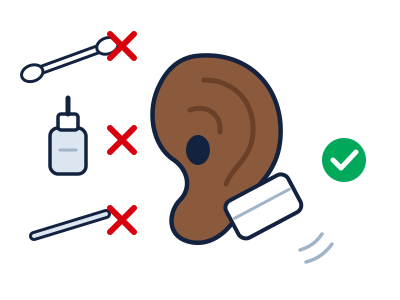
Warm oil, herbal drops, onion or leaf juice, or breast milk in the ear for pain.
These can carry germs into the ear, and harm the eardrum if it has a hole. Pain relief by mouth works better and is safer.
Hold a heated leaf, spoon or cloth to the ear.
These cause burns, especially in babies who cannot pull away. A warm cloth you have tested on your wrist is enough.
Clean inside the ears with cotton buds, hairpins, feathers or matchsticks.
Ears clean themselves. Wax moves out slowly on its own. Objects push wax deeper, scratch the canal, and can pierce the eardrum. Wipe the outer ear only.
Ear infections come from water or cold wind getting into the ear.
Middle ear infections come from germs travelling up from the back of the nose, usually during a cold. Water only matters if the eardrum already has a hole.
If Something Is Stuck in the Ear
Children often push beads, seeds, beans, paper, or small toys into their ears, and insects can crawl in.
- Do not try to remove it yourself with tweezers, a hairpin or a cotton bud. This usually pushes it deeper and can damage the eardrum.
- Do not pour water in, especially for beans or seeds, which swell when wet.
- If an object is loose at the entrance, tilting the head to that side may let it fall out. Otherwise, see a doctor the same day.
- If an insect is buzzing, keep your child calm and come in. Do not poke at it.
- A button battery in the ear or nose is an emergency. It can burn through tissue within hours. Come in now.
Glue Ear
After an ear infection, or with repeated colds, thick sticky fluid can stay behind the eardrum. This is called glue ear (otitis media with effusion). It does not usually hurt, so it is easy to miss, but it muffles hearing — like listening with fingers in the ears.
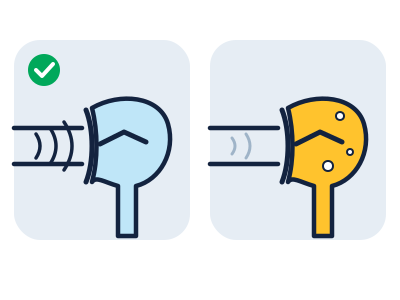
Signs of glue ear include:
- not answering when called, or seeming to "ignore" you;
- asking "what?" often, or turning the TV or phone up;
- talking loudly, or speech that is unclear or late;
- being tired, frustrated or inattentive at school;
- clumsiness or poor balance in some children.
Glue ear often clears on its own within three months. A doctor will usually check hearing, then watch and re-check. If it lasts and hearing is affected, options include hearing aids for a while, or a small operation to place tiny ventilation tubes (grommets) in the eardrums to let air in. While waiting:
- get close to your child and face them when you speak;
- turn off the TV and generator noise when talking or reading together;
- tell the teacher so your child can sit near the front.
Is My Child Hearing Well?
Children learn to talk by hearing. A child who cannot hear well will be late to speak, and the earlier a hearing problem is found, the better the chance of good language. Any worry about hearing is a reason for a hearing test, at any age.
Newborn Hearing Screening
A quick, painless hearing screen can be done in the first weeks of life, usually while the baby sleeps. International guidance is to screen every newborn by one month, confirm any hearing loss by three months, and start support by six months. Newborn hearing screening is not yet routine in every Nigerian hospital — ask for it, especially if your baby:
- spent more than a few days in a neonatal unit, or was born very early;
- had jaundice that needed an exchange transfusion, or had meningitis;
- was given certain strong antibiotics in hospital;
- has a family history of childhood deafness, or differences of the face, head or ears;
- was affected by an infection in pregnancy, such as rubella or cytomegalovirus (CMV).
What to Expect by Age
| Age | A child who hears well usually… |
|---|---|
| Newborn | Startles, blinks or wakes to a sudden loud noise |
| By 4 months | Quietens or smiles at your voice, and moves their eyes towards sounds |
| By 6 months | Turns their head towards a voice or sound, and makes babbling sounds |
| By 12 months | Responds to their name, understands "no" and "bye-bye", and says a first word or two |
| By 18 months | Says several words and points to things you name |
| By 2 years | Puts two words together and follows simple instructions without gestures |
| School age | Hears from across a room, follows instructions in class, and speaks clearly |
If your child is behind any of these, or you notice a change, ask for a hearing test. Children who speak more than one language at home (English, Hausa, Yoruba, Igbo, Pidgin) reach these milestones at the same ages when you count words in all their languages. Read more in our guide to speech and language, or check milestones with our milestone tracker.
Other causes of hearing loss in children include meningitis, measles and mumps — all preventable with vaccines — as well as some medicines, head injury, and conditions present from birth.
Protecting Children's Hearing
- Keep up with vaccines, including pneumococcal, measles and meningitis vaccines. Our vaccine schedule tool shows what is due.
- Breastfeed if you can, and do not prop a bottle for a baby lying flat. Feeding lying down can let milk reach the middle ear.
- Keep smoke away from children. Second-hand smoke increases ear infections.
- Protect from loud noise. Keep babies and children away from loudspeakers at parties, churches, mosques and events, and from generators and fireworks. Ear defenders made for children help at loud events.
- Headphones: the World Health Organization advises keeping volume below 60 % and taking regular breaks. If you can hear the music from your child's headphones, it is too loud.
Questions Parents Ask
Is ear pulling a sign of teething or an ear infection?
It can be either, or neither. Babies pull their ears when tired, teething or discovering their bodies. Ear pulling with a fever, crying, poor sleep and a cold is more likely to be an infection. If you are not sure, a doctor looks at the eardrum and tells you in a minute.
Can my child fly or travel with an ear infection?
Flying can make ear pain worse during take-off and landing. If your child has an infection, ask a doctor first. Feeding or sucking during descent, or chewing for older children, helps the ears adjust.
Can my child swim?
Children with healthy ears can swim. After a burst eardrum, or with grommets, ask the doctor — usually ears need to stay dry until the eardrum has healed.
My child has a lot of ear wax. Should I remove it?
No. Wax protects the ear and moves out on its own. Wipe away what you can see at the opening. If wax seems to block hearing or causes pain, see a doctor, who examines the ear and tells you what to do.
My child gets ear infections again and again. What can be done?
Most children grow out of them as the ear tubes grow. Reducing smoke, keeping up with vaccines and feeding upright help. If infections are very frequent, or hearing or speech is affected, book our ENT clinic: the specialist examines the ears, arranges a hearing test and may suggest grommets.
Is my baby too young for a hearing test?
No. Hearing can be tested from birth. Tests for babies are painless and often done while they sleep. Do not wait for a child to be "old enough to talk".
Sources
- National Institute for Health and Care Excellence. Otitis media (acute): antimicrobial prescribing (NG91). 2018, updated 2022.
- National Institute for Health and Care Excellence. Otitis media with effusion in under 12s (NG233). 2023.
- Lieberthal AS, et al. The diagnosis and management of acute otitis media. American Academy of Pediatrics clinical practice guideline. Pediatrics, 2013.
- Joint Committee on Infant Hearing. Year 2019 position statement: principles and guidelines for early hearing detection and intervention programs. 2019.
- World Health Organization. World report on hearing. 2021.
- World Health Organization and International Telecommunication Union. Global standard for safe listening devices and systems. 2019.
Written for parents and carers in NigeriaClinically reviewed by Limi Children’s Hospital cliniciansLast updated September 2026Next review due September 2027