
If You Remember Nothing Else
- A baby or young child with a fever and no obvious cause needs a urine test. A urine infection may be the only explanation.
- Burning when passing urine, going very often, new wetting, or tummy pain in an older child can mean a urine infection.
- A clean-catch sample, caught mid-stream into a sterile pot, gives the most reliable result. Collect it before any antibiotic.
- Fever with back or side pain, vomiting, or a child who looks very unwell may be a kidney infection. See a doctor today; come in now if your child is very sleepy or a baby under 3 months.
- Give the whole antibiotic course, and come back if your child is not better in 48 hours.
- Treat constipation, drink water through the day, and do not hold urine in to help prevent infections coming back.
A urinary tract infection (UTI) is an infection anywhere in the system that makes and carries urine: the kidneys, the tubes from the kidneys (ureters), the bladder, and the tube out of the body (urethra). Most are caused by bacteria from the child's own bowel, such as E. coli, that get into the urethra and travel up. An infection in the bladder (cystitis) is uncomfortable but not dangerous if treated. An infection that reaches the kidneys (pyelonephritis) makes children more unwell and, if repeated, can scar the kidneys.
About one in twelve girls and one in fifty boys have a urine infection during childhood. In the first months of life, boys are affected more often; after that, girls are, because their urethra is shorter.
Signs In Babies and Toddlers
Babies and young children cannot tell you it hurts to wee. They may show only:
- a fever with no clear cause — no cough, no runny nose, no diarrhoea;
- vomiting, or poor feeding;
- irritability, crying, or being unusually sleepy;
- not gaining weight well;
- crying when passing urine, or smelly, cloudy urine (these are helpful clues if you notice them, but often absent);
- in newborns, jaundice that appears or lasts longer than expected.
Because the signs are so general, guidance from NICE and the American Academy of Pediatrics is that a baby or young child with a fever that has no obvious cause should have their urine tested. In Nigeria, many such children are treated for malaria first. A malaria test and a urine test together are the right starting point for a young child with an unexplained fever.
Signs In Older Children
Children who can talk usually have clearer signs:
- pain, burning or stinging when passing urine;
- needing to go often, or urgently, and passing only a little each time;
- wetting again, in the day or at night, after being dry;
- pain low in the tummy, or in the back or side;
- urine that smells bad, looks cloudy, or has blood in it;
- fever, feeling unwell, or vomiting (more likely if the kidneys are infected).
Smelly or dark urine on its own is much more often due to not drinking enough, especially in the heat. Offer more water and see whether it clears.
When to Come In
If your child has any one of the "come in now" signs, go to the nearest emergency department. Have someone else drive if you can, and call us on the way if you are coming to Limi.
Come In Now
Emergency department, straight away
- A baby under 3 months with a temperature of 38 °C or more
- Very sleepy, floppy, confused or hard to wake
- Vomiting everything and unable to keep fluids down
- No urine for 12 hours or more, or very little, dark urine
- Cold, pale or mottled skin with a high fever
- A convulsion (fit)
See a Doctor Today
Same day, for a urine test
- A fever without an obvious cause in a child under 5
- Fever with pain in the back or side, or with vomiting
- Burning or pain passing urine
- Blood in the urine
- On antibiotics for a UTI and not better after 48 hours
- Swelling of the face or legs with a change in urine
Usually Fine at Home
Watch, and offer more water
- Dark or strong-smelling urine in hot weather that clears with more drinks
- Mild redness or itching around the genitals without fever or pain passing urine
- Improving on antibiotics within two days
Use our fever checker for help with fever at your child's age, and our dehydration checker if your child is vomiting or not drinking.
Collecting a Urine Sample
A urine test is only as good as the sample. Urine can easily pick up bacteria from the skin, and a contaminated sample can show an "infection" that is not there, or confuse the result. Ask for a sterile pot from the clinic, laboratory or pharmacy. Collect the sample before any antibiotic.
Older Children: A Mid-Stream Sample
- Wash your hands and your child's hands.
- Clean around the genitals with plain water and pat dry. Do not use antiseptics or soap, which can affect the test. Girls sit with legs apart; boys draw back the foreskin gently, only as far as it goes easily.
- Let the first few drops go into the toilet, then catch the middle of the stream in the open pot without touching the inside.
- Close the lid tightly and write the name, date and time on the pot.
Babies and Toddlers: A Clean Catch
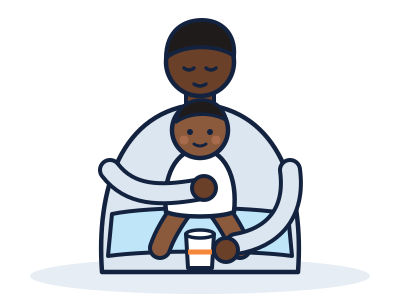
- Feed your baby, which often brings on a wee within half an hour to an hour.
- Take the nappy off and clean the genitals with plain water.
- Sit your baby on your lap on a towel, or lay them on a clean surface, and hold the open sterile pot ready.
- Catch the urine as it comes, without the pot touching the skin. A small amount is enough.
- Close the lid, label it, and take it to the laboratory as soon as possible.
Getting the sample to the lab: ideally within one hour. If there is a delay, keep it in the fridge (not the freezer) for up to about four hours. Samples left in the heat grow bacteria and give wrong results.
Urine collection bags and pads that stick on the skin are easier but get contaminated more often. A negative result from a bag is useful; a positive one may need a clean sample to confirm it. Babies who are very unwell may have a sample taken in hospital with a thin tube (catheter) or a fine needle into the bladder, which is quick and gives a reliable result.
The Tests
- Dipstick: a strip dipped in urine gives a quick answer in older children. It is less reliable in babies.
- Microscopy and culture: the laboratory looks at the urine and grows any bacteria to confirm infection and show which antibiotics will work. This is the standard test for babies and when an infection is likely to be in the kidneys.
Treatment
- Antibiotics by mouth treat most UTIs in children over three months who are not very unwell. The doctor chooses the antibiotic, and may change it when the culture result is back.
- A bladder infection usually needs a short course of a few days. A kidney infection needs a longer course.
- Babies under three months, and children who are very unwell or vomiting, are treated in hospital with antibiotics into a vein at first.
- Give every dose, for the whole course, as prescribed, even when your child feels better.
- Your child should be better within 48 hours. If the fever or pain is not improving, see the doctor again.
- Plenty of water and paracetamol (using the dose on the pack for your child's age) help with comfort.
Do not use leftover antibiotics or buy them at a chemist for a suspected UTI. Taking an antibiotic before a sample is collected can make the culture negative even when there is an infection, and the wrong antibiotic lets the infection continue. Bacteria causing urine infections in Nigeria are often resistant to common antibiotics.
Infections That Come Back, and Scans
Most children have one UTI and never have another. Some have several. The doctor decides on tests of the kidneys and bladder from the child's age and the kind of infection. Following NICE guidance, scans are more likely if:
- the child is under six months;
- the infection was in the kidneys, or the child was very unwell;
- the infection did not improve within 48 hours of the right antibiotic;
- the bacteria were unusual;
- the urine flow is weak, or a lump is felt in the tummy;
- the infections keep coming back.
The first test is usually an ultrasound scan of the kidneys and bladder, which is painless. Some children also need other scans to look for kidney scarring or for reflux.
Vesicoureteric Reflux, Explained Simply
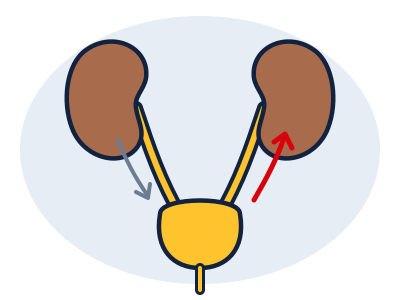
Normally, urine flows one way: from the kidneys, down the ureters, into the bladder. Where each ureter joins the bladder, there is a natural valve that stops urine flowing back. In some children this valve does not close well, so when the bladder squeezes, some urine goes back up towards the kidneys. This is called vesicoureteric reflux (VUR). It often runs in families. Any bacteria in the bladder can then reach the kidneys more easily.
Mild reflux often improves as children grow. Some children are given a low daily dose of antibiotic for a time to prevent infections, and a few need a small operation. At Limi, a children's kidney specialist explains the options and plans care with you — see our nephrology clinic and paediatric urology.
Preventing Urine Infections
- Treat constipation. A full bowel presses on the bladder and stops it emptying properly, and is one of the most common reasons infections come back. Aim for soft stools every day or two: water, fruit (pawpaw, orange, banana), vegetables, beans and whole grains help. See a doctor if constipation does not settle.
- Drink water through the day. Send a water bottle to school, and check it comes home empty.
- Do not hold it in. Encourage children to wee regularly, every three to four hours, and when they first feel the need. Many children avoid school toilets; talk to the school if this is a problem.
- Empty the bladder fully. Children should sit properly on the toilet, with feet supported and not rushing.
- Wipe from front to back after a poo, for girls, so bacteria from the bottom are not wiped forward. Teach this when toilet training.
- Change nappies promptly, especially dirty ones.
- Avoid bubble baths, perfumed soaps and antiseptics in the bath water, which irritate the genitals. Plain water is enough. Choose cotton underwear.
- Do not force back a young boy's foreskin to clean under it. It separates naturally over years.
Other Urine Problems to Know About
- Blood in the urine in a school-age child who swims or plays in streams, rivers or ponds may be schistosomiasis (bilharzia), a parasite found in parts of Nigeria. It is easily treated, and schools in some areas run treatment programmes. Tell the doctor about any water contact.
- Swelling of the face or legs, with frothy or cola-coloured urine, can be a kidney condition rather than an infection. See a doctor the same day.
- Red-looking urine can also come from foods like beetroot or some medicines. If unsure, bring a sample.
Myths and What Is True
My child caught a "toilet infection" from a dirty toilet seat.
Urine infections almost always come from bacteria that normally live in the child's own bowel. Clean toilets matter for many reasons, but toilet seats are not how UTIs spread. Constipation, holding urine and not drinking enough matter far more.
The lab report says "staph", so my child needs strong antibiotics.
Skin bacteria, including some kinds of staph, or a "mixed growth", often mean the sample was contaminated during collection. The doctor will look at the whole picture and may ask for a clean repeat sample, rather than treating the report.
Washing inside with antiseptic or salt water prevents infections.
Antiseptics and strong soaps irritate delicate skin and can make symptoms worse. Clean the outside with plain water only.
A urine infection in a girl means she is not being kept clean.
UTIs are common in girls because of how their bodies are built. They are not a sign of poor care. Wiping front to back, drinking well, and avoiding constipation help.
Questions Parents Ask
My child's urine is dark and smells strong. Is it an infection?
Usually it means your child needs more to drink, especially in the heat. Offer water through the day. If it does not clear, or there is pain, fever or wetting, get a urine test.
Can a baby have a urine infection without a fever?
Yes, though fever is the most common sign. Poor feeding, vomiting, poor weight gain and irritability can also be signs. If your baby is unwell and there is no clear reason, ask for a urine test.
Will a urine infection damage my child's kidneys?
A bladder infection treated promptly does not. Kidney infections can leave small scars, especially if treatment is delayed or infections keep happening. That is why prompt testing and treatment, and follow-up scans when recommended, matter.
Does cranberry juice help?
The evidence in children is limited and cranberry products are expensive and sugary. Plain water and treating constipation are better first steps. Ask the doctor before using any supplement.
My child has started wetting the bed again. Could it be a UTI?
It can be. New wetting in a child who was dry is a reason for a urine test. Other causes include constipation, stress, and, less commonly, diabetes — especially if your child is also very thirsty and losing weight, which needs a same-day check.
Can my child go to school with a UTI?
Yes, once they feel well enough and any fever has gone. Urine infections do not spread from child to child. Make sure they can drink and use the toilet freely at school.
Sources
- National Institute for Health and Care Excellence. Urinary tract infection in under 16s: diagnosis and management (NG224). 2022.
- National Institute for Health and Care Excellence. Urinary tract infection (lower): antimicrobial prescribing (NG109). 2018.
- American Academy of Pediatrics. Urinary tract infection: clinical practice guideline for the diagnosis and management of the initial UTI in febrile infants and children 2 to 24 months. Pediatrics, 2011, reaffirmed 2016.
- National Institute for Health and Care Excellence. Fever in under 5s: assessment and initial management (NG143). 2019, updated 2021.
- National Institute for Health and Care Excellence. Constipation in children and young people: diagnosis and management (CG99). 2010, updated 2017.
- World Health Organization. Schistosomiasis (fact sheet). 2023.
Written for parents and carers in NigeriaClinically reviewed by Limi Children’s Hospital cliniciansLast updated September 2026Next review due September 2027