If You Remember Nothing Else
- Autism is a difference in brain development, not bad parenting, a vaccine injury or a spiritual attack. Nobody is to blame.
- Losing words or skills at any age needs to be seen soon. So does a child who does not respond to their name, point, or show you things by 12 to 15 months.
- Only a trained team can diagnose autism. Lists of signs, including this one, are a reason to ask, not a diagnosis.
- Early support makes a real difference. You do not need a diagnosis to start helping your child talk and play.
- There is no cure, and anything sold as one can hurt. Chelation, "bleach" drinks, strict diets without medical advice, and beating or starving a child in the name of deliverance are dangerous.
- Look after yourself too. Your child needs you well for a long time.
What Autism Is
Autism (autism spectrum disorder, or ASD) is a lifelong difference in how the brain develops. It affects two main areas:
- Social communication and interaction — how a child uses and understands words, gestures, eye contact, facial expressions and turn-taking, and how they connect with other people.
- Repetitive behaviours, strong interests and routines — including sensory differences, such as being very bothered by noise or clothing labels, or seeking out spinning, rocking or certain textures.
It is called a spectrum because every autistic person is different. Some children speak fluently and do well in school but find friendships and change very hard. Others speak few or no words and need support with daily life. Many have strengths, such as memory, attention to detail, or deep knowledge of a favourite subject. The World Health Organization estimates about 1 in 100 children worldwide is autistic. Autism is found in every country, every tribe and every kind of family.
Some autistic people and families prefer "autistic child", others "child with autism". Both are used respectfully here. What matters most is understanding your own child.
Early Signs
Signs usually show between 12 months and 3 years, though some are only noticed when a child starts school. Parents are often the first to notice that something is different. A child does not need to show all of these, and many children who are not autistic show one or two. This is not a checklist to diagnose your child — it is a guide to when to ask.
Communication and Connecting with People
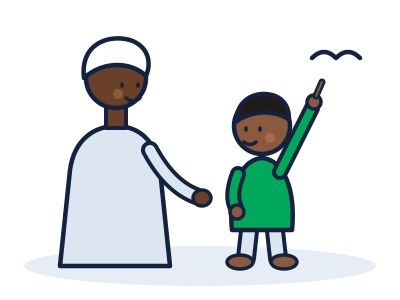
- Does not turn when you call their name by about 12 months, though hearing seems fine at other times
- Rarely looks at faces, or does not share smiles and looks back and forth with you
- Does not point to show you things, or bring toys to show you, by 12 to 15 months
- Late talking, or talking mainly to ask for things rather than to share
- Repeats words or phrases from others or from TV (echolalia) without using them to chat
- Takes your hand and uses it as a tool, such as putting it on the door handle, rather than asking
- Little interest in other children, or wants to join in but does not know how
- Little pretend play, such as feeding a doll or pretending to cook, by about 2 to 3 years
Behaviour, Interests and Senses
- Repetitive movements, such as hand-flapping, rocking, spinning or walking on tiptoe
- Lining up toys, spinning wheels, or opening and closing doors again and again
- Very strong need for routine; great distress at small changes, like a new route to school
- Intense interest in one topic or object
- Over- or under-reacting to sound, light, touch, taste or pain — covering ears at the blender or generator, refusing many foods, or not seeming to notice a fall
When to Ask for Help
Come In Now
Emergency department, straight away
- A fit lasting more than 5 minutes, or a first fit
- A head injury from head-banging or a fall, followed by vomiting, drowsiness or unusual behaviour
- Swallowed a button battery, magnets, medicine or a household chemical
- Self-injury causing a deep wound, heavy bleeding or a possible broken bone
Ask for an Assessment Soon
Book a development appointment; do not wait and see
- Losing words, babble, eye contact or play skills, at any age
- No response to name, no pointing or showing by 12 to 15 months
- No words by 16 to 18 months, or no two-word phrases by 2 years
- Several of the signs above together
- A nursery teacher or nanny raises a concern
Usually Part of Normal Development
Mention it at the next check
- Enjoying routines and the same bedtime story, while coping with change
- Lining up toys sometimes, alongside other kinds of play
- Shyness with strangers, but warm and chatty with family
- Walking on tiptoe now and then, while also walking flat-footed
Our milestone checker takes you through social, talking and play skills for your child's age. At 18 and 24 months many doctors use a short parent questionnaire (such as the M-CHAT) to screen for early signs of autism. A screening result is not a diagnosis; it tells you whether a fuller assessment is needed. Always ask for a hearing test too — see our guide to ears and hearing.
What Causes Autism, and What Does Not
Autism comes mainly from differences in how the brain develops before birth. Genes play a large part — autism often runs in families, and brothers and sisters of an autistic child are more likely to be autistic. Being born very early, and some conditions in pregnancy, also raise the chance. In most children there is no single cause that can be found.
We know clearly what does not cause autism:
Vaccines, especially the measles vaccine, cause autism.
Very large studies of millions of children, including one that followed more than 650,000 children in Denmark, show no link. Signs of autism often become noticeable around the age vaccines are given, which is why the two get confused. Not vaccinating leaves your child at risk of measles, which can kill.
The mother was cold, or the child was not disciplined enough.
Parenting does not cause autism. The old "cold mother" idea was wrong and has been abandoned. Warm, patient parenting helps every child, but it does not cause or prevent autism.
It is a spiritual attack, witchcraft, or a punishment for the family.
Autism is a difference in brain development found in every culture and faith. Many families draw strength from prayer and their faith community — that can go hand in hand with medical care and therapy.
It comes from the nanny, too much TV, or too much sugar.
None of these cause autism. Less screen time and more talk helps every child's language, but screens are not the cause.
He will grow out of it.
Autism is lifelong, but children keep developing. Many gain speech and skills over the years, especially with support. Waiting to see means losing time when help works well.
Getting an Assessment
Autism is diagnosed by watching how a child communicates, plays and behaves, and by hearing their story from the family. There is no blood test or brain scan that shows it. A reliable diagnosis is often possible from around 2 years of age.
At Limi, autism assessment is part of the development service. Autism touches many parts of life, so doctors from the developmental clinic and a speech and language therapist assess your child, and the team brings in other specialists your child needs from across the hospital. The care team tells you who will see your child.
- A detailed history. The team asks about pregnancy, birth, milestones, sleep, eating, behaviour, family history and what worries you. Bring the child health card, any school reports, and short phone videos of the things you have noticed at home — children often behave differently in clinic.
- Observation and play. Structured play sessions let the team see how your child communicates, plays and reacts. To your child, it feels like play.
- Health checks. A physical examination, a hearing test, and sometimes a vision check. Some children are offered blood or genetic tests to look for an underlying cause.
- Other conditions. The team also looks for things that often come with autism or can look like it: hearing loss, language disorder, ADHD, learning difficulties, anxiety, sleep problems and epilepsy.
- Feedback and a plan. The team explains what they found in plain words, answers your questions, and writes a plan. Sometimes the answer is "not yet sure" and a review is booked — that is honest, not a failure.
A diagnosis is not a label that limits your child. It is a way to understand them and to get the right help at home and at school.
Support and Therapy That Help
There is no medicine that treats autism itself. The aim of support is to help your child communicate, learn, manage daily life and be happy — not to make them "normal". Approaches with good evidence include:
- Parent-led communication programmes. A therapist coaches you to play and talk with your child in ways that build attention, turn-taking and language. These work because they use the many hours you already spend together.
- Speech and language therapy — for understanding, talking and social communication. For children with few words, this can include pictures, signs or a device to communicate. These do not stop a child learning to speak; they often help speech come.
- Occupational therapy — for sensory differences, play, handwriting, dressing, toileting and other daily skills.
- Behavioural and developmental approaches — structured teaching of skills through play and everyday routines, with rewards for trying. Good programmes are respectful, fun, and set goals with the family.
- Help with other problems. Sleep difficulties, constipation, anxiety, ADHD and epilepsy are more common in autistic children and can be treated. A doctor may prescribe medicine for these; never start one without a prescription.
At home, the ideas in our guide to building language help autistic children too. Visual timetables (pictures showing the order of the day), warning before changes, and a quiet corner to calm down can reduce distress a great deal.
Keep Your Child Safe
Many autistic children wander off and do not sense danger. Drowning is a particular risk. Fence or cover wells, tanks and buckets, keep gates locked, teach swimming if you can, and make sure your child carries your phone number. Many also put non-food things in their mouths, so store medicines, kerosene and chemicals locked away in their own containers — never in drink bottles.
"Cures" That Harm
Desperate families are often targeted with expensive treatments that promise to cure autism. None of them do, and some have killed children. Be very careful of anyone who promises a cure, asks for large payments up front, or tells you to stop your child's other care.
Do Not Use These
- Chelation — drugs to "remove metals" from the body. Children have died from it.
- "MMS", chlorine dioxide or bleach drinks and enemas — these are industrial bleach and burn the gut.
- Strict special diets (for example no gluten and no milk) without a medical reason — no good evidence they help autism, and they can cause poor growth and weak bones.
- Stem cell injections, hyperbaric oxygen and "detox" programmes sold as cures.
- Deliverance that involves beating, starving, chaining, burning or leaving a child alone — this is abuse, it causes lasting harm, and it is against the law.
If you are unsure about a treatment, ask the team before you start. A useful question: "What good evidence is there that this helps autistic children, and what are the risks?"
School and Inclusion
Autistic children can learn, and many do well in mainstream schools with the right support. Others do better in a smaller class or a special school. Nigerian law — the Discrimination Against Persons with Disabilities (Prohibition) Act 2018 — protects children with disabilities from being refused education because of their disability.
- Talk to the school early. Share the assessment report, what helps your child, and what upsets them.
- Ask for simple changes: a seat away from noise, a picture timetable, warning before changes, a quiet space, extra time, and a named adult your child can go to.
- Watch for bullying, which autistic children face more often. Changes in sleep, mood or refusal to go to school can be signs.
- A shadow teacher or classroom aide helps some children in the early years.
Our page for schools has information teachers can use.
Looking After the Family
Raising an autistic child can be joyful and exhausting. Families in Nigeria also often face stigma, unhelpful advice and blame from relatives or neighbours. It helps to:
- Share what you know. Explain autism to grandparents, the nanny and the church or mosque family in simple words. Many attitudes change with understanding.
- Find other parents. Parent support groups in Abuja and online offer practical tips and friendship. Ask the care team about groups near you.
- Share the care. Both parents, and trusted relatives, can learn the same strategies so one person does not carry everything.
- Remember brothers and sisters. They need their own time and simple, honest answers.
- Notice your own health. Constant tiredness, low mood or hopelessness are common in carers and deserve help. Tell your own doctor.
Girls, Older Children and Adults
Girls are diagnosed less often and later than boys. Many girls learn to copy others and hide their difficulties (sometimes called masking), and their intense interests may seem ordinary, such as animals or a music group. Signs may show as anxiety, exhaustion after school, eating difficulties or friendship troubles in the pre-teen years. If this sounds like your daughter, ask.
Older children and teenagers can be assessed at any age. A diagnosis later in childhood often brings relief and a better understanding of why school and friendships have been hard.
Autistic adults go to university, work, marry and raise children. Some need support throughout life. Planning early for the teenage years — puberty, independence, and what comes after school — makes that move easier.
Questions Parents Ask
My child makes eye contact. Does that mean they are not autistic?
No. Many autistic children make some eye contact, especially with people they know well. The team looks at the whole pattern of communication and behaviour, not one sign.
Will my child ever talk?
Many autistic children who are late to talk go on to speak, especially with early support. Some communicate mainly through pictures, signs or a device, and live full lives. Nobody can say for certain in the early years, and anyone who promises either way should be questioned.
We were told our child is too young to assess. Is that right?
Autism can often be diagnosed reliably from about 2 years, and concerns can be assessed earlier. Even before a diagnosis, a child with delays can start speech therapy and parent coaching. You are allowed to ask for a second opinion.
Should I delay vaccines for my younger child?
No. Vaccines do not cause autism, and delaying them leaves your child unprotected against measles, whooping cough and other serious infections. Use our vaccine schedule to keep on track.
Will my next child be autistic too?
Brothers and sisters of an autistic child are more likely to be autistic than other children, though most are not. Tell your doctor about the family history so younger children can be watched closely and assessed early if needed.
How do I handle meltdowns?
A meltdown is not naughtiness; it is a child overwhelmed. Keep them safe, reduce noise and people, speak little and calmly, and wait. Afterwards, look for the trigger — hunger, noise, a change, tiredness — and plan around it. An occupational therapist or psychologist can help you build a plan.
A school has refused my child. What can I do?
Ask the school to explain in writing, share the assessment report, and ask what support would let your child attend. Ask our development team for a letter that sets out your child's needs.
Sources
- World Health Organization. Autism (fact sheet). 2023.
- Hyman SL, Levy SE, Myers SM; American Academy of Pediatrics Council on Children with Disabilities. Identification, evaluation, and management of children with autism spectrum disorder. Pediatrics, 2020.
- National Institute for Health and Care Excellence. Autism spectrum disorder in under 19s: recognition, referral and diagnosis (CG128). 2011, updated 2017.
- National Institute for Health and Care Excellence. Autism spectrum disorder in under 19s: support and management (CG170). 2013, updated 2021.
- Hviid A, Hansen JV, Frisch M, Melbye M. Measles, mumps, rubella vaccination and autism: a nationwide cohort study. Annals of Internal Medicine, 2019.
- Federal Republic of Nigeria. Discrimination Against Persons with Disabilities (Prohibition) Act. 2018.
- US Food and Drug Administration. FDA warns consumers about the dangerous and potentially life threatening side effects of Miracle Mineral Supplement. 2019.
Written for parents and carers in NigeriaClinically reviewed by Limi Children’s Hospital cliniciansLast updated September 2026Next review due September 2027