
If You Remember Nothing Else
- Any talk of suicide, any self-harm that needs treatment, and any overdose means come to Limi Children's Hospital now — even if the young person seems fine. If you cannot get here quickly, go to the nearest emergency department.
- Low mood, worry or not eating that lasts two weeks or more deserves a doctor's help. It is not weakness or laziness.
- Codeine cough syrup and tramadol are addictive and can kill. Talk about them openly, and lock away medicines at home.
- Teenagers need 8 to 10 hours of sleep. Phones charging outside the bedroom is the single most useful rule.
- Periods that soak a pad every hour or two, or pain that stops school, are not something to put up with.
- Girls aged 9 to 14 should have the HPV vaccine. One dose protects against most cervical cancer.
- Keep talking, and listen more than you lecture. A teen who can talk to you is safer.
When to Get Help Now
Most teenage ups and downs are normal. These signs are not, and some cannot wait.
Get Help Now
Emergency department, straight away — do not leave them alone
- Talking about wanting to die, having a plan, or saying goodbye to people
- Self-harm that is deep, bleeding heavily, or on the neck
- Any overdose of tablets, syrup or drugs, even a small one, even if they seem well — some overdoses, such as paracetamol, cause harm days later
- Very drowsy, confused, breathing slowly, or fitting after alcohol or drugs
- Not eating, with fainting, chest pain or a very slow or irregular heartbeat
See a Doctor Soon
This week — book the adolescent clinic
- Sad, irritable or hopeless most days for two weeks or more
- Signs of self-harm, such as cuts, burns, or long sleeves in the heat — ask gently about thoughts of suicide the same day; any such thoughts mean get help now
- Skipping meals, rapid weight loss, making themselves sick
- Panic attacks, or worry stopping them going to school
- You suspect regular drug or alcohol use
- Heavy periods with tiredness — the same day if she is dizzy, breathless or has fainted
Usually Normal
Keep talking; mention it at a check-up
- Moody days that pass
- Wanting more privacy and time with friends
- Sleeping late at weekends
- Exam nerves that ease once exams start
- Irregular periods in the first two years
If your teenager may have swallowed something harmful, see our first aid for poisoning and come to Limi Children's Hospital now, day or night. If you cannot get here quickly, go to the nearest emergency department. Have someone else drive if you can, so you can stay with your teenager, and call 0813 408 5400 on the way so the team can prepare. Remove tablets, blades, ropes and pesticides from the home if someone is at risk.
Puberty: When It Starts
Puberty is when the body changes from a child's to an adult's. It happens over several years, and the timing varies a lot between healthy children.
- Girls usually start between 8 and 13. The first sign is a small, sometimes tender lump under one or both nipples (breast buds), then hair under the arms and in the pubic area, and a growth spurt. Periods usually start about two years after breasts begin to develop, often around 12 or 13.
- Boys usually start between 9 and 14. The first sign is the testicles getting bigger, then pubic hair, the penis growing, and later a deeper voice, facial hair and a big growth spurt. Boys often keep growing until 17 or 18.
When to See a Doctor About Timing
- Signs of puberty before 8 in a girl or before 9 in a boy
- No breast development by 13 in a girl, or no growth of the testicles by 14 in a boy
- No period by 15, or more than three years after breasts started to develop
- Puberty that starts and then stops, or growth that stops
Boys often get a little breast swelling in puberty; it usually settles within two years. A lump in a testicle needs a doctor soon. Sudden pain in a testicle is an emergency: come to Limi Children's Hospital now, or go to the nearest emergency department if you cannot get here quickly. See our guide to testicle problems.
Periods
Talk to girls about periods before they start, ideally by age 9 or 10, so the first one is not frightening. In the first year or two, periods are often irregular. After that, for most girls:
- A cycle (from the first day of one period to the first day of the next) is 21 to 45 days in the early years
- Bleeding lasts up to 7 days
- Some cramping pain in the lower tummy or back on the first day or two is common
Heavy or Painful Periods
See a doctor if your daughter soaks through a pad in an hour or two, bleeds for more than 7 days, passes clots bigger than a coin, bleeds through clothes at school, or feels tired, dizzy or breathless. Heavy periods can cause anaemia and are sometimes the first sign of a bleeding disorder. See a doctor, too, for pain that stops her going to school or is not helped by pain relief — a treatable cause may be found.
For ordinary period pain: a hot water bottle on the tummy, gentle exercise, and pain relief such as paracetamol or ibuprofen, using the dose on the pack for her age. Ask a pharmacist or doctor first if she has asthma, stomach problems or kidney problems.
Pads, Hygiene and Missing School
Many girls in Nigeria miss school during their period because pads cost too much or there is nowhere private to change. Change a pad every 4 to 6 hours, or more often if it is full. If using cloth, use clean cotton, wash it with soap and water, and dry it fully in the sun. Wash the outside of the genital area with water; do not douche or put anything inside. Pack a small period kit for school bags: pads, clean underwear, a small bag for used pads.
Acne and Skin
Most teenagers get spots. Wash the face twice a day with mild soap and water, do not squeeze or pick, and use oil-free products. Gels containing benzoyl peroxide from a pharmacy help mild acne. See a doctor if spots are painful and deep, leaving dark marks or scars, or getting your teenager down — good treatments exist.
Avoid bleaching and "toning" creams. Many contain mercury or strong steroids, which damage skin and kidneys and can make acne worse. Do not use steroid creams on the face unless a doctor prescribes them.
Sleep
Teenagers need 8 to 10 hours of sleep a night. In puberty the body clock moves later, so teens genuinely feel awake late and struggle to get up — it is biology, not laziness. Early school runs and evening lessons squeeze sleep further. Too little sleep affects mood, memory, exam results, skin, weight and safety on the road.
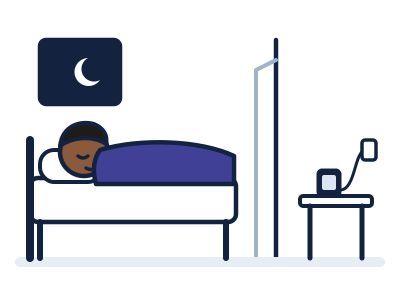
- Keep bedtime and wake time within an hour or two, including weekends
- Screens off an hour before bed, and phones out of the bedroom overnight
- No coffee, energy drinks or cola after lunch
- A cool, dark room — a fan helps in the heat
Food, Growth and Sport
Teenagers grow faster than at any time since babyhood and need more food, not less. Three meals a day, including breakfast, give the energy to learn. Useful foods:
- Iron — beans, ugwu and other green leaves, meat, fish, liver and eggs. Girls lose iron each month in their periods.
- Calcium for growing bones — milk, yoghurt, small fish eaten with the bones such as sardines, and crayfish.
- Fruit and vegetables every day — oranges, pawpaw, banana, garden egg, okra.
- Water instead of fizzy drinks and energy drinks.
Worry about weight and appearance is common. Avoid comments on your teen's body or weight, and never put a growing teenager on a strict diet without a doctor.
Sport and Injuries
Teenagers should be active for at least an hour a day. In the heat, drink water before, during and after sport, and rest in the shade. Knee or heel pain in growing athletes is common and usually settles with rest. After a knock to the head with confusion, headache, vomiting or dizziness, stop play and do not return the same day; see a doctor. Painful swelling, a misshapen limb, or being unable to put weight on it needs an X-ray — see first aid for fractures.
Stress, Exams and Mental Health
WAEC, NECO and JAMB bring real pressure — from school, family and the teen themselves. Some stress helps focus. Too much looks like poor sleep, headaches, stomach aches, crying, anger, or giving up.
- Help plan revision in short blocks with breaks, meals and sleep. All-night study harms memory.
- Say that you love them whatever the result. Fear of disappointing parents is a heavy load.
- Tell them there is more than one route — resits, other courses and other universities.
Depression, Anxiety and Self-Harm
Depression is more than sadness: it is feeling low, empty, irritable or hopeless most of the day, for two weeks or more, often with changes in sleep and appetite, loss of interest in friends and things they enjoyed, and falling school work. Anxiety is worry that will not switch off, panic attacks, or avoiding places and people. Both are common and treatable, with talking therapy and sometimes medicine.
Self-harm — cutting, burning, hitting or poisoning oneself — is usually a way of coping with overwhelming feelings. If you find out, stay calm. Do not shout, punish or make them promise to stop. Say you are glad they told you, check whether the injury needs treatment, and get help from a doctor. Asking directly "are you thinking about suicide?" does not put the idea in their head; it often brings relief.
Eating Disorders
Anorexia, bulimia and binge eating affect boys as well as girls, in every country. Signs include skipping meals, eating in secret, rapid weight loss, disappearing to the toilet after meals, heavy exercise, and periods stopping. Eating disorders can be dangerous to the heart. Early help works best.
Alcohol, Codeine, Tramadol and Other Drugs
Nigeria has a serious problem with the misuse of prescription medicines. A national survey in 2018 found that about one in seven Nigerians aged 15 to 64 had used a drug other than alcohol or tobacco in the past year, and misuse of tramadol and codeine cough syrup was common. Cough syrup mixed with soft drinks is passed around at parties. Cannabis (including strong forms sold as "colorado" or "skunk"), alcohol in sachets, vapes and sniffing solvents are also common.
- Codeine cough syrup is an opioid. It causes addiction quickly and can slow breathing until it stops, especially mixed with alcohol or other drugs. Nigeria banned codeine cough syrups in 2018, but they are still sold illegally.
- Tramadol is an opioid painkiller. High-strength tablets are sold illegally. It causes addiction and can cause fits and death, even in young people with no history of fits.
- Cannabis harms concentration and memory while the brain is still developing, and strong cannabis can trigger psychosis — hearing voices, paranoia, confusion.
- Alcohol is especially dangerous for teens: drunkenness leads to accidents, assault and unsafe sex, and large amounts can cause fatal poisoning.
- Vapes contain nicotine, which is highly addictive, and other chemicals that harm the lungs.
Signs of drug use include sudden changes in friends, falling grades, money or items going missing, red eyes, drowsiness, slurred speech, and sweet-smelling syrup bottles. Talk calmly, without accusations, and book the adolescent clinic. Addiction is a health problem, and young people recover with treatment. Lock away medicines at home, including tramadol or codeine prescribed for an adult.
Online Safety and Bullying
Phones connect teenagers to friends, learning and support — and to bullying, scams and people who mean them harm.
- Never share nude or intimate images. Once sent, they cannot be taken back. Criminals pose as young people online, get images, then threaten to share them unless paid. If this happens, do not pay, stop replying, keep the evidence, and tell a trusted adult. It is not the young person's fault.
- Keep accounts private and do not share location, school or home address.
- Be wary of online friends who ask for secrets, gifts or to meet alone.
- Bullying, online or at school, is linked to low mood and self-harm. Take it seriously, keep screenshots, and involve the school.
Relationships, Sexual Health and the HPV Vaccine
Teenagers who get clear, accurate information from parents and health workers tend to start sex later and make safer choices. Talk about respect, consent (anyone can say no, at any time, and no means no), and that it is fine to wait. Make sure your teen knows they can come to you, or a doctor, if anyone pressures or hurts them. Our clinicians give confidential advice on puberty, periods, infections and contraception.
The HPV vaccine protects against the human papillomavirus, which causes most cancer of the cervix — one of the most common cancers in Nigerian women. Nigeria added it to routine immunisation in 2023 for girls aged 9 to 14, as a single dose. It is best given before any sexual contact. It is safe, has been given to hundreds of millions of girls worldwide, and does not affect fertility. Ask for it at your daughter's next visit or check the vaccine schedule.
Talking with Your Teenager
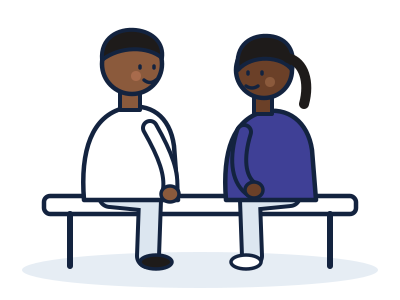
Teenagers still need their parents, even when they seem to push them away.
- Talk side by side, in the car, while cooking or walking. It is easier than face to face.
- Listen first. Ask "what was that like?" rather than jumping to advice or punishment.
- Stay calm with hard news. If they are punished for telling you, they will stop telling you.
- Be clear about the few rules that matter most — safety, respect, school — and explain why.
- Share your own feelings and mistakes. It shows that problems can be survived.
For teens reading this: if you cannot talk to your parents, talk to another adult you trust — an aunt, uncle, teacher, school nurse, faith leader or doctor. You deserve help, and asking for it is strong, not weak.
Seeing the Doctor Alone
In adolescent care, the clinician sees the parent and teenager together first, then the teenager alone for part of the visit. This is standard practice. It gives teens a chance to ask about things they find embarrassing — periods, spots, mood, relationships, drugs — and to learn to look after their own health.
What a teenager says in private stays private, with one exception: if the clinician believes the young person or someone else is at risk of serious harm, they must act to keep them safe. They talk with the teenager first about who needs to know, whenever it is safe to do so. Parents are always welcome to share their own worries with the clinician too.
Questions Families Ask
My daughter is 10 and has started her period. Is that too early?
Periods between 10 and 15 are within the normal range, especially if breasts began to grow a couple of years before. Signs of puberty before 8, or periods before about 10 with little other development, should be checked by a doctor.
My son is shorter than his friends. Should I worry?
Boys who start puberty later often catch up in height later. The team checks his growth over time and tells you if tests are needed, especially if he has not grown at all in a year or has no signs of puberty by 14.
Why can't I stay in the room for the whole appointment?
You can be there for most of it. A few minutes alone lets your teen raise things they would not say in front of anyone. It builds trust with health services, which matters for the rest of their life. Any risk to their safety will not be kept secret.
I found cough syrup bottles in my son's room. What should I do?
Wait until you are calm, then talk to him privately. Ask what is happening rather than accusing. Regular codeine use can cause dependence, and stopping suddenly can make him feel ill. Book the adolescent clinic: the team assesses him and plans his support with you. If he is very drowsy or breathing slowly, come to Limi Children's Hospital now, or go to the nearest emergency department if you cannot get here quickly.
Will the HPV vaccine encourage my daughter to have sex?
No. Studies in many countries have found no change in when vaccinated girls start having sex. The vaccine works best when given at 9 to 14, long before any sexual contact.
Should I take my teenager's phone away?
Taking it away as a punishment often leads to secrecy. Agree rules together instead: phones out of the bedroom at night, no phones at meals, and knowing who they talk to. Rules apply to adults too.
Does seeing someone for mental health mean my child is "mad"?
No. Mental health problems are common, treatable health conditions, like asthma. Getting help early means shorter, easier treatment, and it protects school, friendships and safety.
Sources
- World Health Organization and UNAIDS. Global standards for quality health-care services for adolescents. 2015.
- American College of Obstetricians and Gynecologists. Menstruation in girls and adolescents: using the menstrual cycle as a vital sign (Committee Opinion 651). 2015.
- Paruthi S, et al. Recommended amount of sleep for pediatric populations: a consensus statement of the American Academy of Sleep Medicine. Journal of Clinical Sleep Medicine, 2016.
- World Health Organization. WHO guidelines on physical activity and sedentary behaviour. 2020.
- National Institute for Health and Care Excellence. Depression in children and young people: identification and management (NG134). 2019.
- National Institute for Health and Care Excellence. Self-harm: assessment, management and preventing recurrence (NG225). 2022.
- United Nations Office on Drugs and Crime, National Bureau of Statistics and Centre for Research and Information on Substance Abuse. Drug use in Nigeria. 2018.
- World Health Organization. Human papillomavirus vaccines: WHO position paper. Weekly Epidemiological Record, 2022.
Written for parents and carers in NigeriaClinically reviewed by Limi Children’s Hospital cliniciansLast updated September 2026Next review due September 2027