
If You Remember Nothing Else
- Test every fever before treating it as malaria. A finger-prick rapid test or a blood film takes minutes and tells you what you are dealing with.
- Convulsions, not drinking, vomiting everything, very sleepy, fast or difficult breathing, very pale, dark urine or yellow eyes mean severe malaria is possible. Come to Limi Children's Hospital now, or the nearest emergency department if you cannot get here quickly.
- If the test is positive, the right treatment is an ACT (artemisinin combination therapy), prescribed for your child and given for the whole course.
- Do not use chloroquine, injections from a chemist, or herbal mixtures. They do not reliably cure malaria and can delay treatment that does.
- If the fever is not better by the third day of treatment, or comes back, see a doctor. It may not have been malaria.
- Everyone sleeps under an insecticide-treated net, every night, all year, tucked in all round.
What Malaria Looks Like in Children
Malaria is an infection of the blood caused by a parasite called Plasmodium. It is passed on by the bite of an infected Anopheles mosquito, which bites mostly between dusk and dawn. In Nigeria almost all malaria is caused by Plasmodium falciparum, the type most likely to become severe. Symptoms usually start one to four weeks after the bite.
The main sign is fever. In children it is often the only clear sign, and it does not have to follow a pattern of chills and sweating every other day, as many adults expect. Other signs that often come with it:
- Shivering, then feeling hot and sweaty
- Headache, body aches, tiredness
- Poor appetite, tummy ache, vomiting or loose stools
- In babies and toddlers: fussiness, crying more, refusing feeds, sleeping more than usual
- Pale palms, lips or inner eyelids, from anaemia (a low blood count), especially after repeated attacks
Pneumonia, urine infections, typhoid, meningitis and ordinary viral infections cause the same signs, so no one can tell malaria from the symptoms alone. That is why the test matters.
Children under five, pregnant women, children with sickle cell disease, and children who grew up outside a malaria area (for example, visiting family from abroad) are the most likely to become seriously ill. Babies under six months get malaria less often but can still get it.
When to Come In
Severe malaria can develop within a day of the first fever. If your child has any one of the "come in now" signs, come to Limi Children's Hospital now, day or night. If you cannot get here quickly, go to the nearest emergency department. Have someone else drive if you can, so you can watch your child, and call 0813 408 5400 on the way so the team can prepare.
Come In Now
Emergency department, straight away
- A convulsion (fit), even a short one
- Unable to drink or breastfeed
- Vomiting everything, again and again
- Very sleepy, hard to wake, confused, or unconscious
- Fast breathing, deep sighing breaths, or struggling to breathe
- Very pale palms, lips or tongue
- Dark, cola-coloured urine, or very little urine
- Yellow eyes or skin
- Unable to sit or stand when they normally can
- A baby under 3 months with a temperature of 38 °C or more
- A child with sickle cell disease and a temperature of 38 °C or more
See a Doctor Today
Same day, for a test
- Any fever of 38 °C or more in a child who lives in or has visited a malaria area
- A fever that has not settled by the third day of malaria treatment
- A fever that comes back within a few weeks of treatment
- Fever with a rash, ear pain, cough, or pain passing urine
- Your child is eating and drinking much less than usual
Usually Fine at Home
Once tested and on the right treatment
- Fever that is coming down over the first two days of an ACT
- Tiredness and a poor appetite for a few days after the fever goes
- A child who is drinking, passing urine, and playing between fevers
Not sure whether a fever needs to be seen? Our fever checker walks you through the signs for your child's age.
Test Before You Treat
For more than a decade the World Health Organization, and Nigeria's National Malaria Elimination Programme, have advised that every suspected case of malaria is confirmed with a test before treatment. There are two tests, and both are reliable when done properly:
- Malaria rapid diagnostic test (RDT). A drop of blood from a finger-prick goes on a small plastic cassette. Lines appear in about 15 to 20 minutes. RDTs are used in clinics, pharmacies and primary health centres across Nigeria.
- Blood film (microscopy). A trained laboratory scientist looks for parasites in a stained drop of blood under a microscope. It can also show how many parasites there are, which helps the doctor judge how ill the child is and whether treatment is working.
A negative test means the doctor should look for the real cause of the fever. If the child stays unwell, the test may be repeated, because very early in an infection parasites can be missed.
Why Treating "Just in Case" Is Not Safer
Giving malaria medicine without a test can feel like the cautious choice. It is not. If the fever is really from pneumonia, a urine infection or meningitis, the child loses days without the right treatment. Unneeded antimalarials also help the parasite become resistant, so the medicines work less well for every child.
Treatment and Finishing the Course
Uncomplicated malaria (malaria without any danger signs) is treated with tablets or a syrup taken by mouth. The recommended medicines in Nigeria are artemisinin combination therapies (ACTs), such as artemether-lumefantrine or artesunate-amodiaquine. Each contains two medicines that attack the parasite in different ways, which clears the infection and makes resistance less likely.
- Use the dose prescribed for your child, which is worked out from their weight or age. Measure syrups with the syringe or spoon that comes with the medicine.
- Give every dose, for the full course — usually three days — even if your child seems well after the first day. Stopping early is one of the main reasons malaria comes back.
- Some ACTs work better when taken with food or milk. Ask the pharmacist or doctor how to give the one your child has.
- If your child vomits soon after a dose, ask the doctor or pharmacist whether to repeat it. Do not guess. If they keep vomiting, they need to be seen, because they may need treatment in hospital.
- Buy medicines from a registered pharmacy. Check the packet has a NAFDAC number and is not out of date. Fake and poor-quality antimalarials are a real problem in West Africa.
Severe malaria is treated in hospital, usually with artesunate injections into a vein or muscle, then a full ACT course by mouth once the child can swallow. Children may also need a blood transfusion for severe anaemia, fluids, glucose for low blood sugar, and treatment for convulsions.
Medicines That Should Not Be Used for Malaria
- Chloroquine. Nigeria stopped using it for malaria in 2005 because the parasite no longer responds to it reliably.
- Sulfadoxine-pyrimethamine (SP) on its own. It is used for prevention in pregnancy and in seasonal programmes, not to treat a sick child.
- Tablets with only one artemisinin medicine in them (artesunate or artemether alone). Used alone, they allow the parasite to become resistant.
- Injections given at a chemist or at home. Injections are for severe malaria in hospital, where the child can be watched. At home they can cause abscesses, nerve damage and dangerous delays.
"We Treated Malaria but the Fever Came Back"
There are five common explanations, and most of them are not "stronger malaria".
- It may never have been malaria. If treatment started without a test, or after a test that was not read properly, the fever may have come from something else all along: a viral infection, pneumonia, a urine infection, an ear infection, tonsillitis, or, less often, typhoid or meningitis. Urine infections are easy to miss in young children because they often cause fever and nothing else.
- It may have been called "typhoid" too. Many children are told they have "malaria and typhoid" after a Widal test, which is not reliable. They may take two courses of medicine that do not treat the real cause. See our guide to typhoid.
- The course was not finished. Stopping when the fever settles leaves parasites in the blood, which can multiply again within two to four weeks.
- The medicine did not work as it should. A fake or poor-quality product, a dose that was too small for the child's weight, vomiting soon after doses, or an ACT given without food when it needed food, can all leave the infection partly treated.
- It is a new infection. In a high-malaria area a child can be bitten and infected again within weeks, especially without a net.
What to do: see a doctor rather than starting another course at home. Tell them which medicine your child had, how much, for how many days, and whether a test was done. Bring the packets. The doctor examines your child and checks a blood film, a full blood count and a urine test, with other tests as needed. A rapid test can stay positive for several weeks after successful treatment, so a microscope test is more useful in this situation.
Caring for Your Child at Home
- Offer fluids often: breast milk, water, pap, soups, oral rehydration solution (ORS) if there is vomiting or diarrhoea. Our dehydration checker shows the signs to watch.
- Paracetamol can ease the discomfort of fever, using the dose on the pack for your child's age, measured with the syringe or spoon that comes with it. It does not treat malaria.
- Dress your child lightly and keep the room airy. Do not sponge with cold water, and never use alcohol or kerosene rubs on the skin.
- Keep them under the net while they are ill, so mosquitoes do not pass the infection on to others in the house.
- Check them at night: breathing, colour, and how easy they are to wake.
Preventing Malaria
Insecticide-Treated Nets
A long-lasting insecticide-treated net (LLIN) is one of the most effective protections a family has. It blocks mosquitoes and the insecticide kills the ones that land on it. Nets are distributed free in national campaigns and at antenatal and immunisation clinics.
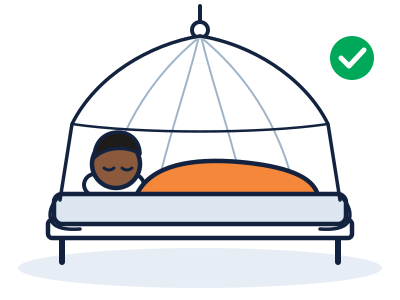
- Every night, every season. Malaria is carried all year in Abuja, not only in the rainy season.
- Tuck it in all round, under the mattress or mat, so there are no gaps. Put children to bed under the net early, as mosquitoes start biting at dusk.
- Check for holes and mend them with a needle and thread or a patch.
- Wash gently and not too often, with plain soap in cool water, and dry it in the shade. Sun and strong detergent weaken the insecticide.
- Air a new net in the shade for a day before first use.
- Babies and pregnant women first if there are not enough nets for everyone.
Around the Home
- Fit mesh screens on windows and doors, and close them from evening.
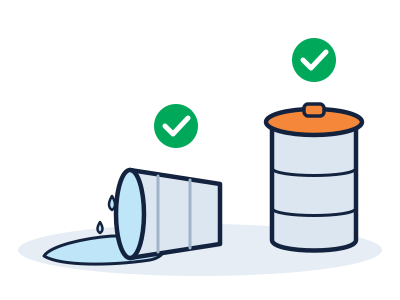
- Empty or cover anything that holds still water: old tyres, buckets, tins, flower pots, blocked gutters. Fill puddles near the house. Mosquitoes lay eggs in still water.
- Insect repellents made for children can help in the evening outdoors. Follow the age advice and instructions on the label, and do not put them on babies' hands, which go in the mouth.
Seasonal Malaria Chemoprevention
In many northern states, health workers give children under five a course of malaria medicine once a month during the rainy season, when malaria is at its peak. This is called seasonal malaria chemoprevention (SMC). It is run in selected states, not everywhere. Ask your primary health centre whether it is offered where you live; if it is, take part: it prevents a large share of malaria episodes in young children.
The Malaria Vaccine
Two malaria vaccines are now recommended by the World Health Organization for children in areas with moderate to high malaria: RTS,S (2021) and R21 (2023). They are given as a series of doses starting from around five months of age. Together with nets, they reduce malaria and severe malaria in young children, but they do not prevent every case — so nets and testing are still needed.
Nigeria began introducing the malaria vaccine in some states from late 2024, with further states planned. Availability depends on where you live and changes over time. Ask at your primary health centre or at your child's immunisation visit whether it is offered in your area. Our vaccine schedule tool shows your child's routine vaccines.
Sickle Cell, Travel and Malaria
Children with Sickle Cell Disease
Malaria is one of the most common triggers of a sickle cell crisis and of severe anaemia. Children with sickle cell disease in Nigeria are usually advised to take a malaria prevention medicine regularly, as prescribed by their haematology team, as well as sleeping under a net. A temperature of 38 °C or more in a child with sickle cell disease means come to Limi Children's Hospital now, or the nearest emergency department if you cannot get here quickly. See our guide to sickle cell disease.
Sickle cell trait (AS) gives some protection against severe malaria. Sickle cell disease (SS, SC) does not; it makes malaria more dangerous.
Travel
Children who live outside a malaria area, including families living abroad and visiting home, have no protection and can become very ill quickly. See a doctor four to six weeks before the trip about preventive medicine. After returning, any fever in the following months needs a malaria test.
Myths and What Is True
Every fever is malaria.
In Nigeria many fevers in children are not malaria, especially in the dry season and in children who sleep under nets. Viral infections, pneumonia and urine infections are common causes. A test is the only way to know.
Eating too much oil, sugar or mango, or sitting in the sun, causes malaria.
Only the bite of an infected mosquito causes malaria. Heat and hard work can make a child feel tired and hot, but they do not put parasites in the blood.
Agbo or other herbal mixtures cure malaria.
No herbal mixture has been shown to clear malaria reliably. Some contain alcohol or substances that harm the liver and kidneys. Artemisinin, the main ingredient in ACTs, did come from a plant, but it works because it is purified and given at a tested dose. Use an ACT.
An injection works faster and is stronger than tablets.
For uncomplicated malaria, an ACT by mouth works well. Injections are for severe malaria in hospital, where a child can be watched and given other treatment they need.
Questions Parents Ask
The test was negative but my child still has a fever. Should I give malaria medicine anyway?
No. A negative RDT or blood film done properly means malaria is unlikely. The doctor should look for another cause. If your child is still unwell a day or two later, a repeat test is reasonable, but treatment should follow a positive result, not replace the test.
How long does it take to get better?
With an ACT, most children's fever settles within two days and they start eating again soon after. Tiredness can last a week. If the fever is still there on the third day of treatment, see a doctor.
Can a baby under six months get malaria?
Yes, although it is less common in the first months. Any fever of 38 °C or more in a baby under three months needs to be seen in hospital straight away, whatever the cause may be.
Should I give my child malaria medicine every month to prevent it?
Not unless a doctor has prescribed it for a reason, such as sickle cell disease, or your state runs a seasonal chemoprevention programme. Regular treatment "to flush out malaria" in a healthy child is not recommended and adds to drug resistance.
My child looks pale after malaria. Is that normal?
Malaria destroys red blood cells, so some paleness is common. Very pale palms or lips, tiredness that does not improve, or fast breathing need to be checked with a blood count. Iron-rich foods such as beans, eggs, fish, meat and green leafy vegetables like ugwu help recovery.
Sources
- World Health Organization. WHO guidelines for malaria. Continuously updated; version of 2024.
- World Health Organization. World malaria report 2024. 2024.
- National Malaria Elimination Programme, Federal Ministry of Health, Nigeria. National guidelines for diagnosis and treatment of malaria. 2020.
- World Health Organization. Malaria vaccines: WHO position paper, May 2024. Weekly Epidemiological Record, 2024.
- World Health Organization. Integrated Management of Childhood Illness: chart booklet. 2014.
- Centers for Disease Control and Prevention. Malaria. CDC Yellow Book 2024: health information for international travel. 2023.
Written for parents and carers in NigeriaClinically reviewed by Limi Children’s Hospital cliniciansLast updated September 2026Next review due September 2027