Paediatric Emergency and Intensive Care
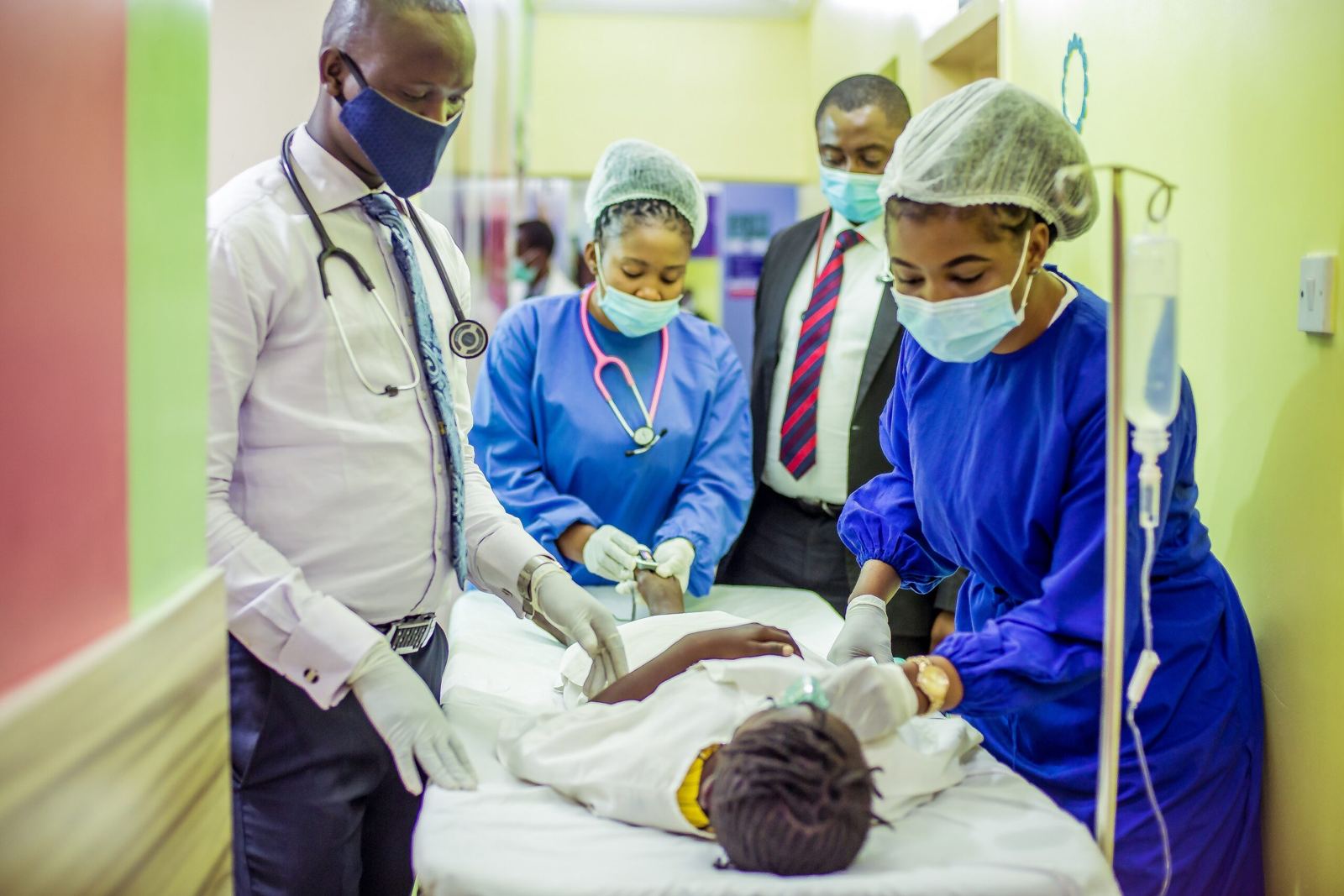
Emergency assessment, children's wards and a paediatric intensive care unit (PICU), day and night, in a hospital that cares only for babies, children and teenagers. A very ill child is checked by a nurse first, treated by paediatric nurses and doctors, and moved to the PICU if they get sicker. Emergency, the wards and the PICU work as one team.
When to Come to the Emergency Department
You do not need to be sure it is an emergency. If you are frightened by how your child looks, come in.
Come In Now
Come to Limi Children's Hospital now, or the nearest emergency department if you cannot get here quickly
- Struggling to breathe, too breathless to talk or feed, or skin sucking in under the ribs
- A fit, or very drowsy and hard to wake
- Blue, grey or very pale lips or face
- A rash that does not fade when you press a glass on it
- A baby under 3 months with a temperature of 38 °C or more
- Swallowed a battery, medicine, kerosene or bleach
- No wee for 12 hours, or vomiting everything
- A child with sickle cell disease and a temperature of 38 °C or more
See a Doctor Today
Same day, not tomorrow
- A fever for more than two days, or a fever that keeps coming back
- Drinking less than half their usual amount
- Ear pain, painful weeing, or a cough with fast breathing
- A child with sickle cell disease who has pain
Usually Fine at Home
Watch, give fluids, and check our tools
- A cold with a runny nose, still playing
- A mild fever in a child over 3 months who is drinking and alert
- One or two loose stools without signs of dehydration
Have someone else drive if you can, so you can watch your child, and call 0813 408 5400 or 0809 059 9995 on the way so the team can prepare.
What Happens When You Arrive
- A nurse sees your child first (triage). A nurse checks breathing, heart rate, temperature, oxygen level and how alert your child is. This decides how urgently they need a doctor.
- The sickest children are seen first. A child who arrives after you may go in before you if they are more unwell. It can feel unfair when you are worried; it is how every child is kept safe. If your child gets worse while you wait, tell the nurse straight away.
- A doctor examines your child and explains. Treatment starts at once when your child needs it: oxygen, fluids, medicine for pain or fever, or treatment for a fit.
- Tests that guide treatment. Blood tests, a malaria test, a urine test or an X-ray. The laboratory runs around the clock.
- A decision: home, ward, or intensive care. Many children go home with a written plan. Others need a few days on the ward. A few need the PICU.
- Leaving with a plan. What to give, what to watch for, and when to come back. If you have your own doctor, the team gives you a letter for them.
Emergency, Ward and Intensive Care at Limi
Emergency Paediatric Care
Assessment and treatment for children who are suddenly unwell or injured: breathing difficulty, asthma attacks, fits, severe malaria, dehydration, sickle cell crises, poisoning, burns, falls and fractures. Because the whole hospital is for children, the equipment, doses and staff are sized for them, from a newborn to a teenager. When a child needs a surgeon or a specialist, the emergency team calls them in from more than 30 specialties under one roof, and explains if any part of care happens elsewhere.
Children's Wards
Children admitted for treatment stay on a children's ward with paediatric nurses and doctors. A doctor reviews your child every day and more often if needed, and the plan for the day is explained to you. Nurses check observations regularly and show you what to watch for too: you know your child best, and it is always right to tell a nurse if something has changed.
The ward team tells you whether a parent or carer can stay with your child, and how, including overnight. Bring things that make the ward feel less strange: a favourite toy or cloth, a book, their own cup. School-age children cope better when they are told honestly what will happen, including when something will hurt.
Paediatric Intensive Care (PICU)
The PICU is for children who need more help than a ward can give: support with breathing, medicine to keep the blood pressure up, very close monitoring after a big operation, or care during and after prolonged fits or a severe infection. PICU nurses and doctors monitor every child continuously.
What You Will See
Intensive care can look frightening. This is what you will see at the bedside:
- Monitors showing heart rate, breathing, oxygen and blood pressure. They beep often; the nurse tells you which sounds need attention.
- Drips and lines in the hand, arm, foot or neck to give fluid and medicines.
- Breathing support: oxygen through small tubes in the nose or a mask, or, for some children, a breathing tube and a machine (ventilator). A child on a ventilator is usually given medicine to keep them comfortable and sleepy, and cannot talk while the tube is in.
- A quieter child than you know. Illness and medicines make children sleepy. You can still hold their hand, talk, sing and read to them.
How We Keep You Informed
The intensive care team talks with you about how your child is, what has changed and what the next goal is. The nurse tells you when to speak with a doctor each day and answers practical questions. When a decision needs time and privacy, the team meets you in private. Tell us who else may be given information about your child, and how to reach you when you are not at the bedside.
For Referring Clinicians: Critical Transfers
Call before transferring a critically ill child on 0813 408 5400, so the receiving team can prepare and advise on stabilisation for the journey. Details of what to share and how transfers are arranged are on the transfer page. We acknowledge, update, report and back-refer: see referring a child.
What to Bring
In an emergency, bring your child. Everything else can follow. If you have a moment:
- Any medicine your child has taken in the last two days, including herbal mixtures, in its packet or bottle.
- If your child swallowed something, the container.
- The child health card or vaccination record, and any recent test results.
- Your HMO or NHIA card, if you have one.
- For a ward stay: nightclothes, a few nappies or pants, a cup, and something comforting.
Deciding Whether to Come In
Tools that help you judge a fever or fast breathing, and the full list of emergency signs.
Fever in Children: What to Do
Enter the age, the temperature and what you see. The checker tells you whether to watch at home, book a visit or come in now.
Interactive tool Interactive toolIs My Child Breathing Too Fast? A 60-Second Counter
Tap once per breath for 60 seconds. The counter tells you if it is fast for your child's age, and what to do.
Interactive tool First aidFirst Aid for Babies and Children: A Family Reference
What to do first, what never to do and when to go to emergency, for the injuries and emergencies families meet most.
First aidQuestions Parents Ask
Do I need a referral or an appointment for the emergency department?
No. Come straight in at any hour. Do not wait for a reply to a message or a booking in an emergency.
Why was another child seen before mine?
Children are seen in order of how unwell they are, not the order they arrived. If yours was checked by a nurse and is waiting, it means they were judged safe to wait a little. If anything changes, tell the nurse.
Can I stay with my child on the ward?
The ward team tells you whether a parent or carer can stay with your child, and the arrangements, including where you can sleep and eat.
Can I be with my child in intensive care?
Yes. Parents are encouraged to spend time at the bedside. The team asks you to step out for short periods, for example during a procedure. The unit explains visiting arrangements for other family members.
Will my HMO pay for an emergency or an admission?
Cover differs between plans, and some need the hospital to request approval. Never delay emergency care for this. Ask the care team to help you contact your HMO. See paying and HMOs.
We gave some herbal medicine at home. Should I say?
Yes. Nobody will judge you. Some herbal mixtures affect the liver, kidneys or blood sugar, and knowing what was given helps the doctors choose safe treatment.
If Your Child Is Very Unwell, Come Now. Call Us on the Way.
If your child is seriously unwell, do not book and do not wait for a message reply. Come to Limi Children's Hospital now, day or night, or go to the nearest emergency department if you cannot get here quickly. Have someone else drive if you can, so you can watch your child, and call 0813 408 5400 on the way so the team can prepare. See the signs that mean go now.