
Paediatric Cardiology
Little Hearts: heart care for babies, children and teenagers. A murmur is a question the heart team answers, not a verdict. Most murmurs heard in children are the sound of a normal heart. When a child does have a heart condition, the team finds it, explains it clearly and plans the next steps with you. Little Hearts works with CardioCare Multispecialty Hospital, part of The Limi Hospitals.
Who This Is For
"The Doctor Heard a Murmur"
At a routine check, during a fever, or before school. Many are harmless (innocent) murmurs; a heart scan tells them apart from ones that need follow-up.
"My Baby Sweats and Tires When Feeding"
A baby who breathes fast, stops often during feeds, sweats on the forehead while feeding or is slow to gain weight.
"The Lips Look Blue"
A blue or grey tinge to the lips or tongue, especially when crying or feeding, needs to be seen now: come to Limi Children's Hospital, or the nearest emergency department if you cannot get here quickly.
"Something Was Seen on a Pregnancy Scan"
A difference in the baby's heart seen before birth. The heart team helps you plan where your baby is born and who is ready at the birth.
"My Child Fainted During Sport" or "Has Chest Pain"
Most chest pain in children is not from the heart. Fainting during exercise, or with palpitations, always needs a heart check — see a doctor today, and no sport until your child has been checked.
"A Condition Runs in the Family"
A parent or brother or sister born with a heart condition, or a relative who died suddenly when young. Babies with Down syndrome should also have a heart scan.
Come In Now If
Your child's lips or tongue go blue, they are struggling to breathe, they faint and do not come round quickly, or a baby becomes grey, floppy and will not feed. Come to Limi Children's Hospital now, day or night. If you cannot get here quickly, go to the nearest emergency department. Have someone else drive if you can, so you can watch your child, and call 0813 408 5400 on the way so the team can prepare.
What Happens at a Heart Appointment
- History and examination. The paediatric cardiology team asks about feeding, breathing, growth, fainting and family history, then listens to the heart and feels the pulses in the arms and legs.
- Oxygen level and blood pressure. A soft clip on a finger or toe measures oxygen. It does not hurt.
- A tracing of the heart rhythm (12-lead ECG), if needed. Stickers on the chest, arms and legs record the heart's electrical signals for a minute. It does not hurt.
- A heart scan (transthoracic echocardiogram). An ultrasound of the heart through the chest, explained below.
- The result, explained. The specialist tells you what the scan shows, draws the heart if it helps, and says what it means for your child now and later.
- A plan. No follow-up needed; a repeat scan in months or years; medicine; or a procedure or operation, with the team planning each step with you.
What the Heart Team Diagnoses and Treats
Heart Murmurs
A murmur is a whooshing sound made by blood flowing through the heart. In many healthy children, blood flow makes a soft sound that a doctor can hear, especially when the child has a fever or has been running. These innocent murmurs need no treatment and no limits on play or sport. A murmur that is loud, harsh, heard in a newborn, or comes with symptoms is more likely to have a cause, and a heart scan answers the question.
Heart Conditions Present from Birth
Around one baby in every hundred is born with a heart that formed differently (congenital heart disease). Some differences are small, such as a little hole between the chambers (ventricular or atrial septal defect), and close on their own. Others need medicine, a procedure through a thin tube in a blood vessel (catheter), or heart surgery. The team explains your child's own heart: what is different, what it does to the blood flow, and what the treatment choices are.
Some children with a heart condition need extra care with teeth, vaccines and chest infections. The team tells you what applies to your child and gives you a letter for school if your child needs one.
Heart Scans (Echocardiograms)
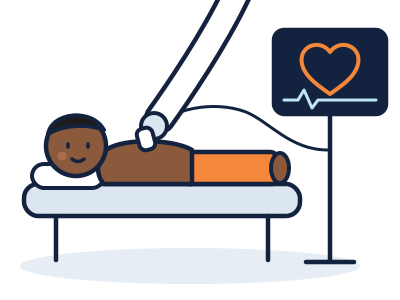
The heart team does echocardiograms for babies, children and teenagers at Limi. An echocardiogram uses sound waves, the same as a pregnancy scan. It shows the heart's chambers, valves and blood flow as it beats. It uses no radiation and no needles.
- Your child lies on a couch, top off, on your lap if they are small.
- Cool gel goes on the chest, and a small probe is moved over it. It may tickle; it does not hurt.
- Babies scan best when calm or asleep: bring a feed. Toddlers do well with a favourite video on your phone.
- You can stay with your child the whole time.
Rhythm Problems and Other Heart Concerns
The team also sees children with palpitations, a heartbeat that races for no reason, fainting, high blood pressure, or heart problems after an infection, and checks the heart of children with conditions such as sickle cell disease or Down syndrome.
Working with CardioCare
CardioCare Multispecialty Hospital (cardiocare.ng) is part of The Limi Hospitals, with Limi Children's Hospital. When a child needs a catheter procedure or heart surgery, the team explains the options and where each is done, and plans it with you, including care outside Abuja when that is needed. The team tells you how your child's information is shared when care involves both hospitals.
For Referring Clinicians
Refer a child with suspected congenital heart disease, a murmur that is not clearly innocent, a newborn with low oxygen readings or a suspected duct-dependent lesion, a baby with a heart difference seen antenatally, syncope on exertion, or palpitations. For an unwell or cyanosed newborn, call before transfer on 0813 408 5400. Your patient remains your patient; we acknowledge, update, report and back-refer. See how to refer and transfers.
Getting Ready
- Bring any letters, earlier scan reports and ECGs, and the child health card.
- Dress your child in a top that opens easily.
- Bring a feed for a baby, and a snack, drink and something to watch for a young child.
- Write down what you have noticed: when the symptoms happen, how long they last, what helps.
- If you have one, bring your HMO or NHIA card. See what to bring.
Read Before Your Appointment
Heart Murmurs in Children: What They Mean and When to Worry
Why most murmurs are harmless, what a heart scan involves, and the signs that do need checking.
13 min read GuideNewborn Warning Signs: When Not to Wait
The signs in the first four weeks that mean come in now, and the many things that are normal.
11 min read GuideSickle Cell Disease in Children: Staying Well and Knowing the Emergencies
Genotype, the daily plan that prevents crises, and the emergencies that cannot wait.
15 min readQuestions Parents Ask
If the murmur is innocent, can it become serious later?
No. An innocent murmur is the sound of a normal heart. It may come and go, and many fade as children grow. Your child can play and do sport as normal.
Do I need a referral?
No. Book directly. A letter from the doctor who heard the murmur helps, because it says where and how loud it was.
Can my child do sport?
Most children with heart conditions can, and should, be active. A few need limits on certain kinds of sport. The specialist tells you what applies to your child and gives you a letter for school if you need one.
Can I stay in the room during the scan?
Yes. Children scan better with a parent beside them.
Does my HMO cover a heart scan?
It depends on the plan. Ask the care team to check before the appointment. See paying and HMOs.
Did I cause my baby's heart condition?
Almost always, no. Most heart conditions present from birth happen while the heart forms in early pregnancy, for reasons nobody could have known or prevented. The team talks this through with you, including any chance of it happening in a future pregnancy.
Told Your Child Has a Murmur? Book a Heart Check and Get a Clear Answer.
If your child is seriously unwell, do not book and do not wait for a message reply. Come to Limi Children's Hospital now, day or night, or go to the nearest emergency department if you cannot get here quickly. Have someone else drive if you can, so you can watch your child, and call 0813 408 5400 on the way so the team can prepare. See the signs that mean go now.