
If You Remember Nothing Else
- Soaking a pad in an hour, or clots the size of an egg, is an emergency. Go now.
- A bad headache, blurred vision or swelling of the face in the weeks after birth can be pre-eclampsia, which can still happen after the baby is born.
- Fever, chest pain, breathlessness, or pain and swelling in one calf need emergency care the same hour.
- Weepy days in the first two weeks are common. Low mood lasting longer is postnatal depression: common, treatable, and not a weakness or a spiritual attack.
- Strange beliefs, confusion, or thoughts of harming yourself or the baby need help now. Do not leave the mother alone.
- Go for your postnatal checks, including the one at six weeks, and ask about birth spacing.
Limi Is a Children's Hospital
We care only for babies, children and teenagers. A mother with any of the warning signs below should come to The Limi Hospital, the group's hospital for adults and maternity care, now. If she cannot get there quickly, she should go to the nearest emergency department that treats adults. If the baby is with you and also needs care, tell the staff — or call us on 0813 408 5400 and we help you arrange care for the baby.
Warning Signs for Mothers
Most serious problems after birth happen in the first week, but some appear up to six weeks later. Put this list on the fridge and show it to whoever is helping at home, so they know when to act.




Go Now
The Limi Hospital, or the nearest emergency department
- Soaking a pad in an hour or less, clots the size of an egg or bigger, or bleeding that suddenly gets heavier
- Feeling faint, dizzy, or a racing heartbeat
- Fever of 38 °C or more, or hot and shivery, especially with tummy pain or smelly discharge
- Severe headache, blurred vision or flashing lights, swelling of the face or hands, or pain under the ribs
- A fit (convulsion)
- Chest pain, sudden breathlessness, or coughing up blood
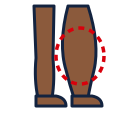
- Pain, heat or swelling in one calf or leg
- Confusion, seeing or hearing things, strange beliefs, or thoughts of harming herself or the baby
See a Doctor or Midwife Today
Same day, not tomorrow
- Caesarean wound red, swollen, leaking or opening
- Stitches very painful, smelly or oozing
- Burning or stinging when passing urine, or cannot pass urine
- A red, hot, painful area on the breast
- Bleeding that stays bright red after the first week, or comes back heavy
- Low mood or anxiety most days for two weeks or more, or not coping
Usually Normal
Rest, and mention it at your check
- Bleeding that slowly lightens from red to brown to yellow-white
- Cramping pains during breastfeeding in the first days
- Sore stitches that ease each day
- Heavy sweating at night in the first weeks
- Tearful, emotional days from day 3 to 5
- Tiredness
For any sign in the first column, come to The Limi Hospital now. If you cannot get there quickly, go to the nearest emergency department. Have someone else drive, and take your antenatal and delivery notes.
Bleeding After Birth
After every birth, vaginal or caesarean, the womb sheds its lining as a discharge called lochia. For the first few days it is bright or dark red and heavy, like a heavy period, and small clots are common. Over the next week or two it becomes pinkish-brown, and then yellow-white. It usually stops by four to six weeks. It may get a little heavier for a while when you are more active, or during breastfeeding.
- Use sanitary pads, not tampons, for the first six weeks, and change them at least every four hours.
- Watch the amount. Needing a fresh pad every hour, large clots, or bleeding that gets heavier instead of lighter are not normal.
- Notice the smell. Lochia smells like a period. A bad smell, especially with fever or tummy pain, can mean infection in the womb.
Stitches and Tears
Many women have a tear or a cut (episiotomy) that is stitched after a vaginal birth. The stitches usually dissolve on their own, and the area heals in two to three weeks, though it can stay tender for longer.
- Keep it clean. Wash with clean water once or twice a day and after passing stool, from front to back. Pat dry with a clean cloth.
- Pour warm, not hot, water over the area while you pass urine if it stings.
- Change pads often and wash your hands before and after.
- Sit on a soft cushion or lie on your side to take the pressure off.
- Look for infection: increasing pain, swelling, pus or a bad smell. See a doctor or midwife that day.
After a Caesarean
A caesarean is major surgery. Recovery takes at least six weeks, even when you feel well sooner.
- Wound care. Follow the instructions you were given about the dressing and when stitches or clips come out. Afterwards, wash the wound gently with water, pat it dry, and wear loose clothes and high cotton underwear.
- Moving. Get up and walk a little, several times a day, from the first day; it lowers the risk of blood clots. Hold a pillow against the wound when you cough, laugh or get up.
- Lifting. Avoid lifting anything heavier than your baby for about six weeks. Let others carry buckets of water, shopping and older children.
- Driving and exercise. Ask at your check; most women wait around six weeks.
- Signs of wound infection: redness spreading from the cut, swelling, pus, the wound opening, pain that gets worse, or fever. See a doctor the same day.
Pain, Bowels and Bladder
Pain
Afterpains — cramps as the womb shrinks — are common in the first days, especially during breastfeeding and after a second or later baby. Pain from stitches or a wound should ease day by day. Ask the midwife or doctor which pain relief is suitable while you are breastfeeding, and take it as prescribed or as the pack says. Codeine is not recommended when breastfeeding. Pain that is getting worse, not better, needs checking.
Bowels
The first stool can take a few days and many women fear it will hurt. It will not damage stitches. Drink plenty, eat fruit, vegetables, beans and whole grains, walk a little, and do not strain; holding a clean pad against the stitches can help. Piles (haemorrhoids) are common and usually settle. Tell the midwife if you have not opened your bowels by day three or four.
Bladder and the Pelvic Floor
Leaking a little urine when you cough, laugh or lift is common after birth. Pelvic floor exercises help, and you can start them as soon as you feel ready, even after a caesarean:
- Squeeze and lift the muscles you would use to stop passing urine and wind at the same time.
- Hold for a few seconds, building up to 10 seconds, then relax fully.
- Repeat up to 10 times, three times a day. Add 10 quick squeezes.
Keep going for at least three months. If leaking of urine, wind or stool is not getting better, tell your doctor — it can be treated, and you do not have to live with it.
Rest, Food and Help at Home
- Sleep when the baby sleeps, at least once in the day. Let visitors wait.
- Eat regular, varied meals: beans, eggs, fish, meat, leafy vegetables such as ugwu and spinach, fruit, and whole grains. Hot soups and pepper soup are fine.
- Drink to thirst, more if you are breastfeeding. Keep a cup of water where you feed.
- Carry on any iron or other tablets you were prescribed until the clinic says stop.
- Let people help with cooking, washing, older children and night-time nappies. Omugwo and the other traditions of a mother or relative coming to help are a real gift; ask them to take on the work so you can rest and feed.
Your Feelings
Baby Blues
Most new mothers have a few days, often starting around day three to five, of feeling weepy, anxious, irritable or overwhelmed, alongside joy. This is the baby blues. It is linked to hormone changes and exhaustion, and passes within about two weeks. Rest, food, company and reassurance are the treatment.
Postnatal Depression
Postnatal depression affects at least 1 in 10 mothers, and fathers can have it too. It can start any time in the first year. Signs include feeling low or empty most of the day, losing interest in things, not enjoying the baby, feeling guilty or worthless, being unable to sleep even when the baby sleeps, constant worry, or feeling you are a bad mother. It is common, treatable, and not caused by weakness, a lack of faith or a spiritual attack. Talking treatments and, when needed, medicines that are safe in breastfeeding help most women recover. Prayer and your faith community can be a real support alongside treatment. If low mood lasts more than two weeks, tell your doctor, midwife or the baby's clinic.
Postpartum Psychosis
Rarely — about 1 or 2 in every 1,000 births — a mother becomes suddenly and severely unwell, usually in the first two weeks. She may be confused, not sleep at all, seem unusually excited or fearful, hear or see things that are not there, or have strange ideas about herself or the baby. This is a medical emergency. Stay with her, keep the baby safe with another adult, and bring her to The Limi Hospital now, or to the nearest emergency department if you cannot get there quickly. With prompt treatment women recover.
For Fathers and Family
The people around a new mother shape how well she recovers. Here is what to do.
- Take on the work: meals, washing, cleaning, older children, and bringing the baby to her for feeds at night.
- Protect her rest. Limit visitors in the first weeks, and ask those who come to help rather than be served.
- Learn the warning signs on this page, and act on them without waiting to be asked.
- Notice her mood, ask how she is, and listen without judging. If she seems low for more than two weeks, help her see a doctor.
- Hold the baby skin to skin, change nappies and bathe the baby. Fathers who do this bond with their baby too.
- Look after yourself. Fathers can also feel low or overwhelmed; talk to someone.
The Six-Week Check and Birth Spacing
The World Health Organization recommends that every mother and baby have several postnatal checks: in the first day, around day three, between one and two weeks, and at six weeks. At the six-week check the doctor or midwife will ask about bleeding, healing, bladder and bowels, your mood and feeding, check your blood pressure, and talk about contraception. Bring any questions, even ones that feel embarrassing.
You can become pregnant again before your periods return, and in women who are not fully breastfeeding this can happen within a month of the birth. Breastfeeding only protects you reliably if all three are true: the baby is under six months, is fed only breast milk day and night, and your periods have not come back. The World Health Organization advises waiting at least two years after a birth before the next pregnancy, which is healthier for you, the new baby and the one you have. Many methods are safe while breastfeeding; ask at your postnatal check or family planning clinic.
Traditions and What Is Safe
Families across Nigeria have long, loving traditions for caring for a new mother. Most are good for her. A few can cause harm.
Bathe the new mother with very hot water, or press hot towels on her tummy and private parts, to "clean out the womb" and tighten the body.
Very hot water scalds and can cause serious burns. It does not clean the womb. Warm water is enough. Never apply heat or pressure to a caesarean wound.
Bind the tummy tightly, or sit over steaming herbs.
A light support garment is fine if it is comfortable. Tight binding can hurt a wound and make breathing and bowels harder. Steam over boiling water can burn; avoid it.
Drink herbal mixtures (agbo) to clean the blood or bring down the belly.
Their contents are unknown, some pass into breast milk, and some can harm the liver and kidneys. Your body heals on its own; eat well and rest.
Feeling sad after the baby means she is ungrateful, weak, or under a spiritual attack.
Depression after birth is a common medical condition. It is nobody's fault, and it gets better with support and treatment.
Questions Mothers Ask
My bleeding stopped, then came back. Is that normal?
A short return of red bleeding after more activity, or when your first period comes, can be normal. Heavy bleeding, clots, a bad smell or fever are not; see a doctor that day, or go now if it is heavy.
When can we have sex again?
When the bleeding has stopped and you feel ready, which for many women is after six weeks. It can be uncomfortable at first; take it gently. Arrange contraception first, because you can become pregnant before your periods return.
Can I bathe normally?
Yes. Daily washing with warm, clean water keeps stitches and wounds clean. Avoid very hot water, harsh soaps or antiseptic in the water, and pat stitches or a wound dry.
When can I start exercising?
Gentle walking and pelvic floor exercises can start straight away. Wait for your six-week check before running, heavy lifting or sit-ups, and longer after a caesarean or a difficult birth.
I had high blood pressure in pregnancy. What now?
Your blood pressure needs checking after the birth, often several times, and you may need to continue medicines for a while. Keep every appointment. A severe headache, vision changes or swelling of the face are reasons to come to The Limi Hospital now, or to go to the nearest emergency department if you cannot get there quickly.
My baby needs to be admitted, but I have just given birth. What happens?
Tell the team caring for your baby that you have recently given birth. At Limi, the nurses help you keep breastfeeding or expressing while your baby is on the ward, and tell you where to get care for yourself if you need it. See newborn care and visiting Limi.
Sources
- World Health Organization. WHO recommendations on maternal and newborn care for a positive postnatal experience. 2022.
- National Institute for Health and Care Excellence. Postnatal care (NG194). 2021.
- National Institute for Health and Care Excellence. Hypertension in pregnancy: diagnosis and management (NG133). 2019, updated 2023.
- National Institute for Health and Care Excellence. Antenatal and postnatal mental health: clinical management and service guidance (CG192). 2014, updated 2020.
- World Health Organization. Report of a WHO technical consultation on birth spacing. 2005.
- World Health Organization. Medical eligibility criteria for contraceptive use. Fifth edition, 2015.
Written for parents and carers in NigeriaClinically reviewed by Limi Children’s Hospital cliniciansLast updated September 2026Next review due September 2027